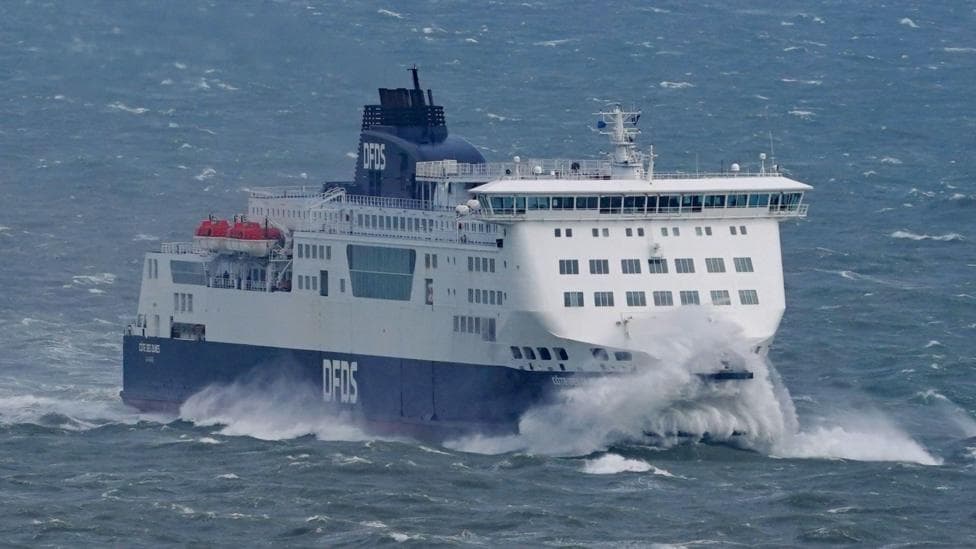
Plans to restore a direct ferry connection between Scotland and mainland Europe have been abandoned after Forth Ports concluded the service lacked long-term commercial viability. The port operator had been negotiating with Danish shipping company DFDS to launch a three-times-weekly passenger and freight route from Rosyth in Fife to Dunkirk in northern France, backed by £3m in funding from each of the Scottish and UK governments.
Forth Ports cited "a number of important economic factors" in its decision to withdraw from the project, stating that discussions with DFDS had failed to establish "a long-term sustainable way forward" for restoring passenger services. The company said its strategic focus would now shift to "delivering alternative activity at the port."
A UK government spokesperson expressed disappointment at the decision, noting that ministers had pledged financial support and worked to bring partners together to broker an agreement. Scottish Secretary Douglas Alexander had previously highlighted the project as a significant development when the government's Growth Mission Fund commitment was announced in March.
How long has the route been dormant?
Passenger ferry services between Rosyth and mainland Europe ceased in 2010 when DFDS terminated its crossing to Zeebrugge in Belgium. Freight operations continued until 2018, when DFDS suspended the service following a fire aboard one of its vessels. The route had remained inactive for over a decade, leaving Scotland without a direct maritime link to continental Europe.
The original Rosyth-Zeebrugge crossing had operated since 2002 under the Superfast Ferries banner before DFDS took over operations. Earlier attempts to restore connectivity, including a proposed service to Eemshaven in the Netherlands mooted in 2019, had also failed to materialise.
What was the proposed service supposed to offer?
The planned Rosyth-Dunkirk route was designed to operate three times weekly in each direction, with a journey time of approximately 20 hours. The service would have carried both passengers and freight, positioning Rosyth as a gateway for UK-Europe trade and travel. In March, Forth Ports had identified the ferry as a "key part" of the Forth Green Freeport project, a major economic development initiative for the region.
However, the project faced persistent obstacles. According to earlier reporting on the route, border-control arrangements emerged as a significant barrier to launching the service. In June 2025, Scotland's First Minister pledged to help remove remaining regulatory obstacles to reopening the link, signalling political commitment to the initiative.

What funding had been committed?
The UK government pledged £3m toward the project through its Growth Mission Fund, with the Scottish government committing an equal amount. According to later coverage of the project, the combined funding pledges from both administrations totalled £6m, though the original source article cited £3m per government.
The route was also positioned within Dunkirk's broader €40bn urban regeneration programme, linking Scotland's transport infrastructure to a major French development initiative. This connection underscored the strategic importance both governments attached to restoring the link.
Why did negotiations fail?
Forth Ports did not publicly detail the specific commercial factors that led to the abandonment, stating only that "careful consideration" of "important economic factors" had resulted in the decision that the service would not restart. The company's statement emphasised its commitment to exploring alternative business opportunities at Rosyth that would "deliver and sustain long-term job creation and economic growth."
DFDS, which had been designated as the route operator, had previously indicated uncertainty about timelines. In January, the company said "no firm timeline" was in place, though it described discussions as "constructive." According to a later report on the project, DFDS explicitly denied that a May 2026 launch date had been confirmed and remained non-committal about when the service might begin.
Initial expectations had suggested the route could start in spring 2026, but subsequent reporting indicated this timeline was optimistic. A late-2026 launch was later discussed, though 2027 was viewed as increasingly likely by project promoters as obstacles accumulated.
What happens next for Rosyth?
Forth Ports has committed to developing alternative commercial activities at the port, though no specific projects have been announced. The port remains designated as a key area for the Forth Green Freeport initiative, which aims to drive economic growth and job creation in the region through tax incentives and regulatory flexibility.
The abandonment of the Rosyth-Dunkirk route leaves Scotland without a direct passenger ferry link to mainland Europe, a gap that has persisted since 2010. Both the Scottish and UK governments have been approached for further comment on their next steps regarding the £6m in committed funding.
Key Facts
- Forth Ports has scrapped plans to restore a ferry service between Rosyth and Dunkirk, citing concerns over long-term commercial viability
- The route had been dormant since 2010 for passengers and 2018 for freight, following a vessel fire
- The Scottish and UK governments had each committed £3m (totalling £6m) to support the project
- DFDS was designated as the route operator but negotiations failed to establish a sustainable business model
- The proposed service would have operated three times weekly with a 20-hour crossing time