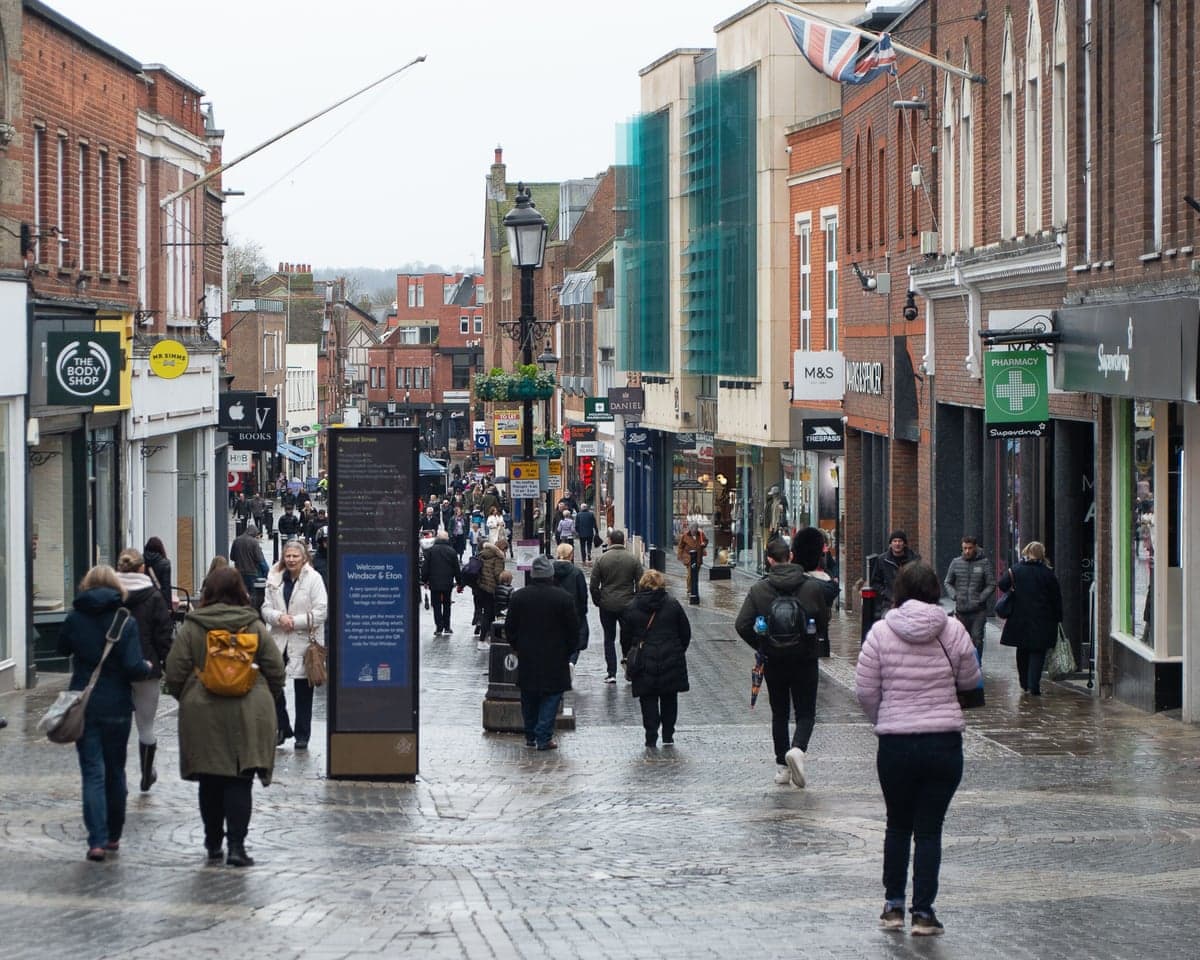
Retail sales volumes in Great Britain contracted more sharply than anticipated during September, marking another economic setback before Chancellor John Healey presents his budget announcement next week.
According to The Guardian, the Office for National Statistics (ONS) reported that the volume of goods sold declined 0.4% month on month in September, substantially exceeding the 0.1% contraction that economists had forecast.
The deterioration in sales reflects multiple pressures on consumer spending. Unseasonably warm weather in September suppressed demand for autumn and winter clothing, particularly affecting online retailers. This sales weakness arrives as UK consumer confidence has fallen to a three-year low, with households grappling with rising mortgage costs and employment uncertainty.
How severe was the decline across different retail sectors?
The contraction was widespread but uneven across the retail landscape. Non-store retailing, dominated by online sales, experienced the steepest fall at 2.2% month on month, representing the largest percentage decline in any retail category. Textile, clothing and footwear stores saw volumes drop 0.9%, while household goods retailers contracted 0.5% and supermarkets declined 0.4%, partly due to weak sales of clothing ranges attributable to the unseasonable temperatures. Department stores provided the sole bright spot outside fuel sales, recording a modest 0.2% increase.
When fuel sales are excluded from the calculation, the underlying retail sales picture deteriorates further. Core retail sales slumped 0.7% month on month in September, substantially worse than the 0.1% decline that City analysts had anticipated. According to ONS data, online spending values fell 0.4% month on month in September, while the online share of total sales edged down from 28.9% to 28.8%.
Why did fuel sales buck the broader trend?
Motor fuel represented a striking exception to the downward momentum. The volume of fuel sold surged 2.2% month on month in September despite pump prices reaching record levels. In value terms, the 6.1% increase in fuel sales marked the largest month-on-month jump since March 2026, when a 10.9% increase was recorded immediately following the start of the US-Iran conflict. Fuel prices have now returned to levels last seen before the Middle East conflict began, reflecting the geopolitical pressures affecting global energy markets.
What do confidence indicators reveal about household sentiment?
Consumer confidence metrics have deteriorated sharply in recent weeks. According to GfK data, October consumer confidence fell to -24 from -13 in September, marking its lowest reading in six months. The British Retail Consortium's October survey found expectations for the economy worsened to -40 from -34 in September, while expectations for personal finances fell to -18 from -15, with consumer confidence in the economy having fallen for a third consecutive month amid rising inflation and geopolitical tensions.
Paul Dales, chief UK economist at Capital Economics, characterised the outlook as increasingly challenging:
October's sharp fall in consumer confidence and the dip in retail sales volumes in September show that times are getting tougher for households just as the all-important festive period for retailers is just around the corner. This supports our view that both real consumer spending and real GDP will grind to a halt in the fourth quarter and the first quarter next year. And this fall in consumer confidence is also the kind of thing that makes the prime minister less likely to call an early election soon.
How does this month compare to recent performance?
The September decline follows a stronger August, which had provided temporary relief. The ONS revised August's monthly sales-volume increase upward from 0.5% to 0.7%, helping quarterly sales increase to 0.7% year on year. September sales volumes were 0.8% higher than a year earlier, indicating that year-on-year comparisons remain positive despite the monthly deterioration.
Hannah Finselbach, a senior statistician at the ONS, noted the mixed signals in the data:
Retail sales grew in the latest quarter with growth led by motor fuel, which, despite recent price increases at the pump, have now returned to monthly sales levels last seen before the start of the conflict in the Middle East. Food and drink sales also contributed to growth in the quarter, partly helped by the warm weather and the World Cup, although they fell back slightly in September.
The timing of this economic weakness is significant, arriving as UK inflation has surged to 3.5% as Middle East conflict pushes fuel costs to record highs, complicating the Chancellor's budget planning. The combination of weakening consumer demand, falling confidence, and persistent inflationary pressures creates a complex backdrop for fiscal policy decisions.
Key Facts
- Retail sales volumes fell 0.4% month on month in September 2026, more than four times the 0.1% decline economists had forecast
- Core retail sales excluding fuel contracted 0.7% month on month, substantially worse than the 0.1% fall anticipated by City analysts
- Non-store retailing experienced the steepest sectoral decline at 2.2%, while motor fuel sales surged 2.2% despite record pump prices
- Consumer confidence fell to -24 in October according to GfK data, its lowest level in six months, with the British Retail Consortium reporting expectations for the economy worsened to -40
- The September sales weakness precedes Chancellor John Healey's budget announcement scheduled for the following week