CS Venkatakrishnan, chief executive of Barclays, has signalled acceptance of higher bank taxes expected in next week's budget, describing the impact as manageable despite months of industry lobbying against the measure. According to The Guardian, when asked whether Barclays might shift assets or investment to the United States in response to tax increases, Venkatakrishnan instead offered his backing to Chancellor John Healey and the government's fiscal priorities.
The Barclays boss acknowledged the political constraints facing the Treasury while defending the bank's position.
I recognise that the chancellor and the government has been entrusted with an important duty by the public and the people. And they have to balance a host of considerations. He [Healey] is the man in the arena, and I deeply respect the responsibility he bears on his shoulders and wish him well. His long term goal is the same as our long term goal, which is to get growth.
Venkatakrishnan emphasised that Barclays already generates roughly half its profits outside the UK, reducing the direct financial impact of domestic tax rises.
Second, we are already a bank, which makes, effectively, half of our money elsewhere [outside] the UK. And so this is not a question of a financial hit to us. It's bearable. It is a question of proportion and it's a question of market signaling. But as I said, I deeply respect the responsibility that the chancellor has and he has our full support and backing.
What would a bank tax increase mean for Barclays' finances?
The bank surcharge, a tax on profits above a certain threshold, was reduced from 8% to 3% in 2023 when corporation tax rose from 19% to 25%. Restoring the surcharge to 8% could raise around £2 billion annually for the government. According to Goldman Sachs analysis, an increase to 8% would reduce Barclays' net profit by 2–3%, compared with 6–7% for Lloyds and NatWest, making Barclays relatively less exposed than some competitors.
Venkatakrishnan's remarks represent a significant shift in banking sector messaging. Bank executives have lobbied intensively against tax rises since narrowly avoiding higher levies in last year's budget. JP Morgan boss Jamie Dimon warned earlier this year of potential consequences if the UK government became hostile to banks. However, Barclays' public acceptance of the tax burden may signal a strategic decision to avoid antagonising the government ahead of the budget announcement.
The bank is also undergoing significant restructuring. Barclays reported third-quarter profit of £2.3 billion, below analysts' forecasts, and announced plans to cut around 5,000 jobs this year as it uses technology to reduce costs.
What is Healey saying about bank profits?
Chancellor Healey has not explicitly confirmed the tax increase but has indicated it is under consideration. In an interview with ITV's political editor Robert Peston, Healey described banks as the engine of investment in Britain and acknowledged their current strong performance.
You know the banks are the engine of investment in this country. The banks are doing well at the moment and that is good to see. It's good for Britain – and the budget is where I've got decisions to take across the economy, across the tax system. I will set those out on Wednesday next week.
When pressed on whether banks are making excessive profits—which would provide an economic justification for higher taxes—Healey did not directly answer, instead framing the decision as part of broader fiscal choices across the economy. This approach suggests the government may increase the surcharge without explicitly claiming banks are profiteering.
Gender pay gap continues to narrow
The Office for National Statistics released new data on workplace equality on 22 October 2026. The gender pay gap for full-time employees fell to 6.8% in April 2026, down from 7.2% a year earlier and 9.4% a decade ago.
The gender pay gap for full-time employees has continued to decline in the UK. It was 6.8% in April 2026, down from 7.2% in April 2025. This compares with 9.4% a decade ago and 16.4% 25 years ago.
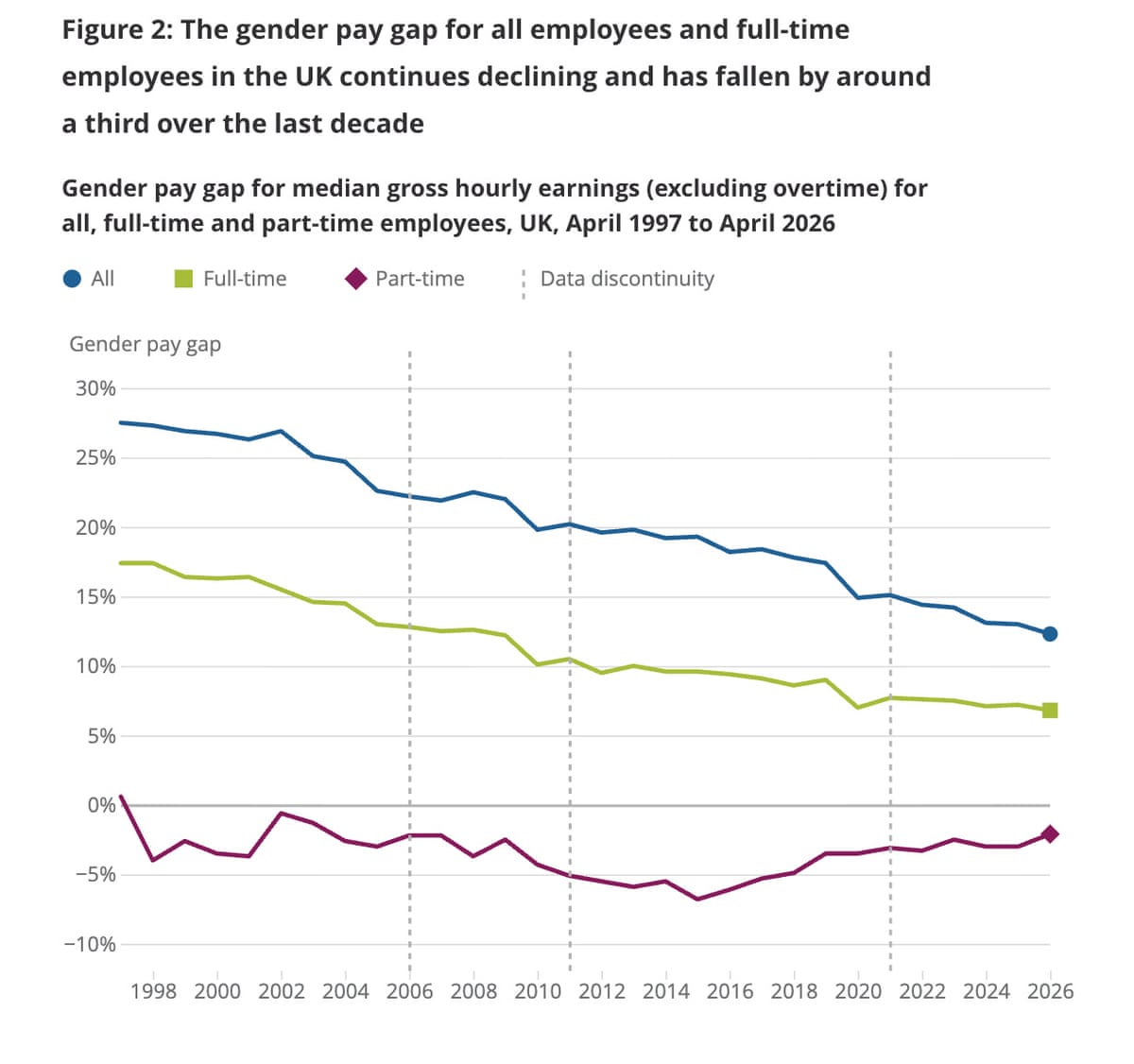
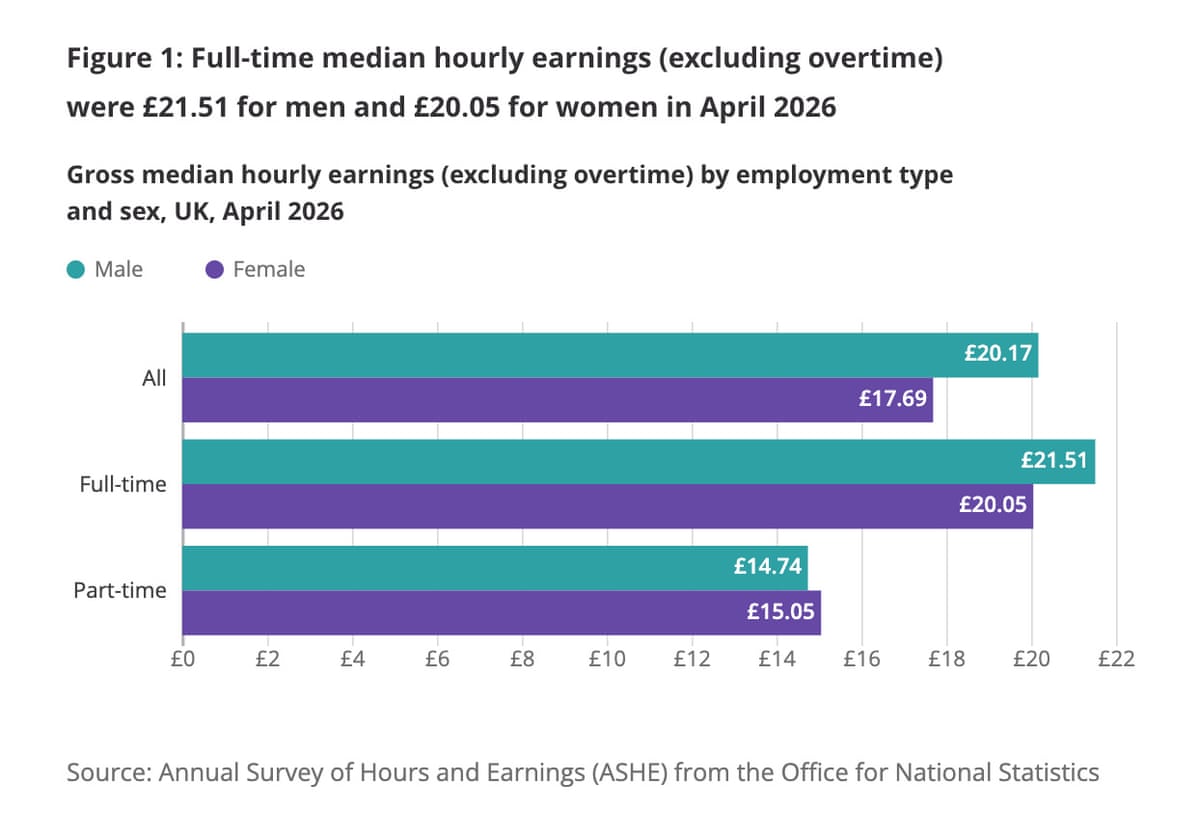
The figures show sustained progress over the longer term, with the gap having narrowed from 16.4% twenty-five years ago. However, the underlying earnings data reveals persistent disparities. Median hourly earnings for full-time employees in April 2026 were £21.51 for men and £20.05 for women, reflecting the continuing structural differences in pay between genders.
Domestic abuse reports surge significantly
A sharp increase in reported domestic abuse has prompted concern among statisticians and policymakers. The Office for National Statistics found that 9.6% of adults aged 16 and over in England and Wales—approximately 4.7 million people—experienced domestic abuse in the year to March 2026, up from 7.8% or around 3.8 million people in the previous year. This represents a rise of 1.8 percentage points, or roughly 900,000 additional victims.
The increase has been driven primarily by a rise in partner abuse, experienced by 7.9% of people aged 16 and over in the latest figures, compared with 6.1% in the previous year. Family abuse remained relatively stable at 2.8% of adults in the year to March 2026, compared with 2.7% in the previous twelve months.
The ONS acknowledged that minor changes to survey methodology may have influenced the size of the increase. Meghan Elkin, head of crime statistics at the ONS, said:
While minor survey changes and the usual uncertainty around gathering data on this sensitive topic are likely to have affected these estimates, our assessment is that the rise in domestic abuse includes real change. More data points are needed to further understand the uncertainty and what this tells us about trends in domestic abuse.
The organisation's assessment is that the rise reflects genuine increases in the prevalence of domestic abuse rather than measurement effects alone, though the exact proportion attributable to real change versus methodological factors remains uncertain.
Crime figures show mixed picture as robbery surges
Crime statistics for England and Wales in the year ending June 2026 reveal a complex pattern, with overall crime against individuals and households continuing a decade-long decline but with notable exceptions. The Office for National Statistics reported that robbery increased by 10%, bucking the general downward trend.
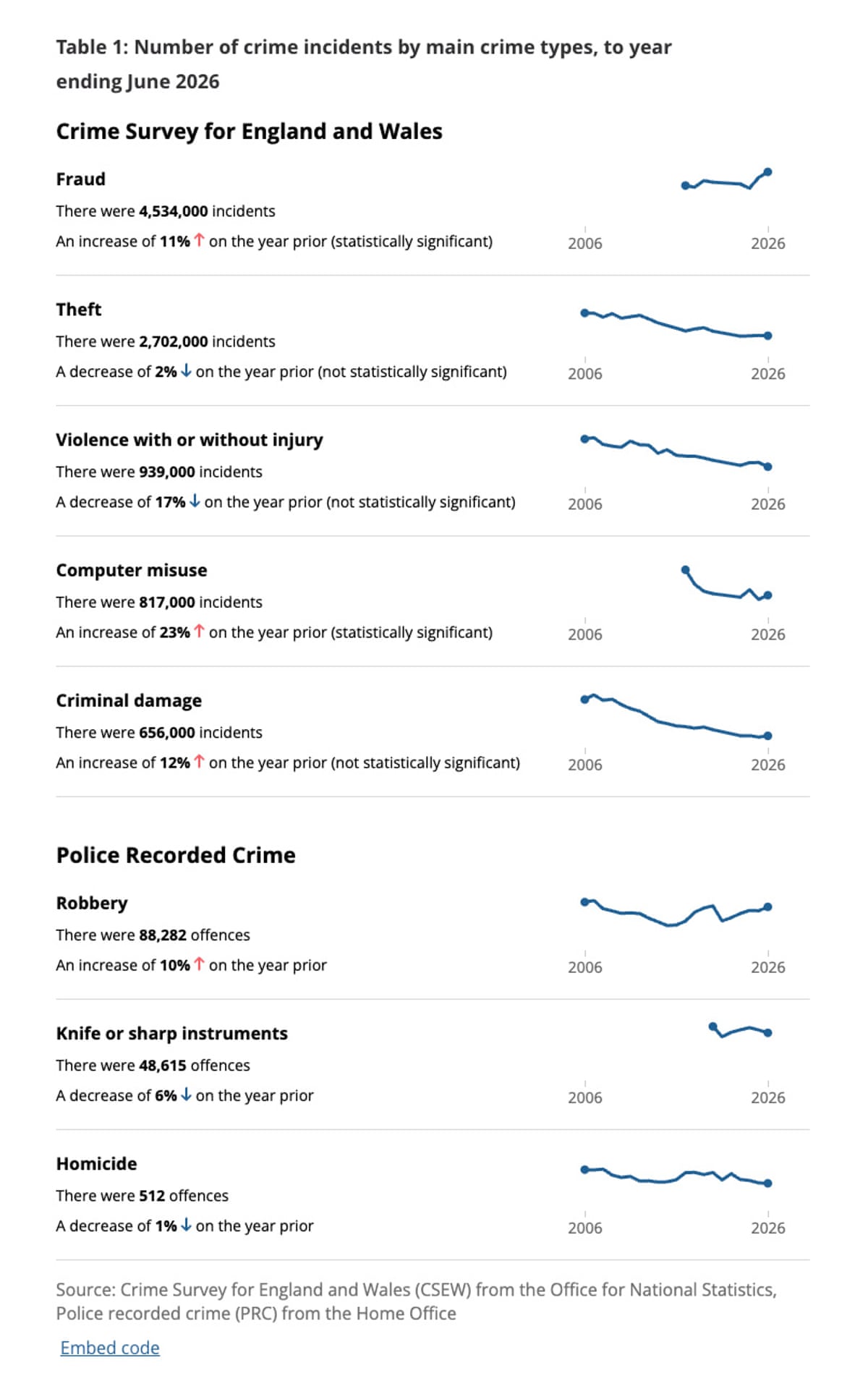
The crime survey figures are based on what people tell researchers about crimes they have experienced, while other figures relate to crimes reported to police. The data shows that while many crime categories have fallen over the past decade, fraud has emerged as a significant exception, growing substantially alongside the rise in robbery.
Badenoch criticises government for absence at Police Federation conference
Conservative leader Kemi Badenoch used her address to the Police Federation's annual conference on 22 October 2026 to attack the government for failing to send ministerial representation. Addressing the federation, she said she was willing to support the police and criticised what she described as a pattern of failing to recognise sacrifice and service.

Too often these days, we fail to recognise sacrifice and service. Whether it's hounding brave and elderly veterans through the courts, hounding police officers who try to do the right thing, or even ordinary members of the public who step in to help only to find that they're in trouble themselves. It's no wonder the people in this country are becoming too scared to wade in, too scared to do the right thing. Well, I am different. I am not scared to wade in, and I am not scared to back the police.
Badenoch pointed out that the Labour government had not sent a minister to address the conference for two consecutive years, neither the policing minister nor the home secretary. However, she stopped short of committing to substantial pay increases for officers, saying:
Now, I know that you would also like a massive pay rise as well. I'm sorry that I can't promise that just yet – at least not on day one. I am not going to stand here and promise something without a plan to pay for it. Too many politicians have done that, and it only leads to disappointment.
New sentencing rules to strip privileges from refusing offenders
The government is introducing changes that will grant judges wider powers to punish offenders who refuse to attend their own sentencing hearings. Under the new rules, criminals who decline to face their victims' families in court could be stripped of prison privileges or kept in cells for extended periods. The measures apply to England and Wales and represent a significant expansion of judicial discretion in managing courtroom conduct.
Healey backs business while acknowledging recent pressures
In an interview with The Times published on 22 October 2026, Chancellor Healey sought to position himself as pro-business while acknowledging that government policies have increased costs for enterprises. He stated:
I want to be a chancellor who backs business in Britain making a profit, and those entrepreneurs who, in the end, are the ones who challenge the status quo, come up with innovative ideas and are trying, some of them through sheer bloody-mindedness, to keep going through these sorts of pressures. If you're not making a profit, you've got nothing to put back into the business. And for the people who start up these businesses, the ones who really thrive and grow, they have to make a profit — and they will be much more inclined to put it back into their own business. But we want it to grow here and stay here.
Healey recognised the cumulative burden on businesses from multiple policy changes.
If you talk to any of the businesses that have come in and have either had one-to-ones or round tables with me, I have recognised that in recent times there's been a lot of pressure: employment law, regulation, tax, input costs, supply chains. And so when I talk about the cost of business, and recognising that in the same way as we're recognising the cost of living pressures, I'm conscious of that as I go into the budget for both businesses and households.
His comments appear to signal a shift in emphasis compared with his predecessor Rachel Reeves, who increased employer national insurance contributions. While Healey defended Reeves' decision as necessary to address the "dereliction of duty" of the previous Conservative government on the economy, he indicated a desire to be perceived as more sympathetic to business concerns.
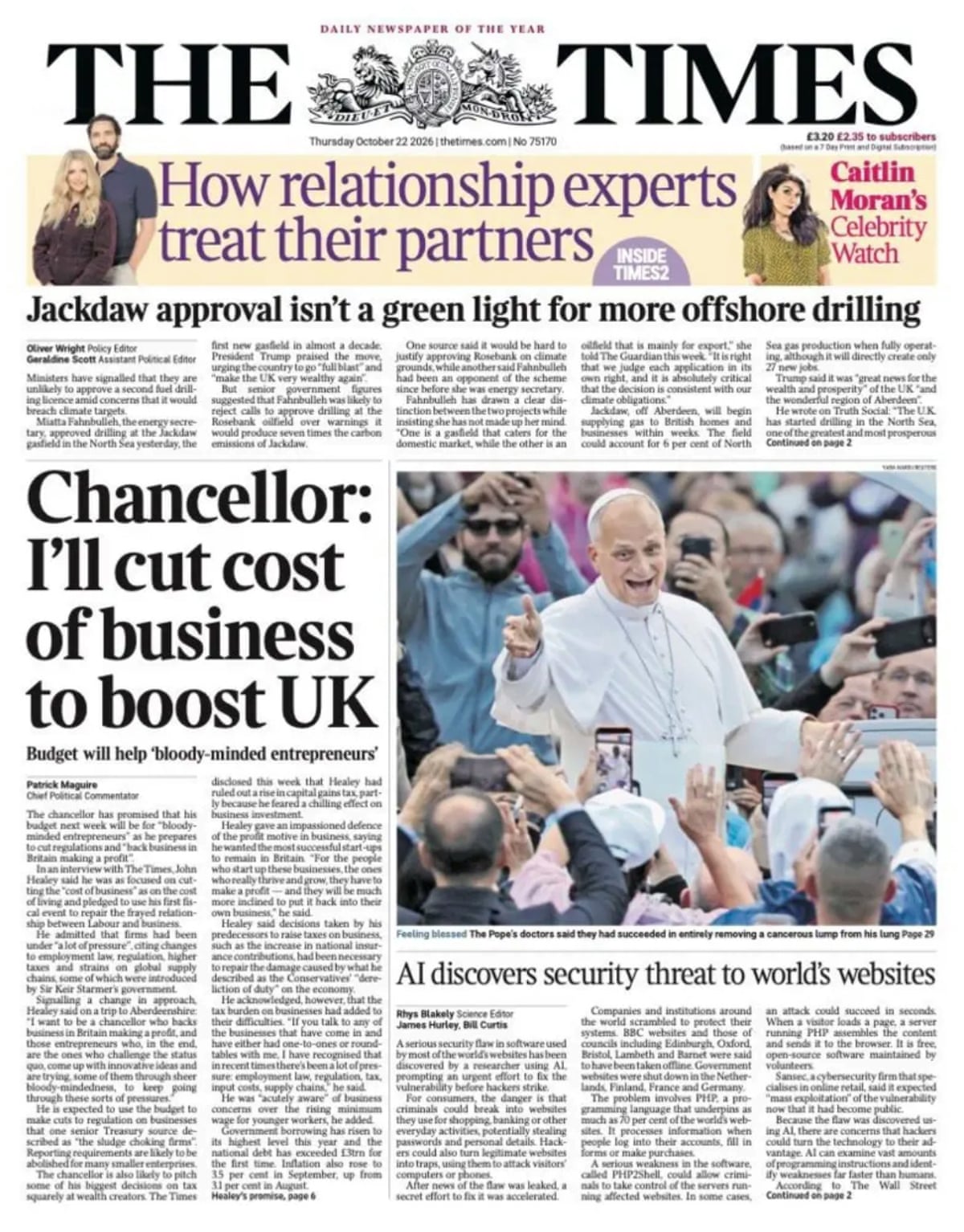
According to reporting by The Times, Healey is expected to use the budget to make significant cuts to regulation, with one senior Treasury source describing the target as "the sludge choking firms." Reporting requirements are likely to be abolished for many smaller enterprises, though Healey has not yet disclosed specific measures.
Healey also hinted at sympathy for concerns about the rising minimum wage, particularly for younger workers. He acknowledged being "acutely conscious" of the trade-off between an ever-increasing minimum wage and levels of employment, noting that many businesses cite the upward ratchet as a reason they cannot employ young people.
Healey defends role in Starmer's departure
The chancellor defended his decision to resign from Keir Starmer's government over defence spending, a move that contributed to the loss of parliamentary support that led to Starmer's resignation. Referring to this period, Healey said:
The country was ready for a change … Wherever you stood on the spectrum of the [parliamentary Labour party], there was a recognition that we needed a change.
He argued that the leadership change had benefited the party.
We have a very rare moment now. We're in the middle of a parliament, the second half of a parliament, and we've got a chance of a new hearing. People are at least willing to listen again … the Labour party is actually quite determined and disciplined, and in any party, the second half of a parliament starts concentrating minds.
Healey responds to growth criticism
Healey used the interview to address criticism from Andy Haldane, the former Bank of England chief economist, who argued in the Financial Times that Conservative policies were better for economic growth. Haldane had memorably described the government as a "traditional tax-and-spend socialist government with better TikTok videos." When asked to respond, Healey said:
I'd say to Andy Haldane, speak to me next Thursday.
The chancellor explicitly discussed making "an argument for how you bring welfare costs down," though he rejected what he called the "crude cuts" that had damaged his predecessor Keir Starmer's standing. His comments suggest the budget will include measures aimed at demonstrating fiscal responsibility and economic competence ahead of the formal announcement.
What happens next
Chancellor John Healey is scheduled to deliver the Budget on 28 October 2026, one week after these interviews were published. The announcement will detail the government's tax and spending decisions, including the expected increase to the bank surcharge and measures to reduce regulatory burdens on business. All major fiscal decisions have almost certainly been finalised at this stage, though the precise details and framing remain under wraps.