

Champagne producers have received regulatory approval to temporarily raise the alcohol content of their wines above the traditional 13% limit following an exceptionally hot 2026 growing season, marking the first time in the region's history that such a waiver has been granted. The decision allows wines from this year's harvest to reach up to 15% alcohol, a measure taken in response to grapes that developed unusually high sugar levels during the extreme summer heat and drought.
The temporary increase is expected to affect only a small number of wines. According to industry officials,
a very small number of wines from this harvest could have slightly exceeded the regulatory limit of 13%, reaching around 13.1% or 13.2%. The Champagne region's regulatory body approved the one-off derogation in early September 2026, with the Comité Champagne announcing on 9 September that the rule change was requested and authorized for the 2026 harvest in response to intense summer heat.
The mechanism behind the stronger champagne is straightforward: during fermentation, yeast converts the sugar present in grapes into alcohol. The exceptional heat and drought conditions produced grapes with significantly elevated sugar concentrations, which naturally led to higher alcohol levels during the winemaking process.
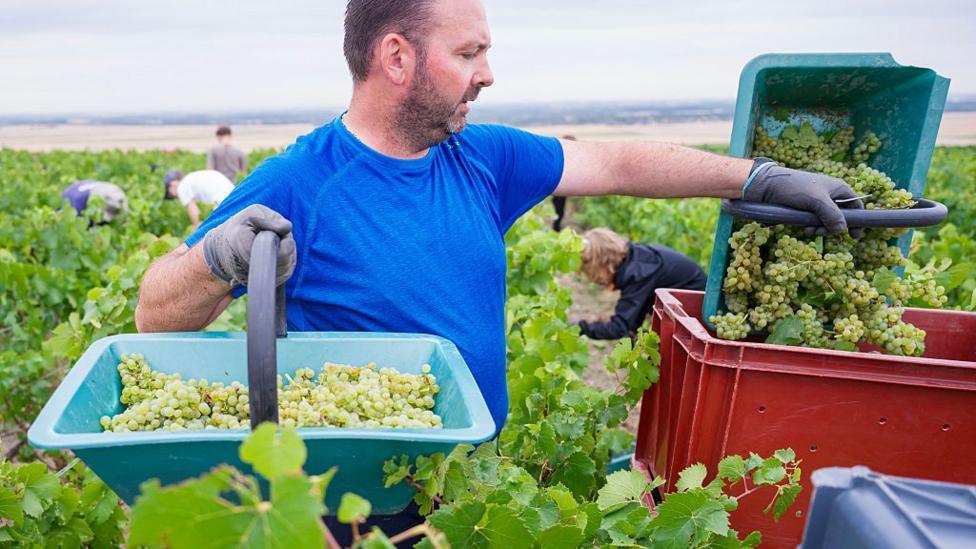
The 2026 growing season proved extraordinary in multiple ways. Growers began harvesting in early August, the earliest date ever recorded in Champagne's documented history. The earliest Champagne harvest in history was underway in late August, with early picking driven by heat and harvest timing pressure. The Comité Champagne described the year as
one of the most unusual in Champagne's history, marked by severe spring frosts of historic intensity, an exceptionally early flowering period and five heatwaves throughout the summer.
What does this mean for future harvests?
Industry leaders warn that conditions like those seen in 2026 may become routine rather than exceptional. Maxime Toubart, co-chair of the Comité Champagne, indicated that the likelihood of hotter weather in the future means
this unusual harvest will probably become the norm in 10 to 15 years. Stéphane Vignon, a producer in Verzenay, told the Times newspaper that
the Mediterranean climate is moving north. This is year one of a new cycle. It's unlikely to be every year, but it will happen again.

The broader context of climate change in Europe underscores these concerns. Europe is warming twice as fast as the global average, according to the Copernicus climate service, making it the fastest-warming continent. This acceleration is driving more frequent and intense heatwaves, which have already caused significant disruptions across France, including red heat alerts covering half the country earlier this year and massive wildfires.
Will stronger champagne appeal to consumers?
Wine experts question whether higher-alcohol champagne will be a commercial advantage. Jane Anson, a wine columnist and author based in Bordeaux, cautioned that consumer preferences are shifting in the opposite direction. She told the Times:
Today people increasingly prefer lower-alcoholwines, and observed that
the battle between what consumers want and what nature provides must be very stressful for producers.
This tension between market demand and environmental conditions reflects a broader challenge facing wine regions worldwide. Similar pressures have prompted regulatory changes elsewhere; UK wine production surged in 2025 with the third-largest harvest recorded, driven by a hot summer and increased vineyard planting, demonstrating how climate shifts are reshaping European wine production patterns.
When will consumers see the 2026 vintage?
Champagne must age for a minimum of 15 months before release, meaning the 2026 vintage is not expected to reach retail shelves until 2028. This extended timeline gives producers and regulators considerable time to assess the quality and reception of the higher-alcohol wines before they become widely available to consumers.
The temporary nature of the alcohol waiver—limited to the 2026 harvest alone—reflects the regulatory caution surrounding such an unprecedented change. However, if Toubart's prediction proves accurate and similar conditions recur within the next decade, the champagne industry may face pressure to make such accommodations permanent or to seek additional regulatory flexibility.
Key Facts
- Champagne producers can temporarily produce wines with up to 15% alcohol for the 2026 harvest, above the standard 13% limit, marking the first such waiver in the region's history
- The earliest-ever Champagne harvest began in early August 2026, driven by exceptional heat and drought that produced grapes with unusually high sugar levels
- Industry leaders predict that conditions similar to 2026 will likely become routine within 10 to 15 years due to climate change
- The 2026 vintage will not reach consumers until 2028, as Champagne must age for at least 15 months
- Consumer preference for lower-alcohol wines may limit the commercial appeal of stronger champagnes, creating tension between what producers can make and what buyers want


