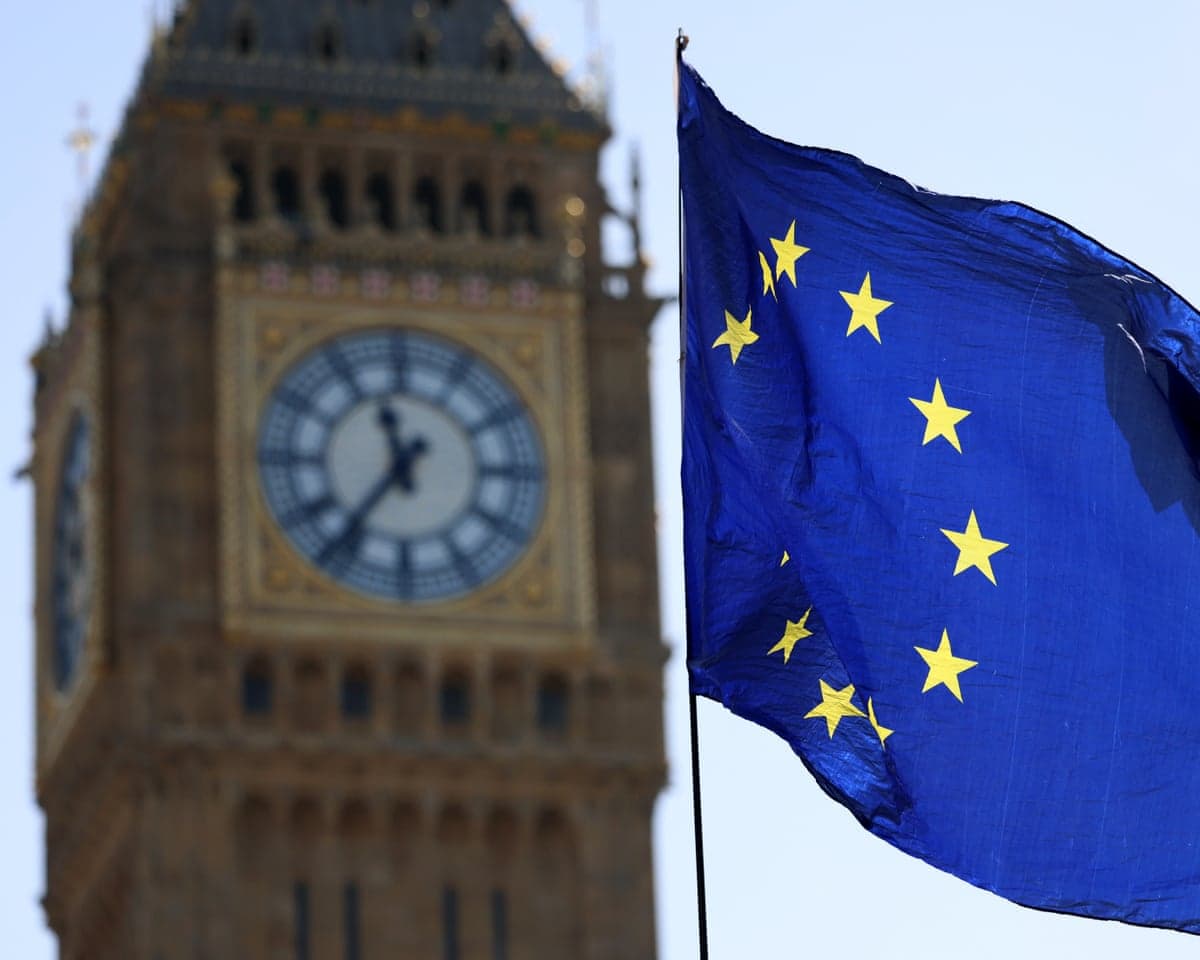
Former Conservative chancellor George Osborne has argued that Britain should rejoin the European Union's customs union, describing the nation's economic trajectory since the 2016 referendum as a sharp downturn that demands urgent policy change.
In an interview published on 12 September 2026, Osborne, who held the Treasury brief during David Cameron's premiership and resigned following the referendum result, told a national news outlet that the British economy has "fallen off a cliff" and that restoring closer commercial ties with the continent represents the most direct path to recovery.
Osborne acknowledged the political complexity of any such reversal, given that more than a decade has elapsed since the referendum. However, he contended that the case for action has become clearer as the economic consequences have mounted.
Why focus on the customs union specifically?
Osborne singled out customs union membership as a more achievable objective than full single-market rejoining, because it would not require acceptance of free movement of people—a politically sensitive issue in Britain.
"I would rejoin the customs union," he said. "It's a quite simple thing to do. That was never part of the Brexit debate. No one knew we were leaving it and it has had a devastating impact on trade."
He pointed out that the original case for leaving the customs union—that Britain would negotiate superior trade agreements with countries such as the United States—has not materialised.
"The reason we weren't supposed to be in the customs union – according to the Brexiteers – was these great trade deals we were going to strike with America. That all looks pretty fanciful now."
Osborne framed the customs union as distinct from the single market in practical terms.
"If I was Andy Burnham, I don't see why you wouldn't rejoin the customs union. It's a pretty straightforward decision because unlike (rejoining) the single market it does not require you to accept the free movement of people – which is a pretty complicated issue to sell to people in Britain at the moment."

What is the current state of UK-EU trade?
The United Kingdom and the European Union currently operate under the Trade and Cooperation Agreement, which took effect in January 2020 and remains the governing framework for bilateral commerce. According to UK government information updated on 2 September 2026, this arrangement has not been superseded by any customs union arrangement.
The trade relationship has proven contentious. An EU Council document published in August 2026 recorded a substantial goods-trade surplus favouring the European side, a factor that continues to shape political discussion around future trade terms. Earlier in 2026, UK officials had explored the possibility of a deeper goods-trade reset with the EU, but Brussels rejected that proposal, according to reporting in May 2026.
Has the EU shown any openness to closer ties?
European officials have signalled receptiveness to the idea of closer commercial arrangements. In February 2026, an EU official stated that the European Commission was "open-minded" about exploring closer trade relations with the UK, including a customs union framework. This statement suggested that the EU side was not categorically opposed to reconsidering the terms of engagement.
Osborne's intervention aligns with a broader conversation about Britain's economic performance and the role of trade policy in addressing it.
"People now realise you can't look at Britain's growth problem without beginning to think, 'How can we revive trade with the continent, how can we get investment?'"he said.
What are the next steps in UK-EU trade discussions?
Several scheduled developments will keep trade relations on the agenda. The first five-year review of the Trade and Cooperation Agreement is due in 2026, a milestone that will provide a formal opportunity to assess and potentially renegotiate terms. Additionally, the EU's new e-commerce customs changes are set to take effect in November 2026, introducing another trade-related deadline in the same policy area. A UK-EU partnership council and joint committee met on 2 February 2026, demonstrating the bilateral machinery through which future trade talks could be conducted.
Osborne's call for customs union membership reflects a shift in the political conversation around Brexit, moving from questions about whether the decision was right to practical discussions about how to mitigate its economic effects.