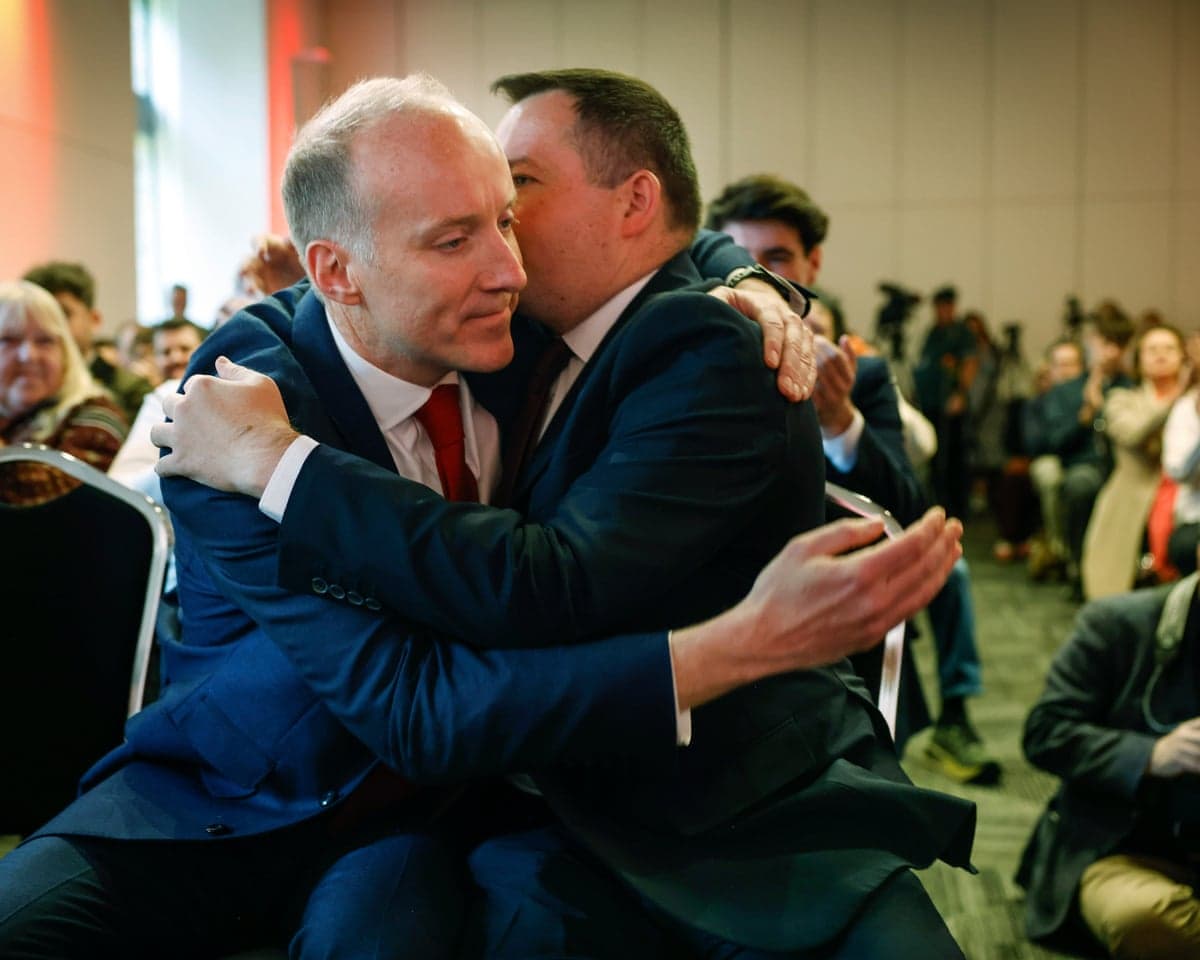
Michael Marra, elected Scottish Labour's new leader on Saturday, has immediately backed the development of the Rosebank and Jackdaw oil and gasfields in the North Sea, calling for a "more rational" approach to energy policy. The North East Scotland MSP won a near two-thirds majority to become the party's 11th leader, replacing Anas Sarwar who departed to serve as a trade minister in Andy Burnham's government.
Marra said he would urge the Prime Minister to approve both fossil fuel projects despite environmental concerns. The applications for these developments were already in the system before the Labour government took office, meaning they fall outside the ban on new drilling licences. According to reporting on the approval process, Energy Secretary Miatta Fahnbulleh is expected to make separate decisions on each field after the public consultation period closed in August.
"I want Rosebank and Jackdaw to be approved,"Marra told reporters immediately after his election victory.
"It's the biggest issue in my region in terms of people's voting intention. We need to have a more rational policy position that delivers for the Scottish economy and Scottish jobs."
In his acceptance speech at the Dynamic Earth science museum in Edinburgh, Marra acknowledged the scale of the challenge facing Scottish Labour after its worst-ever Holyrood performance in May. The party won just 17 seats as the Scottish National Party retained power, leaving Labour with the same number of seats as Reform UK and only two more than the Scottish Greens.
"May hurt so much because we know the SNP didn't deserve a fifth term in power. But the truth is voters didn't think we would be much better,"Marra said.
"Scots know what we are against. They can't tell you what we are for. And that vacuum was filled by the poison, racism and bigotry of Reform. We must be clear in our values. We must lead with our values."
He pledged to reconnect with Scottish voters and rebuild the party's electoral coalition.
"For a decade now, Scotland has gotten weaker. We must reconnect with the country if we are ever to form a government in Holyrood to face these historic challenges."
How did Marra win the leadership contest?
Marra secured 4,266 votes compared to 2,485 for his main rival Joe Fagan, representing a decisive victory in a contest marked by limited policy differentiation between candidates. The election drew 6,751 votes overall, representing 49.43% of Scottish Labour party membership. Both Marra and Fagan faced criticism during the campaign for failing to clearly articulate the circumstances under which Scotland should be permitted a second independence referendum.
Marra has previously stated that the SNP's failure to secure an outright majority in May's election demonstrated that independence is not a priority for voters.
"The people of Scotland do not want a referendum right now. We will continue to make the case for a stronger Scotland in a changing UK. It's imperative to me that we are not in this for the status quo. I'm in this to make sure that we can see a stronger Scotland,"he said.

What is Marra's position on North Sea energy development?
The new leader has made approval of both Rosebank and Jackdaw a priority, framing the issue as central to Scottish economic interests and employment. He indicated he would make this case directly to the Prime Minister in his first call. According to reporting on his position, Marra stated:
"I want Rosebank and Jackdaw to be approved. I do."
Marra has also called for the replacement of the Energy Profits Levy to be brought forward rather than delayed until 2030, signalling a desire to reshape energy taxation policy. This position aligns with his broader argument that Scotland's economic interests require a pragmatic approach to domestic energy production.
The timing of government decisions on these fields remains uncertain. Reports indicate that the Jackdaw decision may be delayed until after the Holborn and St Pancras byelection, with a formal announcement potentially postponed until after the party conference recess. However, some sources have suggested approval could come in mid-September before Parliament breaks for the conference season, though ministers have not confirmed the timing.
What challenges does Marra face in rebuilding Scottish Labour?
The party faces a steep climb to reverse decades of electoral decline. While 37 Labour MPs from Scotland sit in Westminster, the party has lost seats at every Holyrood election since devolution in 1999. The May results represented the nadir of this trajectory, with Labour winning fewer than half the seats it held in the previous parliament.
Academic experts have identified structural problems that Marra must address. Dr Eric Shaw, a research fellow at the University of Stirling who co-authored The Strange Death of Labour in Scotland, highlighted the party's failure to maintain support among working-class voters.
"The party is facing three main issues: the continued salience of independence, the association between Scottish Labour and Labour in Westminster, and the erosion of Labour's historic base in Scotland. The plight of the party is reflected in the fact that Labour did better among the professional middle class than it did in the working class in the most recent election."
Dr Ewan Gibbs, a lecturer in economic and social history at the University of Glasgow, argued that Marra must ask fundamental questions about the party's purpose and constituency.
"We are approaching 20 years of failure with the government in Holyrood if we look at the performance of public services, educational attainment, ongoing income and wealth inequality in Scotland. But Scottish Labour isn't a party that seems equipped to mobilise that opposition and disappointment at the moment."
Marra has acknowledged that the party became overly focused on middle-class voters and has vowed to build a broader electoral coalition centred on the needs of the country. His early emphasis on North Sea energy development appears designed to signal responsiveness to working-class communities dependent on the oil and gas sector, particularly in his own North East Scotland region.
What happens next for the North Sea decisions?
Energy Secretary Miatta Fahnbulleh is expected to announce decisions on Jackdaw and Rosebank separately. Jackdaw approval is anticipated in the coming weeks, though the exact timing remains fluid. Environmental analysis of Rosebank is still being completed, and officials have not yet announced a decision date for that project. The decisions will test whether Marra's backing translates into government action and whether his strategy of prioritising energy sector interests can help rebuild Labour's standing in Scotland.