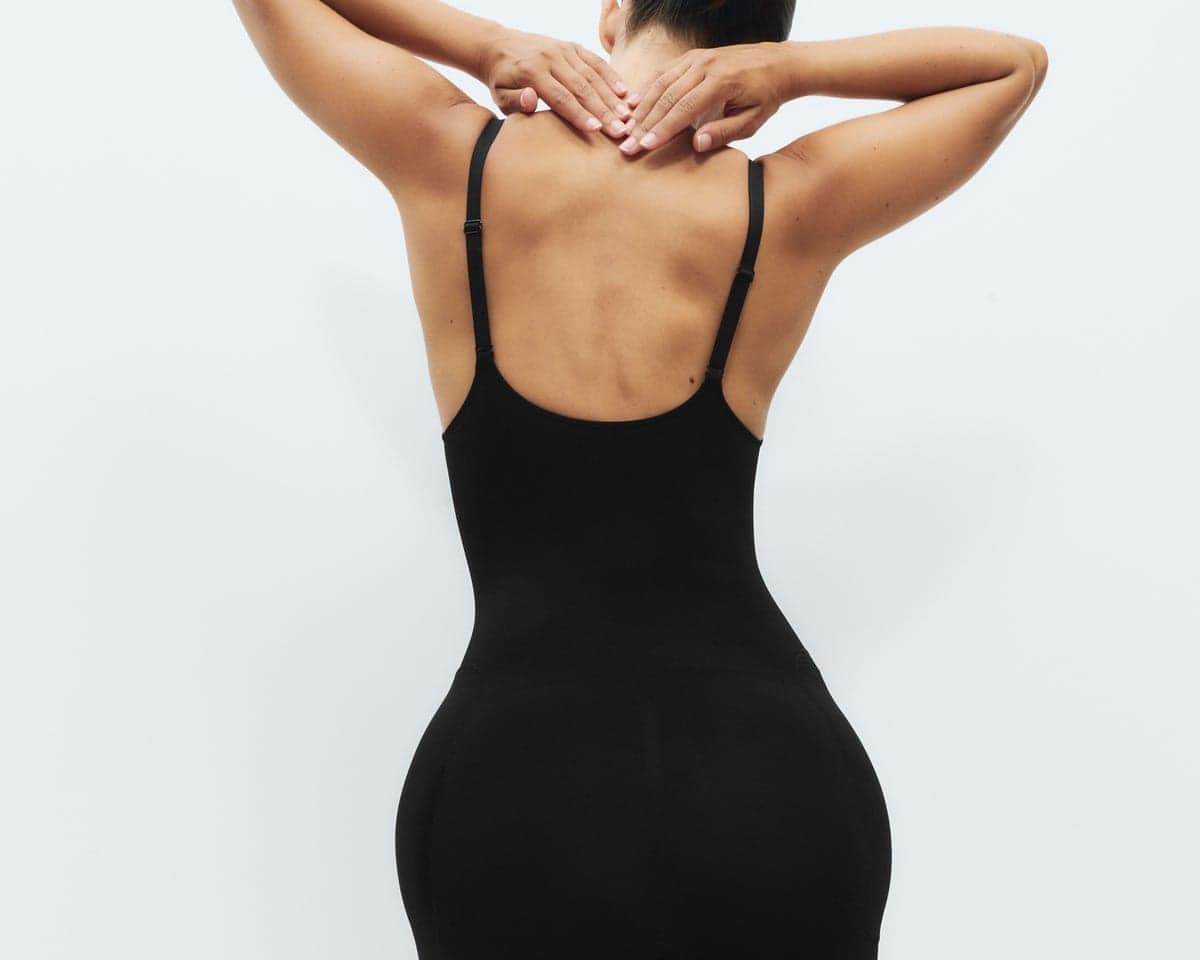
Marks & Spencer has entered the growing market for enhancement-focused shapewear, unveiling a bodysuit priced at £28 that features exaggerated padding designed to create an hourglass figure. The garment represents a shift in shapewear design philosophy: rather than compressing and minimising, it aims to add volume and reshape the body's contours.
The bodysuit incorporates pockets on each side that allow wearers to insert enhancing pads, similar to how bra inserts—colloquially known as chicken fillets—add volume to the chest. This "hip boost" technology enables users to sculpt a curvier silhouette or at least create the visual impression of one.
Charlotte Davies, the director of lingerie at M&S, explained that the concept emerged from customer demand for "solutions that offer subtle enhancement alongside everyday comfort and confidence", with the trend being driven by runway collections and celebrity endorsement. The retailer's previous offerings in this category included shapewear designed "to give the wearer a curvy, contoured look" and stick-on nipples marketed for "a realistic raised profile beneath clothing".
How does this fit into the broader shapewear market?
M&S was already selling related shapewear before this bodysuit launch. According to the retailer's existing product range, its Body Define firm-control line features sheer hip panels and padded construction, showing this launch fits an established product direction.
Kim Kardashian's shapewear brand, Skims, pioneered this enhancement category by launching hip-padded shorts last year. According to product listings at major retailers, Skims's hip-enhancing shorts use soft foam pads embedded at the hip combined with mid-level compression to create a fuller hip shape and hourglass figure. The design includes interior elastic at the waist, a closed gusset, and raw-cut leg openings for a seamless appearance. Some Skims thigh-length versions are marketed as adding up to two inches of volume while also shaping the hips. The brand's hip-enhancing category has expanded beyond direct-to-consumer channels and is now available through major retailers such as Nordstrom, indicating mainstream market penetration.
Many users online claim that strategic padding of this type can help minimise "hip dips"—a phrase describing the natural inward curves between the hipbone and thigh bone.
Why is body enhancement becoming mainstream?
The emergence of enhancing shapewear coincides with a moment when both bodies themselves and cultural ideas about what bodies should look like are under intense scrutiny. From cosmetic procedures to weight-loss medications, bodies have become increasingly malleable.

Recent fashion runways have embraced this concept of bodily reconstruction. At Schiaparelli, creative director Daniel Roseberry employed both visible and invisible padding to inflate hips and cinch waists. Dior and Alaïa drew inspiration from panniers—rigid side hoop undergarments originally worn by women in the 17th and 18th centuries—to create modern dresses with hips so wide that wearers must turn sideways to pass through doorways.
Victoria Pitts-Taylor, a professor at Wesleyan University and author of Surgery Junkies: Wellness and Pathology in Cosmetic Culture, contextualised this trend:
Weight-loss medications have changed many bodies dramatically, but they don't automatically deliver conventional, ideal beauty, which in the current era is quite hard to achieve. To be very thin in some areas of the body and thick in others often requires building and sculpting, which can happen in a dressing room with fabric or an operating room with scalpels.
How is this reflected on the red carpet?
The visual illusion created by padding and structured garments has become a dominant force on the red carpet. Four years after Kim Kardashian wore a sauna suit to lose weight to fit into Marilyn Monroe's dress, she has returned to emphasising her hypercurves, wearing a fibreglass breast plate at a recent high-profile event. Her sisters Kylie and Kendall Jenner opted for moulded corsets featuring fake nipples and amplified hips. Tulip-shaped silhouettes have also been embraced by multiple singers, with more expected at recent major fashion events.
Is this trend historically unprecedented?
Body modification through clothing is far from new. Ali Bodley, a heritage specialist who curated the Shaping The Body exhibition at York Castle Museum, notes that figures from the Tudors through to the Georgians and Victorians all played with their proportions. Long before Kardashian's Skims empire, there were "bum shops"—establishments dedicated to selling padded undergarments.
However, critics argue that the scale and intensity of modern body manipulation represents something different. Susie Orbach, a psychotherapist, psychoanalyst and social critic, describes the current trend as "grotesque", arguing it places women in a "position where they are constantly having to create a body".
What does this mean for body image and self-perception?
Pitts-Taylor observes that celebrity lifestyles in the 20th century were generally understood as aspirational rather than attainable. Today, however,
consumer culture and social media put pressure on people in everyday walks of life to be image-minded. The beauty ideal seems to promise belonging, being valued and successful, in a world in which actual, material equality is increasingly hard to achieve.
Orbach emphasises that no "ideal body shape" exists, as the parameters constantly shift.
There is always some type of body shape being promoted. But as soon as you get there, it is wrong.Rather than "living and being allowed to have safety in our bodies", she argues, "we are now always in a process of transformation."