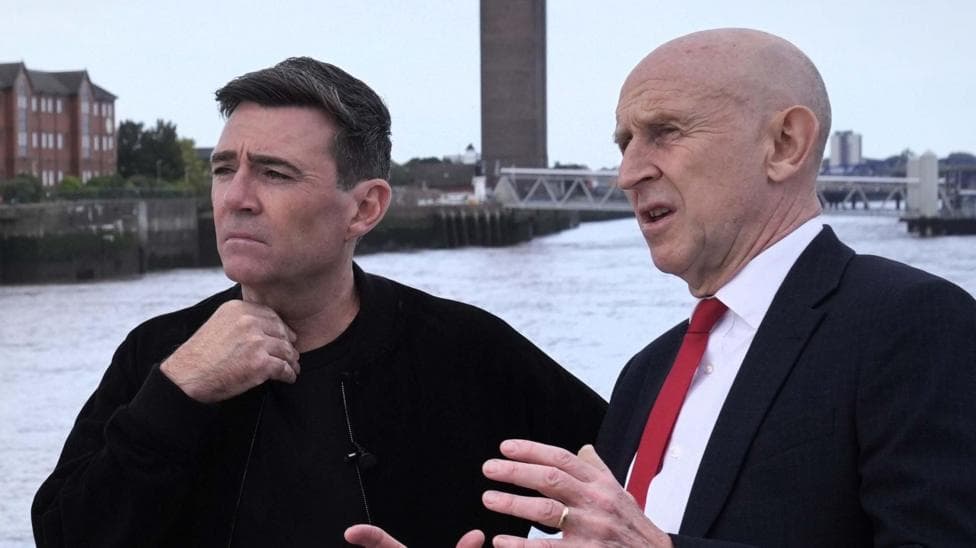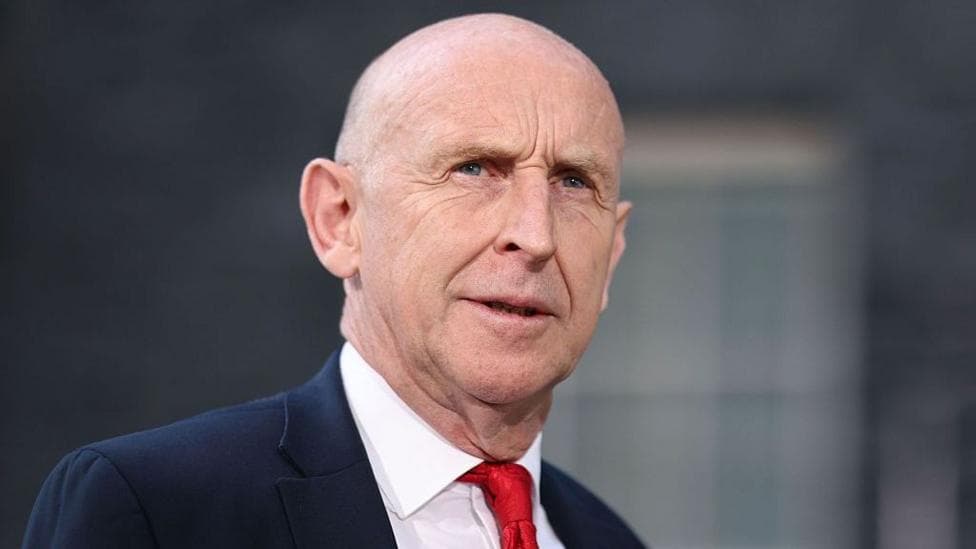
Chancellor John Healey will present Labour's tax and spending plans when he delivers his first Budget on 28 October 2026. The government has confirmed the package will aim to move "power and money out of Westminster, and into every postcode around Britain." Healey has declined to rule out tax increases after acknowledging that government borrowing costs have reached "historic highs", yet the administration's flexibility on taxation remains constrained by pre-election commitments.
Before the 2024 general election, Labour pledged not to raise three major sources of government revenue: income tax, National Insurance and VAT. This manifesto commitment significantly limits the options available to the Chancellor as he attempts to balance competing demands on the public finances.
What exactly is the Budget?
During his statement to MPs in the House of Commons, Healey will outline how the government intends to adjust tax rates and allowances. The Treasury will simultaneously release comprehensive documentation detailing the proposed measures and their estimated financial impact.
The independent Office for Budget Responsibility (OBR), tasked with scrutinising government finances, will publish its own assessment of the UK economy's current state alongside a projection of future economic performance. The Treasury confirmed on 31 July that the OBR was asked to prepare an economic and fiscal forecast for publication on 28 October 2026.
What could the Budget contain?
The period leading up to the Budget typically generates considerable speculation about its contents, which the government is attempting to restrict this year. Healey faces a difficult challenge: delivering additional support to households and meeting defence spending commitments while honouring Labour's manifesto pledges on taxation and adhering to the government's self-imposed fiscal rules.
The previous chancellor, Rachel Reeves, established two principal fiscal rules that the current leadership has committed to maintaining. The first requires the government to stop borrowing to finance day-to-day public spending by the end of this parliament. The second demands that government debt falls as a share of national income by the end of this parliament.
In March, the OBR calculated that the first rule would be satisfied with a gap—or headroom—of £23.6 billion. However, this buffer is expected to have contracted significantly. Analysts at KPMG believe the headroom could have fallen to £12 billion, primarily because government borrowing costs have risen substantially during the year. One possibility that has been discussed is Healey accepting a smaller buffer, which would reduce pressure to increase taxes in the Budget.
In a major pre-Budget speech on 28 September 2026, Healey stated that "fiscal discipline" will be at the core of his first Budget, framing it around debt costs and growth. Bloomberg reported the same day that Healey tied Labour's economic message to fiscal discipline in this major pre-Budget address.

The "Your First Home" scheme, designed to assist first-time buyers in England in purchasing property, is expected to receive further details in the Budget. The scheme permits individuals to buy a new-build home with a deposit of just 2.5%, with the government providing a loan equivalent to 20% of the property's value to support the purchase.
Capital Gains Tax—the levy imposed on profits made when selling an asset that has increased in value—has been the subject of considerable discussion, with potential changes including higher rates or the removal or modification of certain exemptions. The High Value Council Tax Surcharge, commonly known as the Mansion Tax, was announced in last year's Budget and will apply to properties in England valued above £2 million from April 2028. However, reports have suggested the government is considering extending it to properties worth more than £1.5 million.
Banks have reported substantial profits, prompting calls from unions to increase taxation on the financial sector. Banks have resisted, arguing that heavier levies would undermine the government's objective to stimulate growth and maintain the UK's international competitiveness. One of the two big decisions facing Healey is how to fund the Defence Investment Plan, which represents a significant fiscal challenge alongside other spending priorities.
How is the UK economy performing?
During the first three months of 2026, the UK's economy expanded by 0.6%, though growth moderated to 0.4% in the April-to-June quarter. The Office for National Statistics characterised this performance as "relatively robust", with the UK expanding faster than other G7 nations. The most recent data indicated the economy grew by 0.4% in July, a result that substantially exceeded analyst expectations.
Economists attribute the UK economy's resilience to its ability to withstand energy price shocks stemming from geopolitical tensions. The conflict in the Middle East has effectively closed the Strait of Hormuz, a critical shipping route for oil and gas trade, driving a sharp increase in oil prices that has translated into higher energy and fuel costs for households and businesses.
Forecasters anticipate that UK growth will decelerate in coming months as elevated energy costs continue to burden both consumers and enterprises. The rate of inflation remains elevated relative to the Bank of England's target. Inflation reached 3.1% in the year to August, the highest level in five months and above the central bank's 2% objective, driven primarily by increases in petrol and diesel prices.
The Bank of England maintained interest rates at 3.75% for the sixth consecutive occasion in September, though it signalled that rates were likely to increase if high energy prices persist, creating additional uncertainty for households and businesses planning ahead.
When does the Budget take place and what follows?
The Budget speech typically commences at approximately 12:30 UK time, following Prime Minister's Questions, and continues for roughly an hour. The statement will be broadcast live on the BBC's streaming service and news website.
Kemi Badenoch, the Leader of the Opposition and Conservative MP, will deliver a response to the speech in the House of Commons. MPs will then debate the proposed measures over four days before voting on them. Should MPs approve the measures, tax changes can take effect immediately. However, the government must pass a finance bill through parliament to make them permanent law.