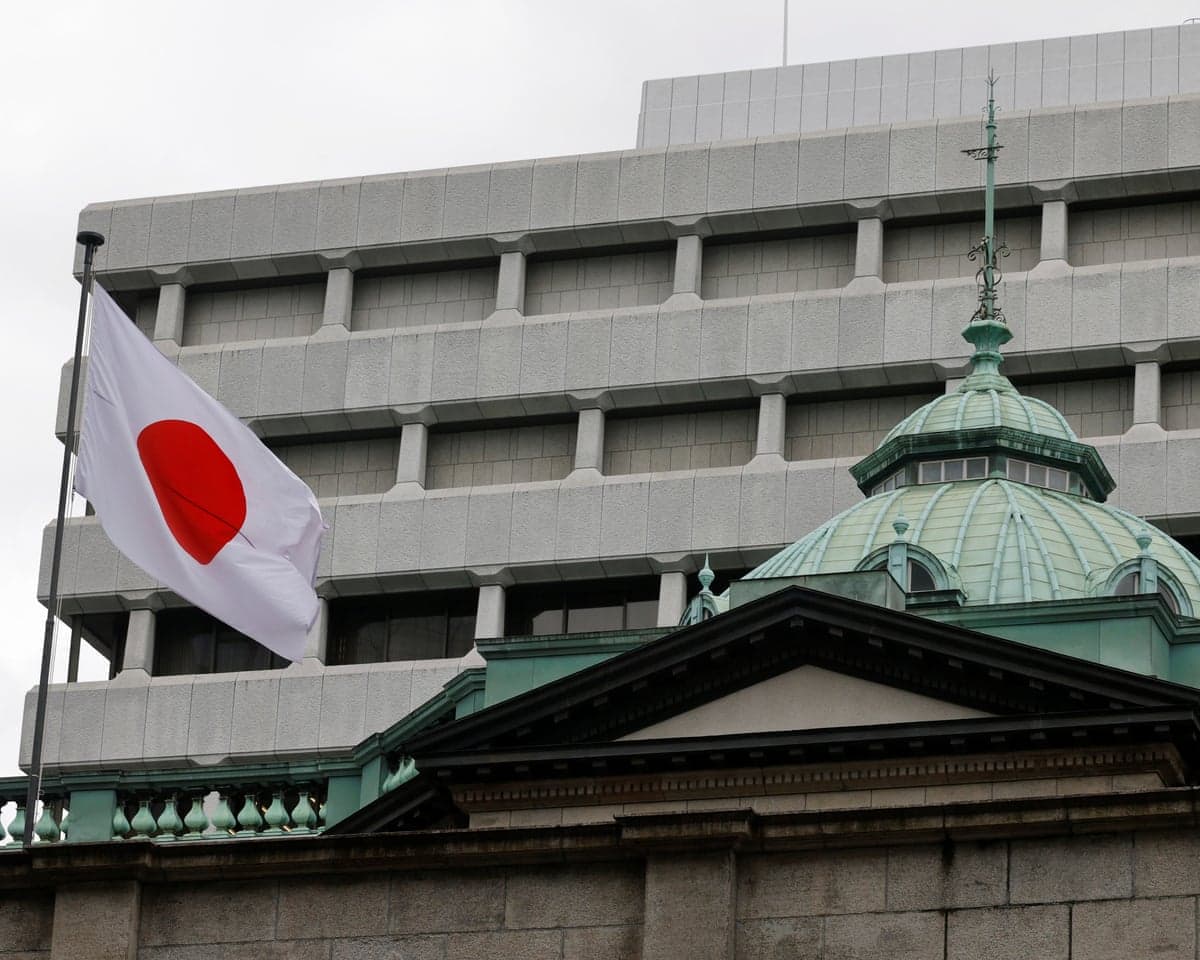
The Bank of Japan lifted its benchmark interest rate to 1.25% on 17 September, marking the highest level since 1995 and joining a coordinated global push by major central banks to combat persistent inflation. The decision came despite two dissenting votes from board members, signalling internal debate over the pace of monetary tightening.
The quarter-point increase represents a continuation of the BoJ's rate-hiking cycle that began in 2024, when policymakers first lifted the policy rate out of negative territory. The move places Japan alongside the US Federal Reserve and the European Central Bank, both of which have tightened monetary policy this month as part of the worldwide effort to control inflation. By contrast, the Bank of England voted on 17 September to hold UK interest rates steady at 3.75%, maintaining its cautious stance.
The BoJ has faced mounting pressure to raise borrowing costs as the yen weakened significantly against the dollar throughout the year, prompting currency intervention by policymakers to stabilise the exchange rate. According to , Tokyo core inflation rose to 1.8% in August, while the index excluding fresh food and fuel climbed to 2.0%, both strengthening the case for a rate increase. Additionally, Bloomberg reported that Japan's corporate goods price index rose 7.6% year-on-year in August, indicating that price pressures remained elevated across the economy.
Why did the market react to the dissenting votes?
Although the rate increase had been widely anticipated, the presence of two high-profile board members voting against the hike generated significant market reaction. Jim Reid, strategist at Deutsche Bank, noted that despite the BoJ's reiteration that it would continue raising rates if economic and inflation conditions evolved as projected, traders focused on the dissent as a signal of internal uncertainty. The yen weakened by 0.72% to 157.10 following the announcement, having traded around 153.40 at the start of the week, while the Japanese government bond curve steepened, with two-year yields falling 2.2 basis points and 30-year yields rising 3.2 basis points.
What did Governor Ueda say about future rate moves?
Bank of Japan Governor Kazuo Ueda addressed the pace of future tightening during his press conference on 17 September, emphasising that the central bank would not follow a predetermined schedule for rate increases.
That depends on how price conditions develop. There could be various possibilities. We shouldn't rule anything out.he said when asked about the possibility of 50-basis-point hikes or consecutive rate increases.
Ueda stressed the importance of careful data analysis while rejecting the notion that the BoJ would move slowly.
We're at a phase where we need to look at various data carefully. But that doesn't mean we can move slowly. We will analyse data carefully and take timely action as needed.On the timing of future hikes, he stated:
As for the pace of future rate hikes, we don't have any pre-set idea in mind such as once every three months. We will determine at each policy meeting how best to ensure underlying inflation stabilises at 2%.
The governor also flagged risks from energy costs, noting that
If the renewed rise in energy costs persists, that could add further pressure to wholesale inflation and then consumer inflation. That's something we need to look out for.He acknowledged the delicate balance the BoJ must strike between controlling inflation and avoiding financial instability.
Financial conditions are becoming less accommodative as we raise rates ... It's important to avoid financial conditions from tightening too much, or to cause a big adjustment in asset prices, by raising rates too sharply.
Ueda highlighted a fundamental shift in the BoJ's policy stance, explaining that
Up till now, our short-term policy focus was to push up underlying inflation from levels below 2%. Now, underlying inflation is approaching 2%. If risks of underlying inflation overshooting 2% materialise, that could have a negative impact on Japan's economy. It's important to stabilise underlying inflation at 2%. Our policy phase has changed.When pressed on the neutral interest rate and terminal rate, he acknowledged uncertainty:
It is hard to pinpoint where the neutral rate is, and therefore the terminal rate. It might be the case that as we adjust policy as appropriate, we will know where those rates sit ex-ante.

What do analysts expect for future rate increases?
Market expectations for the BoJ's tightening path have shifted upward. According to , analysts now expect the BoJ to lift rates to 1.5% by the end of March 2027 and to 1.75% in the second quarter of 2027, representing a faster tightening cycle than previously anticipated. This revised outlook reflects growing confidence that inflation pressures will persist and that the central bank will need to act more decisively than earlier forecasts suggested.
How are oil prices affecting the inflation picture?
Oil prices retreated on 17 September, falling 2% as markets responded to reports that Saudi Arabian authorities hoped to bypass a damaged section of the East-West Pipeline and restore roughly half its capacity within days. Brent crude dropped to $102.55 a barrel, down from over $100 per barrel following an attack on the pipeline the previous week that had triggered concerns about significant supply disruptions. The decline in energy costs offered some relief to households, businesses and central bankers navigating the inflation challenge.
What happened to retail sales in Great Britain?
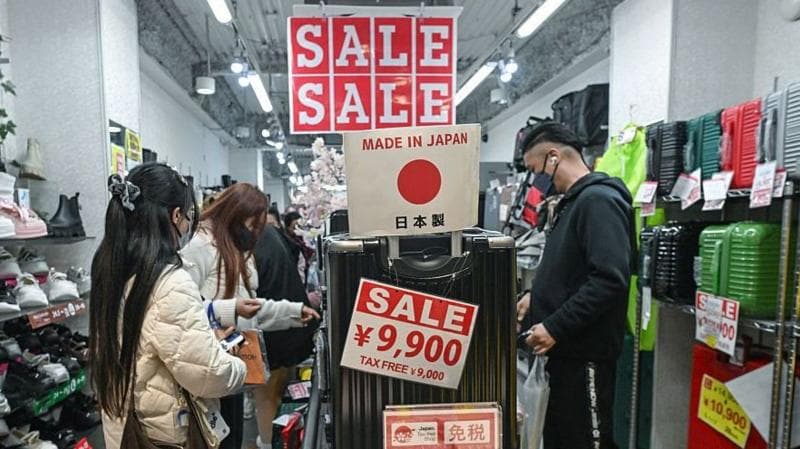
Retail sales across Great Britain rose over the summer months despite the ongoing inflationary squeeze on household finances. The Office for National Statistics reported on 17 September that retail sales volumes increased by 0.9% in the three-month period to August, driven by a combination of factors including the summer heatwave, a surge in online shopping, and the men's football World Cup.
Non-store retailers experienced particularly strong performance, with online sales volumes rising following an exceptionally robust June period when consumers opted to order goods from home rather than venture onto high streets during the heatwave. Retailers selling alcohol and beverages performed well across all three months to August, attributing their success to promotional activity, hot weather conditions, and World Cup-related spending.
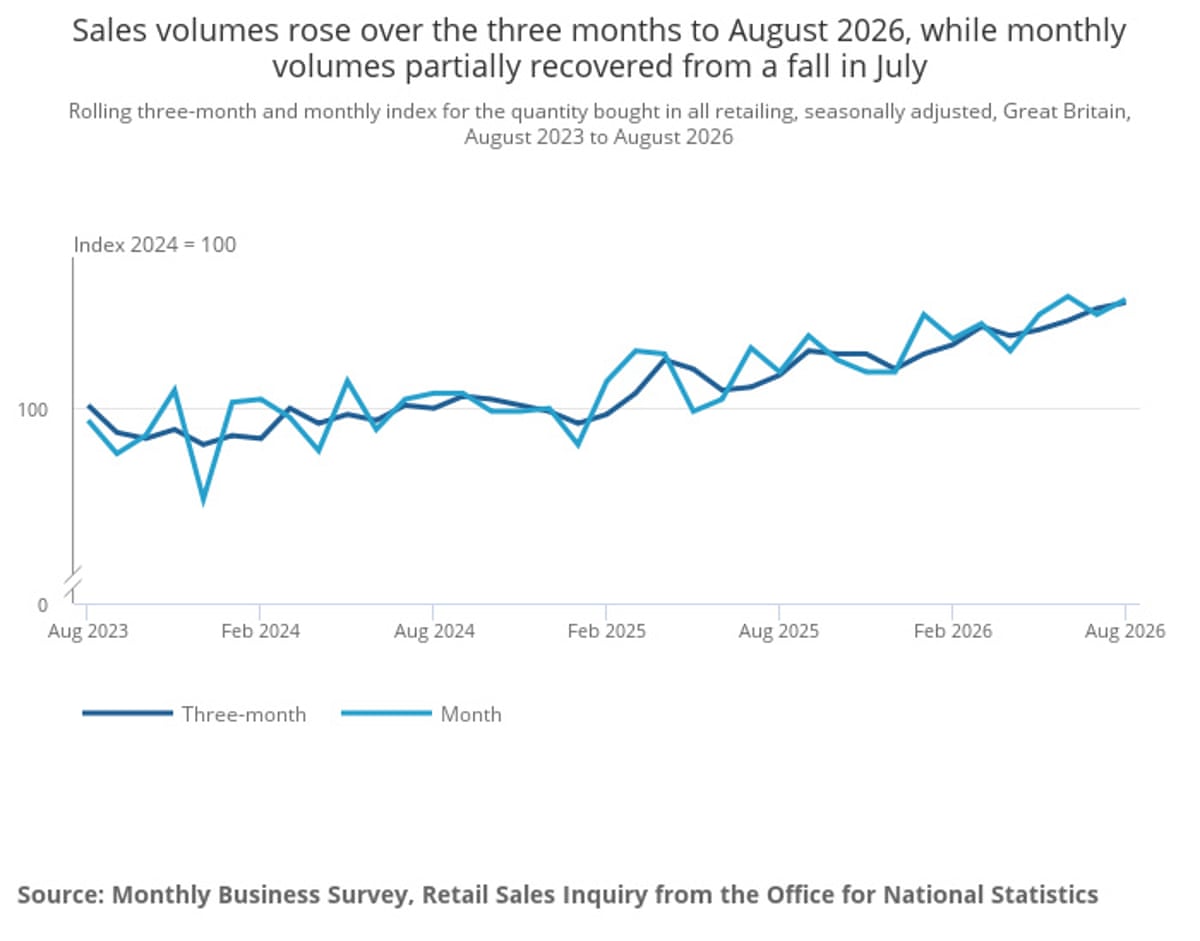
In August alone, retail sales volumes rose by 0.5%, reversing a 0.5% decline recorded in July. This August increase proved unexpected, as economists had forecast a 0.2% fall, making it the latest piece of economic data to exceed expectations. The Office for National Statistics also reported that sales at British department stores picked up in August following stock availability issues that had constrained sales in July.
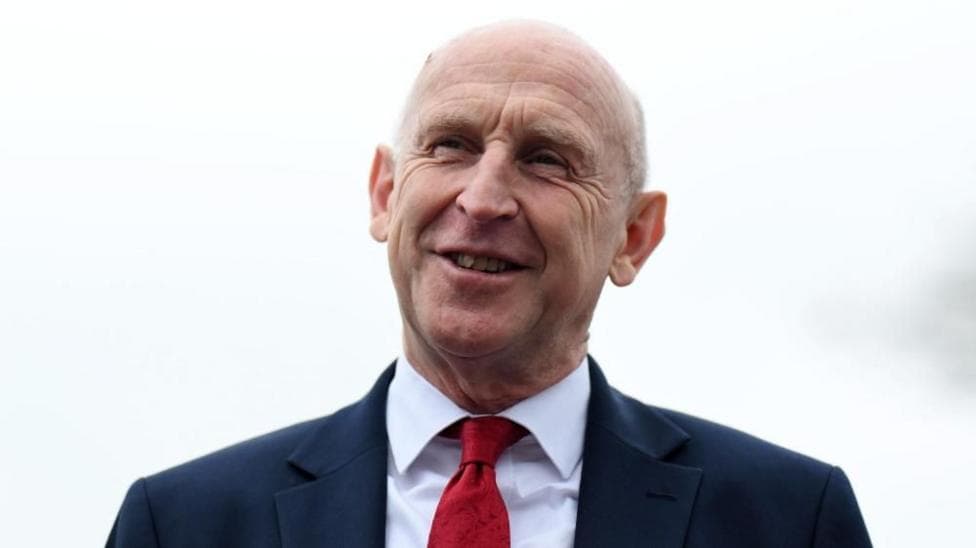
Jon Gough, senior statistician at the Office for National Statistics, commented on the results:
Retail sales increased in the latest three months, with a particularly strong June for online outlets helping to boost their sales across the period. Food store sales also rose, with supermarkets doing well in July and August. Meanwhile, retailers selling alcohol and beverages performed well across all three months, which they attributed to promotions, the hot weather and the World Cup.
How have fuel sales been affected by energy prices?
Fuel sales declined significantly during the period, dropping 1.7% in August and 2.5% across the three-month period as motorists reduced non-essential journeys in response to major increases in petrol and diesel prices since the start of the Iran conflict in February. This pattern reversed the surge in sales volumes recorded in March, when motorists had stocked up on fuel immediately after the Middle East conflict erupted and traders anticipated substantial supply disruptions.
What happens next for monetary policy?
The BoJ's next scheduled policy-related release will be the Summary of Opinions on 1 October, following the completion of its 17-18 September monetary policy meeting. Market participants will closely monitor Governor Ueda's remarks and any forward guidance for clues about the pace and magnitude of future rate increases, particularly whether the central bank signals an acceleration in tightening if inflation continues to overshoot its 2% target.
Key Facts
- The Bank of Japan raised its benchmark rate to 1.25% on 17 September, the highest level since 1995, with two board members dissenting from the decision
- Tokyo core inflation reached 1.8% in August, while the index excluding fresh food and fuel climbed to 2.0%, supporting the case for monetary tightening
- Analysts expect the BoJ to raise rates to 1.5% by end-March 2027 and 1.75% in Q2 2027, representing a faster tightening cycle than previously forecast
- Retail sales in Great Britain rose 0.9% in the three months to August, driven by online shopping, hot weather and World Cup spending
- Brent crude fell to $102.55 a barrel on hopes that Saudi Arabia could restore half the capacity of its damaged East-West Pipeline within days