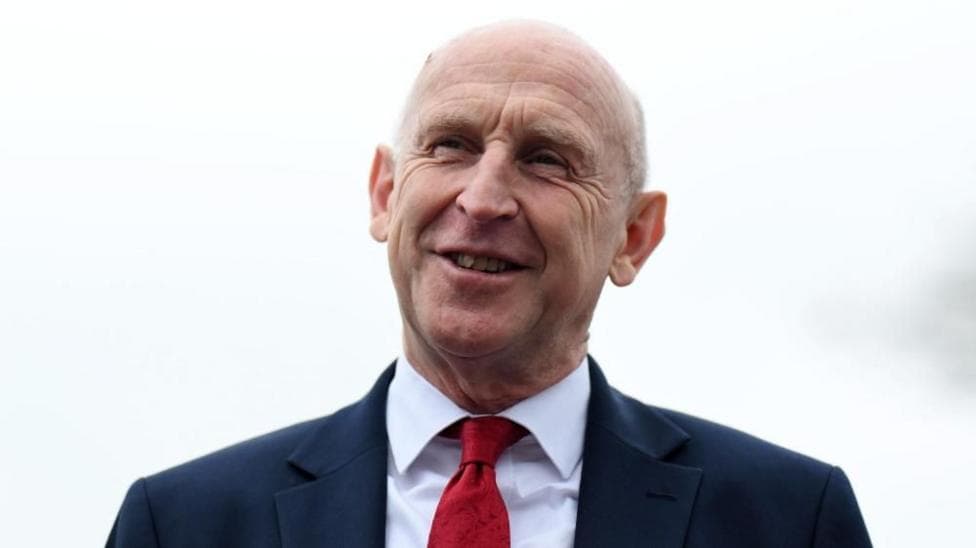
Chancellor John Healey will meet EU finance ministers in Dublin on Friday to urge the bloc to design its industrial protection programme in ways that strengthen UK-EU ties rather than create fresh barriers to British firms.
The chancellor intends to press for deeper partnerships across technology, defence, and manufacturing sectors. Treasury sources indicated that Healey will specifically warn against locking British companies out of the EU's "Made in Europe" initiative, which is formally known as the Industrial Accelerator Act.
Officials said Healey plans to emphasise to European finance ministers the importance of drawing lessons from last year's failed negotiations over UK participation in an EU defence loans scheme, a dispute that centred on the financial terms Britain would need to accept.
What is the "Made in Europe" scheme?
The Industrial Accelerator Act, currently under consideration by the EU, aims to shield European manufacturing from unfair competition originating outside the bloc. The European Commission formally proposed the measure on 4 March 2026 to strengthen the EU industrial base by incorporating "Made in EU" and low-carbon requirements into public support and procurement decisions.
The scheme targets energy-intensive industries, net-zero technologies, and the automotive sector. The European Commission's stated objective is to raise manufacturing's share of EU GDP from 14.3% in 2024 to 20% by 2035. The act also includes Union-origin requirements for battery energy storage systems, solar photovoltaic technologies, heat pumps, wind technologies, electrolysers, and nuclear fission energy technologies.
Why does the UK government have concerns?
Government officials worry that the scheme could exclude British firms from European supply chains. Former UK trade negotiator Sir Crawford Falconer explained that the EU's initial proposal would have permitted free trade partners such as the UK to participate, but a revised proposal recommended restricting membership to EU member states alone.
Sir Crawford said that development caused "everyone to hit the panic button," warning: "If we weren't able to complete on equal terms, it would put the viability of some of our production facilities at risk."

Earlier this year, Nissan highlighted the interconnected nature of manufacturing across the EU and UK, stating: "EU and UK manufacturing are deeply intertwined, and restricting eligibility for public support to EU only assembly would damage competitiveness, disrupt integrated supply chains, and undermine Europe's EV transition."
What is Healey's position?
The next chapter of Britain's growth story will be written in more places. To me, closer ties with the EU means British businesses – wherever they are based across the UK – get better access to both the supply chains and the customers they need to grow.
Healey said this while emphasising that Treasury officials want to reduce the economic impact of Brexit and build closer EU relationships, though not at any cost to British interests. A Treasury source noted that "the chancellor wants to make sure nothing holds them back" regarding tech firms, defence companies, and manufacturing operations.
Where does the Industrial Accelerator Act stand in the legislative process?
The European Parliament's committees are scheduled to hold a joint public hearing on the Industrial Accelerator Act on 2 September 2026, with the draft report expected on 28 September 2026 and a committee vote planned for 1 December 2026. The Commission's proposal indicates the regulation is due to enter into force in 2027 and remain applicable beyond 2030, with a review every five years.
Recent parliamentary activity shows evolving positions on the scheme's scope. Parliament rapporteurs want stricter foreign-investment conditions, including a lower €50 million threshold for investments in sectors dominated by China. Renew Europe's draft report would raise the threshold for "Made in Europe" and low-carbon products in strategic sectors to 50% by 2036.
What is the broader context for Healey's Dublin visit?
Healey's meeting follows a broader effort to reset UK-EU relations. A major reset summit with the EU was delayed after Sir Keir Starmer's resignation as prime minister, though Treasury sources now expect that summit to occur in November.
The Dublin meeting also comes as Healey explores additional avenues for defence funding. Earlier this week, it emerged that he is in discussions about joining the Defence, Security and Resilience Bank, a global investment vehicle aimed at raising additional money for defence spending. Canada has been leading efforts to establish the bank, which supporters argue would enable governments to borrow at lower costs to increase military spending. This represents a shift from his predecessor Rachel Reeves, who rejected the idea.
Securing funding for the UK's expanding defence commitments represents one of Healey's most significant challenges as he prepares for the Budget in October and next year's spending review.
Key Facts
- The Industrial Accelerator Act targets energy-intensive industries, net-zero technologies, and the automotive sector, with the EU aiming to raise manufacturing's share of GDP from 14.3% to 20% by 2035
- A revised EU proposal would restrict scheme membership to EU member states, raising concerns that British firms could be excluded from European supply chains
- European Parliament committees will hold a public hearing on the scheme on 2 September 2026, with a committee vote scheduled for 1 December 2026
- Healey is simultaneously exploring UK participation in a Canada-led Defence, Security and Resilience Bank to fund growing military commitments
- A major UK-EU reset summit is expected in November following delays caused by changes in UK political leadership