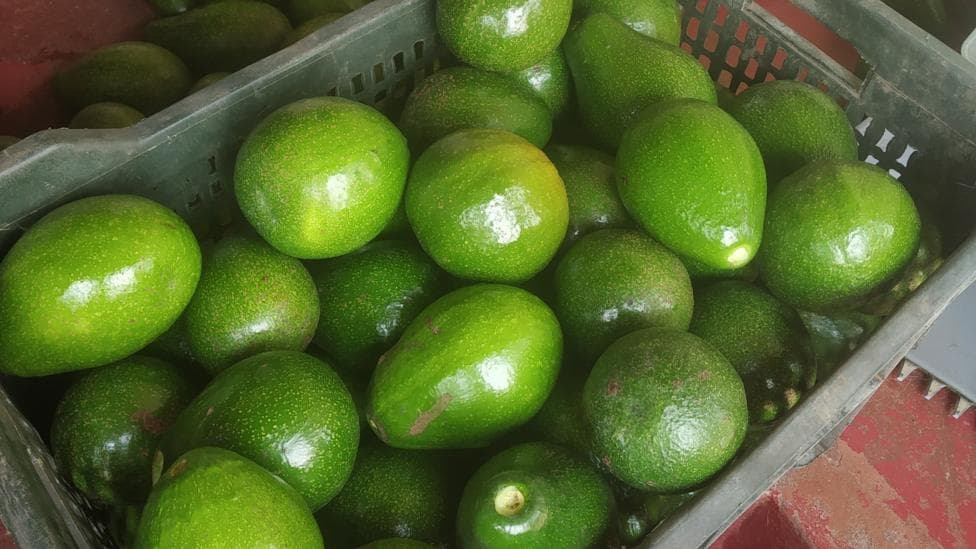
India's avocado market has undergone a dramatic transformation over the past 15 years, shifting from a crop so unwanted that fallen fruit fed stray dogs to a high-value agricultural commodity driving farmer investment across multiple states. The surge reflects changing consumer preferences, celebrity endorsements, and a persistent gap between domestic supply and rising demand that continues to fuel imports.
Sunil Bopaiah, group manager at Cottanad Plantations in Wayanad, Kerala, witnessed this shift firsthand during his 26 years in India's plantation sector. He recalls a time when avocados were viewed as little more than shade trees for coffee crops, with ripe fruit dropping to the ground and earning the unflattering local name "dog fruit." The turning point arrived around 2011 when Bollywood actor Shilpa Shetty publicly discussed using avocado for skincare.
Overnight, prices doubled and then kept rising,Bopaiah recalls.
Cottanad responded by dedicating 40 acres to avocado cultivation, harvesting between 10 and 15 tonnes last year with projections to reach 40 to 50 tonnes within three to four years. The operation underwent significant modernisation after learning from South African experts, adopting raised beds, wider spacing, and disease-resistant planting methods tailored to avocado's vulnerability to root infections.
How large is the supply-demand gap?
India faces a substantial mismatch between what consumers want and what farmers produce. According to Manilal Palliyath, who promotes India's avocado industry, the country imports roughly 15,000 tonnes annually while domestic production stands at only 8,000–9,000 tonnes. However, recent data shows the situation has intensified: according to government figures reported by Mint, India's avocado imports surged from 5,040 tonnes in the 2023–24 financial year to 11,800 tonnes in 2024–25, while domestic output reached approximately 9,000 tonnes in 2026. The import value has climbed steeply, rising from $13.5 million in FY24 to $42.27 million by February 2026.
Palliyath sees this gap as an opportunity for farmers, particularly those struggling with traditional crops.
Coffee and pepper have suffered because of changing climatic conditions, making diversification essential for farmers.According to EastFruit analysis from March 2026, domestic consumption could rise from about 10,000 tonnes in 2024 to roughly 40,000 tonnes by 2026–2027, underscoring why growers are rapidly expanding plantations.
Why do restaurants still prefer imported avocados?
Despite growing local production, India's hospitality sector continues to rely heavily on imported fruit. Hussain Shahzad, executive chef at Hunger Inc. Hospitality, which operates four restaurants in Mumbai including Veronica's and The Bombay Canteen, explains the challenge.
Indian-grown avocados are improving and there are some great farmers working with local varieties, but the quality and availability can vary significantly depending on the season and region,he says.
The consistency issue is critical for commercial kitchens.
We have explored different varieties of avocados available in India, but the imported ones currently offer the consistency we need in terms of flavour, texture, size, and ripening,Shahzad notes. Yet he remains committed to local sourcing where possible.
We are always interested in exploring better local produce as it evolves. Supporting Indian agriculture and working with indigenous ingredients is central to how we approach food.

What role are international varieties playing?
Many Indian entrepreneurs are modernising the sector by introducing proven international cultivars. Harshit Godha founded Indo-Israel Avocado Nursery in Bhopal, Madhya Pradesh, in 2021 after spending a month learning about Israel's advanced growing techniques. Over five years, his nursery has supplied around 18,000 avocado plants to farmers nationwide, all of them international varieties such as Hass and Pinkerton.
Godha emphasises why Israeli expertise matters.
Israel grows avocados on approximately 13,000 hectares - a small country with almost no rainfall for eight months of the year. This is precisely why Israeli avocado technology is the most advanced in the world,he says. However, establishing a commercial orchard demands far more than simply planting trees. The process requires grafting rootstock chosen for local conditions onto upper growth that determines fruit type, followed by meticulous management.
Tree height presents a practical challenge.
When you put in a professional orchard, you have to know the techniques of pruning. A tree can grow up to 25 feet within six to seven years, and harvesting at 25 feet is next to impossible,Godha explains.
Aggressive pruning is needed to keep the harvest at a height that's convenient for workers.

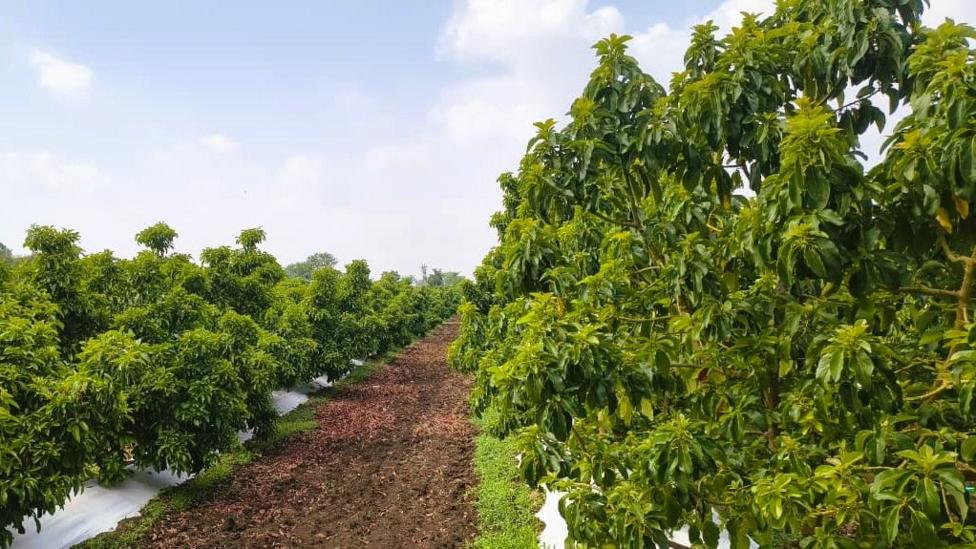
Pollination adds another layer of complexity. Avocado trees cannot self-pollinate; two different varieties must be planted adjacent to each other, with one releasing pollen as a male while the other opens as a female at precisely the same moment.
If a farmer gets this planting ratio wrong, the trees will fail to produce fruit, no matter how advanced the irrigation tech is. This single botanical detail is what separates a highly profitable, high-yielding orchard from one that looks great on paper but fails in reality,Godha warns.
Recent market developments show the Maluma variety gaining traction among growers. According to a June 2026 market report, Maluma is prized for early bearing and is attracting cultivators despite high input risks. Wholesale prices for locally grown avocados range around EUR 2.20–2.40 per kilogramme, with retail fruit at approximately EUR 0.55–0.65 per piece, while farmgate prices hover between ₹200–₹300 per kilogramme according to Business Today's June 2026 reporting.
How is India developing its own varieties?
Alongside international cultivars, India is strengthening its domestic breeding programmes. Dr Ganeshan Karunakaran, principal scientist at the ICAR-Indian Institute of Horticultural Research in Bengaluru, has spent 25 years developing locally adapted varieties. The institute has released two new cultivars based on traditional Indian trees, including the Arka Supreme.
The challenge with India's existing avocado stock is profound.
The biggest issue with the avocado trees in India are that every backyard tree is genetically different,Karunakaran explains.
That is why Indian markets are flooded with mixed fruit of varying quality. Standard varieties are essential if we want a reliable commercial market.
His breeding work aims to provide farmers with uniform, high-yielding, quality planting material rather than thousands of unnamed trees. Karunakaran is equally concerned about unregulated nurseries distributing diseased or unidentified plants.
Farmers may unknowingly buy diseased plants. The trees may look healthy initially, but after five or seven years they can suddenly die, causing huge financial losses,he warns.
What are farmers experiencing on the ground?
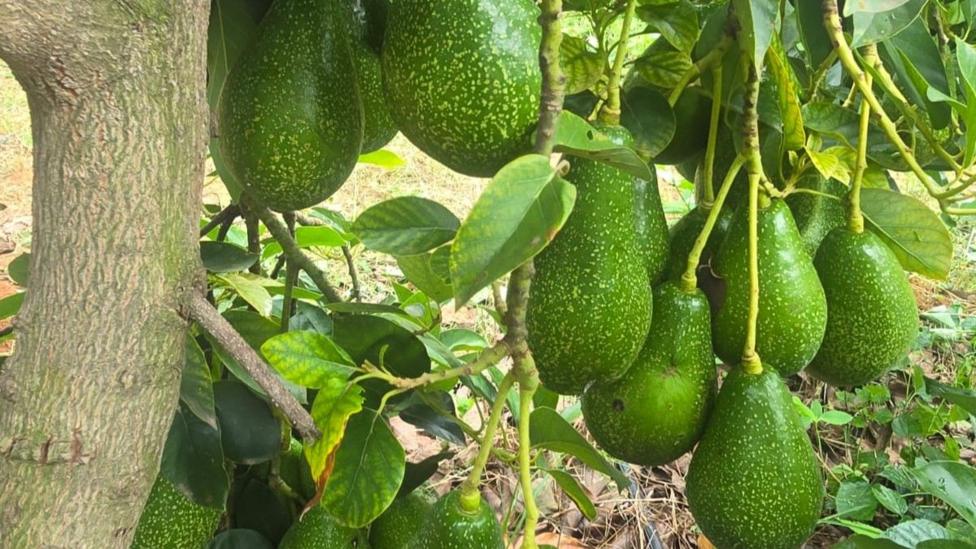
Despite the technical and market challenges, individual farmers are embracing avocado cultivation. Shiju Sebastian, based in Wayanad, Kerala, was an early adopter, dedicating two acres to the crop eight years ago. This year he harvested 3,500 kilogrammes, all sold in Bengaluru.
Farmers are willing to grow avocados, but they need proper guidance and assured markets,he says.
His enthusiasm for the crop is evident.
Avocado will never fail you. It's such a loving and lovable fruit. I have fallen in love with this fruit now. I'm planning to plant another three acres — only avocado.
Avocado cultivation has expanded significantly across India's agricultural landscape. According to Mint reporting, the crop now covers approximately 10,000 hectares across Karnataka, Kerala, Tamil Nadu, Sikkim, and parts of Maharashtra. The expansion reflects both the crop's profitability and farmers' search for alternatives to climate-stressed traditional crops.
What political and market signals are emerging?
Government attention to the sector has intensified. In August 2026, Prime Minister Narendra Modi publicly highlighted avocado farming benefits for South Indian farmers, signalling official recognition of the crop's importance to regional agriculture. This political backing may accelerate investment and policy support for the sector.
The import trajectory suggests continued reliance on foreign supply in the near term. According to a 2025 report updated in 2026, India's avocado imports were expected to cross 20,000 tonnes in FY26. Market analysts note that local supply remains tight and younger Maluma orchards are not yet producing at commercial scale, keeping prices firm in the short term.
Key Facts
- India's avocado imports jumped from 5,040 tonnes in FY24 to 11,800 tonnes in FY25, while domestic production reached approximately 9,000 tonnes in 2026
- The crop's turning point came around 2011 when a Bollywood celebrity publicly endorsed avocado for skincare, causing prices to double overnight
- Avocado cultivation now spans roughly 10,000 hectares across five Indian states, with farmers attracted by profitability and crop diversification opportunities
- Commercial orchards require grafted trees, precise pollination management between two varieties, and aggressive pruning to keep harvests at worker-accessible heights
- India's avocado market is expected to grow from approximately 10,000 tonnes of consumption in 2024 to roughly 40,000 tonnes by 2026–2027