Precious metals and cryptocurrencies are rallying sharply as investors reassess risks tied to US inflation expectations and turbulence in the bond market. Spot gold reached its highest level since mid-May, climbing to almost $4,700 an ounce before settling at $4,649, while Bitcoin broke through $80,000 for the first time in months.
The moves reflect growing concern about the trajectory of US price pressures and uncertainty surrounding longer-dated government debt. According to , the rally was supported by a weaker dollar and technical buying, with traders watching this week's US inflation data and a speech by Federal Reserve Chair Kevin Warsh. Early on 25 August, spot gold traded at $4,668.19 an ounce, while US gold futures reached $4,724.50.
Bond market turbulence intensified last week when the US Treasury Department announced it would double its debt purchases of longer-dated bonds in an effort to stabilise yields after a sharp rise. This announcement has kept investors focused on upcoming economic data and central bank communications for signals about the path of interest rates.
Bitcoin climbed to $80,453 this morning, up more than a quarter over the past week, though it remains substantially below the all-time peak of $126,000 reached last year. Ether also advanced, trading at $2,503.
What are the key catalysts ahead?
Market attention is concentrated on this week's US inflation release and the Jackson Hole symposium, which identified as the next major catalysts for gold prices and interest rate expectations. Federal Reserve Chair Kevin Warsh's scheduled speech on Friday is expected to provide insight into the central bank's thinking on rate policy and bond market conditions.
How are Middle East tensions affecting energy markets?
Shipping activity through the Strait of Hormuz has declined sharply, with just two commodity vessels transiting the waterway on Monday—the lowest daily count since early May. According to shipping data cited by , this figure fell well below the 10-day average of 14 transits, though the actual number may be higher since some vessels disable their navigation transponders during passage.
Iran announced on Monday that it had blacklisted 45 tankers for violating its passage rules and threatened enforcement actions including fines against vessels engaged in ship-to-ship transfers with them.

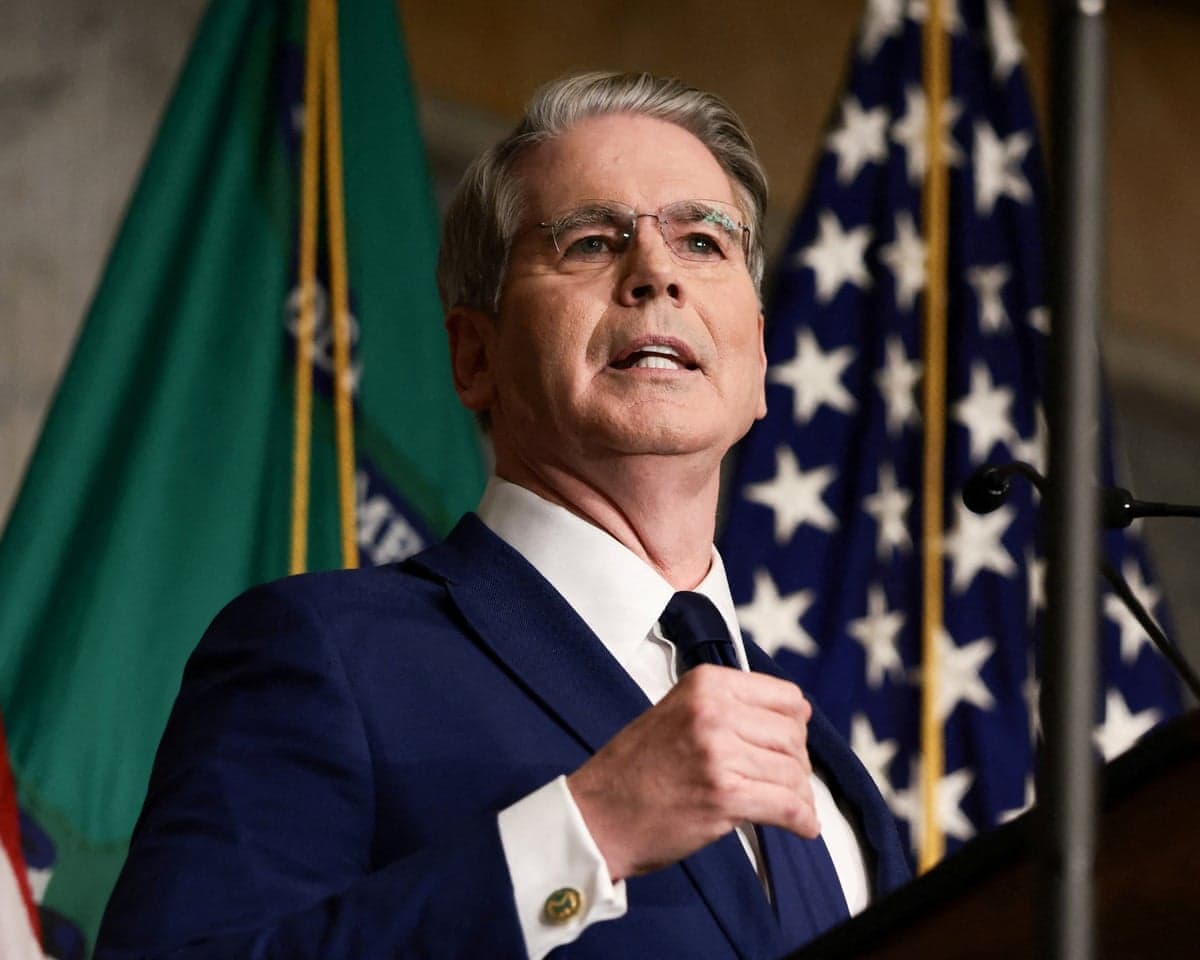
The US Treasury Secretary, Scott Bessent, launched what he termed Operation Economic Outcast on Monday, describing it as an unprecedented campaign and drawing a comparison to the D-Day Normandy landings as a pivotal moment in the Second World War. When questioned about why immediate sanctions were not being imposed, Bessent stated:
Well, we are giving everyone the opportunity to remedy bad behaviour. Why would I want to blow up the global financial system? We believe that it is important to level set and give people a cure period, but they should know that that will move very quickly and that we are serious.
The extent to which the US administration is willing to confront China, Iran's largest trading partner, remains unclear. Tehran has warned against any country participating in the US-led isolation campaign.
Despite the geopolitical tensions and threats of severe sanctions, oil and equity markets have largely absorbed the risks. Brent crude, the global benchmark, fell further this morning to $91.41 a barrel, down 76 cents or 0.8%. Previous spikes in oil prices have accompanied escalations in US-Iran tensions, though current market behaviour suggests investors are pricing in diplomatic resolution or limited economic disruption.
What is happening in Asian and European markets?
Asian stock indices posted mixed results. Japan's Nikkei rose 0.5%, South Korea's Kospi advanced 0.7%, while Hong Kong's Hang Seng dipped 0.15%.
Germany, Europe's largest economy, expanded 0.3% in the second quarter compared with the previous three months, driven primarily by export growth. This outcome exceeded a preliminary estimate of 0.2%. Ruth Brand, president of the Federal Statistical Office, remarked:
The German economy is maintaining the growth momentum seen at the start of the year. As in the first quarter, growth was primarily driven by the positive development of exports.
Total exports of goods and services increased 2%, and wholesale and retail trade performed significantly better than anticipated, though investment declined 0.2%. Long-term borrowing costs across major developed economies have climbed to multi-decade highs this week, reflecting broader concerns about inflation and geopolitical risks.
What economic data is due this week?
Several important releases are scheduled:
- 9am BST: Germany Ifo business confidence for August
- 2pm BST: US S&P/Case-Shiller 20-City Home Price Index
- 3pm BST: US Conference Board consumer confidence for August
- 3pm BST: US New home sales for July
Key Facts
- Spot gold reached $4,668.19 an ounce on 25 August, the highest level since mid-May, supported by dollar weakness and technical buying momentum
- Bitcoin surged past $80,000 for the first time since May, rising more than 25% in a week, though it remains 37% below its all-time high
- US Treasury doubled its purchases of longer-dated bonds to stabilise the bond market after yields spiked sharply
- Shipping through the Strait of Hormuz fell to just two vessels on Monday, the lowest daily count since early May, amid escalating US-Iran tensions
- German economic growth of 0.3% in Q2 exceeded forecasts, driven by export strength despite investment weakness