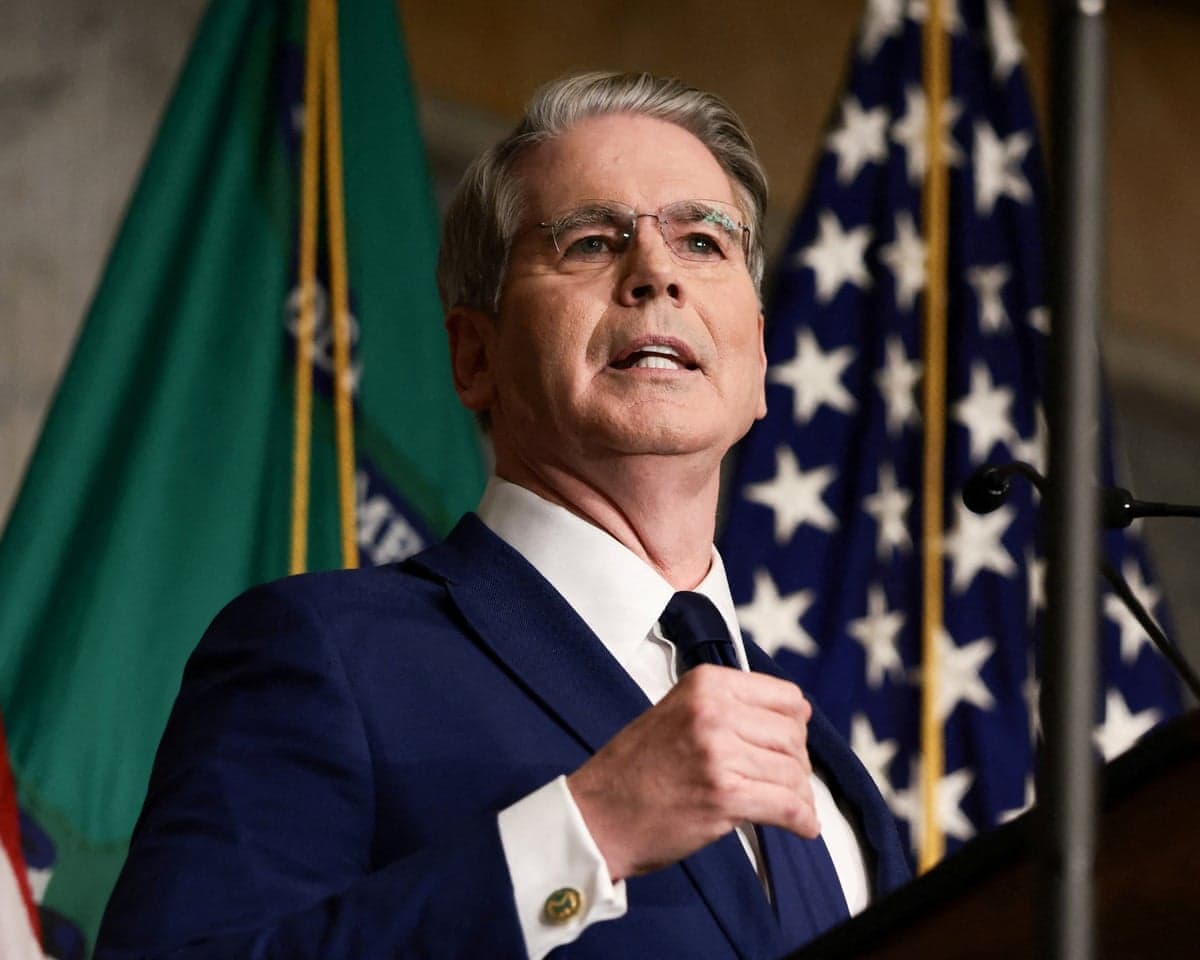
Scott Bessent's efforts to stabilize bond markets and reduce America's borrowing costs have drawn sharp criticism from the US Treasury secretary's former mentor, billionaire investor Stanley Druckenmiller. Druckenmiller, who mentored Bessent during the 1990s at George Soros's fund management firm, contends that the Treasury's approach to managing yields is fundamentally misguided and destined to backfire.
The dispute centers on how Washington should respond to elevated long-term borrowing costs. Bessent has pursued bond buyback operations to push prices higher and yields lower, but Druckenmiller argues this strategy misreads market signals and postpones necessary fiscal action.
What is Druckenmiller's core argument?
Druckenmiller maintains that governments attempting to defend asset prices against underlying economic fundamentals inevitably lose such battles.
Governments defending prices against fundamentals always lose. The only variable is how much they spend before conceding,he warned. Instead of intervening in markets, he contends that Washington should allow bond yields to function as a fiscal disciplinarian, signaling the need for deficit reduction.
The long-term Treasury yield is the most important price in the world. It is also the only fiscal disciplinarian the US has left. Neither party will run on entitlement reform. Both have spent the past decade expanding commitments while ignoring arithmetic,Druckenmiller wrote.
What triggered this criticism?
On 19 August 2026, the Treasury announced an expansion of its bond buyback operations. According to , the upsized buybacks are scheduled to run from September 9 through November 4, 2026, targeting intermediate and longer-dated securities in the 10- to 20-year and 20- to 30-year maturity ranges. The total increase in buybacks for the current quarter amounts to at least $14 billion, with maximum repurchases rising to $83 billion when planned operations are included.
The Treasury's announcement initially pushed yields lower, but the effect proved temporary.
The market's verdict was swift and correct: This wasn't liquidity management, it was price management – and a mistake far larger than $4bn suggests,Druckenmiller said. According to CNBC, yields rose again the following day, suggesting market participants viewed the intervention as an attempt to artificially suppress borrowing costs rather than address underlying supply concerns.

Long-term US bond yields had reached their highest level since 2007 before the Treasury's intervention, reflecting broader market stress in the 10- to 20-year and 20- to 30-year sectors, which have faced heavy selling pressure since late June.
Why does Druckenmiller believe deficit reduction is the real solution?
Druckenmiller argues that addressing the primary budget deficit is the only durable way to lower long-term yields. Last week the US national debt surpassed $40 trillion, and the annual deficit is projected to reach $2 trillion this year. He contends that a credible fiscal package addressing these imbalances would have far greater impact than any buyback program.
The reward is enormous: A credible fiscal package would do more for the long end of the curve than a buyback program 1,000 times this size,he wrote in the Wall Street Journal. According to , Bessent has indicated that the repurchases could be increased beyond $4 billion per operation if market conditions warrant further intervention.
What is the Treasury's position?
Bessent has characterized recent market movements as an overreaction. According to reporting, Bessent said the market
got a little bit ahead of itselfafter the recent selloff in longer-dated securities. The Treasury's quarterly buyback plan released on August 5 indicated it anticipated purchasing up to $38 billion in off-the-run securities for liquidity support plus up to $25 billion for cash management purposes in the quarter.
Market analysts view Bessent's bond market intervention as evidence that
Washington is increasingly uncomfortable with soaring long-term borrowing costs,according to Axel Rudolph, chief technical analyst at the investing and trading platform IG. The Treasury's actions suggest a response to what some describe as a
buyers' strikein the intermediate and longer-dated portions of the market.
What happens next?
The Treasury's expanded buyback schedule will continue through November 4, 2026. According to , the next scheduled buyback operation is September 10 for 10- to 20-year bonds, followed by September 24 for 20- to 30-year bonds. The Treasury's tentative quarterly buyback schedule is published on its official website and covers the upcoming refunding quarter.
Key Facts:
- The US national debt exceeded $40 trillion last week, with the annual deficit projected to reach $2 trillion in 2026
- Long-term bond yields reached their highest level since 2007 before the Treasury's August 19 intervention
- The Treasury's upsized buyback operations target intermediate and longer-dated securities and run through November 4, 2026
- Druckenmiller argues that fiscal discipline through deficit reduction, not market intervention, offers the only durable solution to elevated borrowing costs