
Financial markets have entered a period of acute turbulence as multiple threats converge on investor confidence. Soaring government bond yields, intensifying conflict in the Middle East, mounting concerns about artificial intelligence investment sustainability, and ballooning government debt levels have combined to create what analysts describe as dangerous conditions for a potential equity market downturn.
The shift in sentiment has been dramatic. During the summer months, optimism prevailed in major financial centres as the artificial intelligence investment boom drove the US stock market to record highs. Investors believed the multitrillion-dollar spending spree on AI infrastructure would outweigh economic damage from regional conflict. That confidence has evaporated.
The deterioration accelerated sharply in mid-September. According to , the US 10-year Treasury yield briefly exceeded 5% on 15 September, marking its highest level since 2007, while German government bond yields climbed to their highest in over 17 years. The average 10-year yield across the Group of Seven nations reached 4.285%, the highest since mid-2008, according to the same source. These elevated borrowing costs ripple through the global economy, raising expenses for households, businesses, and governments already burdened by debt.
The combination of factors has created what senior analysts at major investment institutions describe as a precarious environment. Albert Edwards, a strategist at the French investment bank Société Générale, characterised the moment as
febrile times, warning that
the key worry for investors and policymakers alike is the extent to which the current oil price 'shock' will ripple through the global economy and whether it will necessitate sharply higher, recession-inducing, interest rates.
Oil prices have surged above $100 per barrel as fighting in the Middle East intensifies without resolution, creating inflationary pressure that central banks feel compelled to combat. The Bank of England responded to these concerns on 19 September with its first interest rate rise since 2023. Financial markets now anticipate the US Federal Reserve will raise rates four times before the end of 2027, even after holding borrowing costs steady in its most recent decision. The European Central Bank raised rates last week, and Japan's central bank lifted its policy rate to a 31-year high on 20 September, each responding to the economic shock from escalating regional conflict.
Higher interest rates impose a dual burden. They weigh on economic activity by raising the cost of borrowing for households and businesses already struggling with elevated energy bills and fuel prices. Simultaneously, they create the risk of job losses and economic contraction, compounding challenges for governments drowning in debt. The US government's borrowing needs have driven national debt above $40 trillion, a figure that troubles investors as Washington pursues expansionary fiscal policies.

The concern extends beyond immediate inflation and interest rate dynamics to the sustainability of the artificial intelligence investment boom itself. The S&P 500 index of leading US companies sits 3% below its all-time high, while the seven largest technology stocks—Nvidia, Apple, Google, Microsoft, Meta, Amazon and Tesla—command a combined market value exceeding $20 trillion. This concentration of value in a narrow group of companies raises questions about whether markets have become dangerously overextended.
Research by Fathom Consulting reveals the scale of the challenge facing the AI sector. For the multitrillion-dollar investment spree to generate returns, artificial intelligence-related sales from technology companies must rise by between $600 billion and $800 billion within two years. Brian Davidson, an economist at the consultancy, stated:
For all the impressive advances in AI technologies in recent years, the economics behind the current capex boom do not work. Yes, recent AI advances could yet unlock huge productivity gains; but sales of AI models need to increase by hundreds of billions of dollars per year over the next two years to justify the current spend. Such growth appears unlikely.Fathom estimates a 30% probability that the AI bubble deflates in 2027.
How overvalued are US equities?
Traditional valuation metrics suggest the US stock market has reached levels last seen before previous crashes. The CAPE ratio, or cyclically adjusted price-to-earnings ratio, has climbed to its highest level since 2000. The S&P 500's CAPE ratio stands at nearly 41 points, more than double its long-term average of approximately 17 points and approaching the record high of 44.19 points recorded in December 1999, just before the dotcom crash wiped out trillions in investor wealth.
The parallel to the dotcom era is instructive. Many internet companies billed as transformative technologies collapsed in value after investors financed excessive infrastructure too early. Adrian Cox of the Deutsche Bank research team noted that
it took a decade or more for demand to catch up with the infrastructure laid down in the British canal and railway and US telecoms and fibre booms – and many investors never recovered their capital.The same pattern could repeat if artificial intelligence fails to deliver the productivity gains investors expect.
More than 1,000 investors registered for an analyst call conducted by Jefferies this week focused on
AI Extinction Warnings, after executives from the world's largest technology companies called for regulatory oversight of artificial intelligence development. The level of investor concern about the sector's future is evident in their willingness to attend such sessions.

What happened in South Korea's margin call crisis?
A cautionary tale emerged from South Korea, where retail investors borrowed heavily to purchase shares in artificial intelligence-linked chip manufacturers. This margin buying—acquiring stocks with borrowed money—doubled the value of the blue-chip Kospi index. However, when markets began declining, these investors faced margin calls demanding they deposit additional cash to maintain their positions. According to Goldman Sachs, 1.2 million South Korean investors received such calls, equivalent to one in every 30 adults in the country being forced to liquidate positions or raise emergency capital.
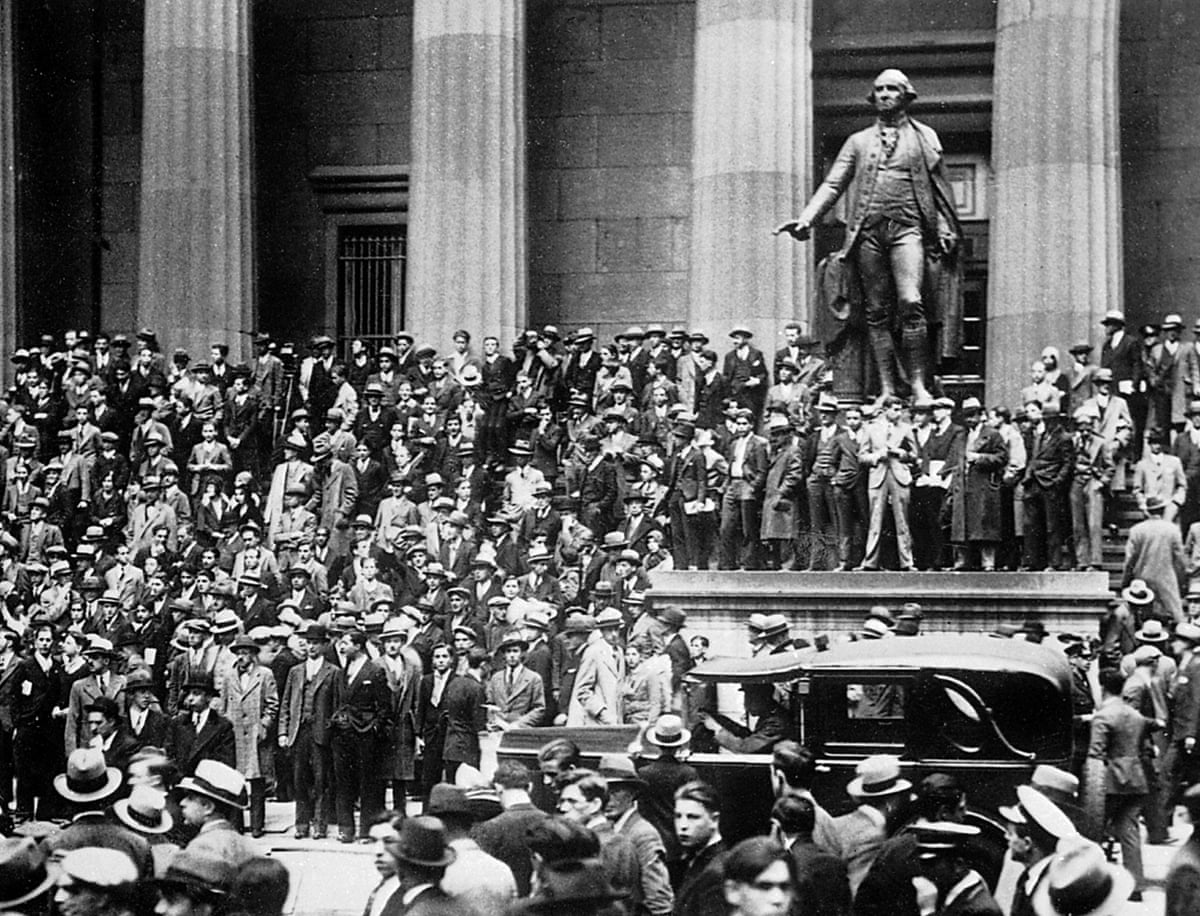
The South Korean experience echoes the buildup to the Great Crash of 1929, when millions of small American investors purchased stocks on margin. When markets collapsed, those margin calls triggered a cascade of forced selling that deepened the downturn and contributed to the Great Depression. The parallel is not lost on financial historians and risk managers monitoring current conditions.
Stress is also visible in credit markets beyond equities. The Bank of England reported during the summer that the spread between the riskiest and safest high-yielding corporate debt has widened since the Middle East conflict began, indicating that investors have grown warier of holding risky obligations. Oracle, the database software vendor, exemplifies the challenge facing companies with ambitious artificial intelligence plans. Its share price surged a year ago following a cloud computing partnership with OpenAI, the company behind ChatGPT, but has since halved as investors fretted that the company could be borrowing excessively to fund data centre expansion.
What are the critical yield thresholds?
Bond market movements have taken on outsized importance in determining equity market direction. Government bonds have been sold off in recent weeks, pushing yields higher and making shares less attractive by comparison. An investor faces less incentive to purchase equities, which carry greater risk, when safer government bonds offer higher returns.
The 5% threshold on US 10-year Treasury yields carries psychological significance. John Higgins, chief economic adviser at Capital Economics, described this level as
seen by some as a threshold above which financial markets might go into meltdown.While Higgins expressed scepticism that 5% represents a true breaking point, he acknowledged that
higher Treasury yields would certainly pose a risk to the sustainability of the US public finances as well as threaten equities.
Bloomberg macro strategist Simon White has identified a more precise inflection point. He calculated that if the US 10-year Treasury yield rises above 5.25%, this represents the level at which stocks and bonds have historically reinforced losses in one another, creating a vicious cycle of selling pressure across asset classes. According to , the US 30-year Treasury yield has already climbed to 5.40%, its highest level since 2003, while Japan's 10-year government bond yield has nudged 3%, its highest since 1996.
Could a crash be avoided?
Despite the turbulent backdrop, some analysts argue that a severe downturn remains avoidable. Economists at Oxford Economics contend that
a major downturn would need a trigger. Further geopolitical instability could be the catalyst, but we've long argued that the impact of geopolitical shocks on economic activity is overstated.They also suggested that markets may be overestimating inflation risks from the Middle East conflict, noting that
our view on inflation is less alarmist – we think market expectations overstate the risk of further policy tightening.
A slowdown in artificial intelligence investment could paradoxically protect markets from a bubble-driven collapse. Evidence suggests artificial intelligence is beginning to drive measurable economic growth. The US economy has recorded rising productivity growth, while artificial intelligence contributed to Canada's growth at the fastest rate in the Group of Seven during the first half of 2026. If productivity gains accelerate, companies with elevated share prices could begin justifying their valuations, providing a foundation for current market levels.
Andy Haldane, former chief economist of the Bank of England, offered a nuanced assessment when speaking to LBC this week. He stated:
Do I think there's a significant dose of reality though in that productivity miracle in AI? Yes.However, he cautioned that
I don't think outright collapse in a dotcom bubble type fashion. But could I see a slow release of air that doesn't collapse the world economy, but slows it down? Yes, I could.
Historical precedent suggests that equity markets typically begin falling before recessions commence and often start recovering before economic activity rebounds. Deutsche Bank's Jim Reid calculated that US recessions have historically followed approximately three to 3.5 years after the first interest rate rise. This timeline offers little comfort to investors facing immediate market volatility.
What happens next?
Central bank decisions scheduled for mid-to-late September will prove pivotal. The Federal Reserve's rate decision on 16 September and the Bank of Japan's policy announcement later that week represent critical junctures for market sentiment. According to , global stocks extended their selloff on 15 September as oil prices rose again and investors braced for the Fed's rate decision the following day. Market focus remains on whether elevated Treasury yields will force a more restrictive policy path going forward.
The coming weeks will test whether current market valuations can withstand the combination of higher borrowing costs, geopolitical uncertainty, and questions about artificial intelligence investment returns. For investors, the situation represents a high-stakes gamble: betting that productivity gains from artificial intelligence will justify current share prices while navigating the immediate risks posed by inflation, rising rates, and potential credit market stress.