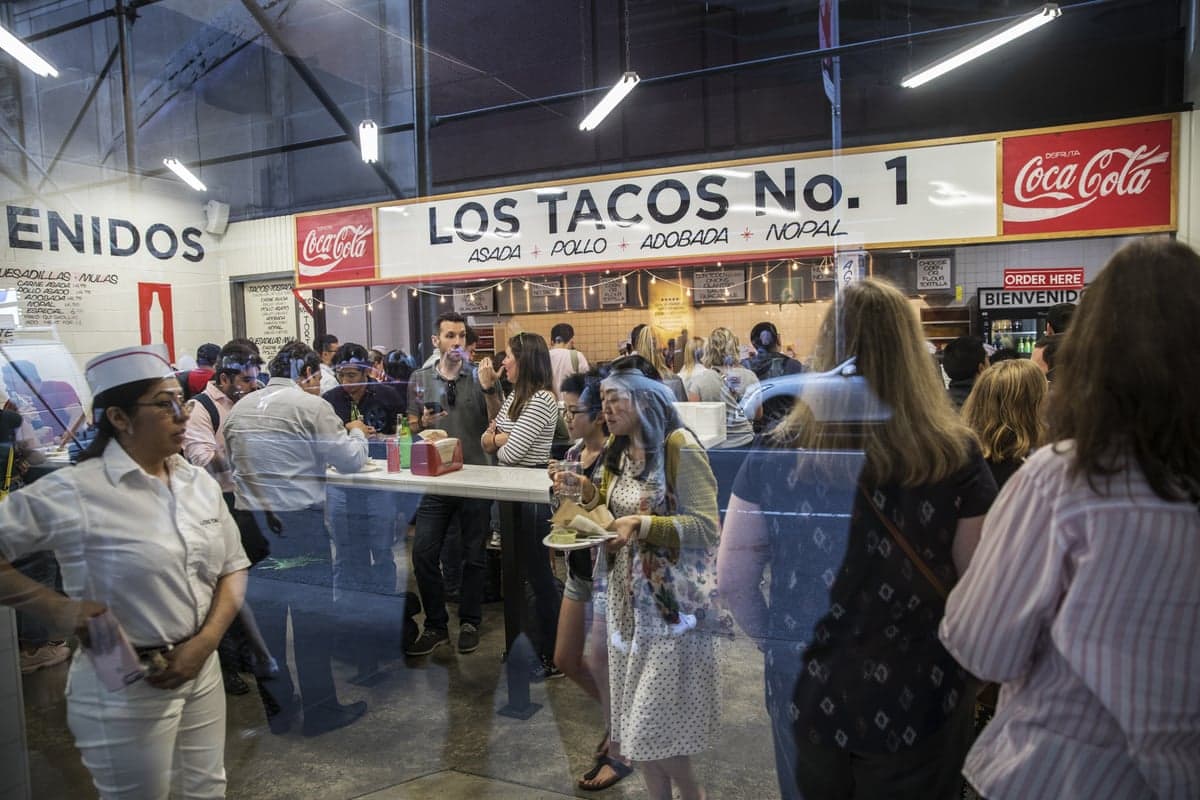
Los Tacos No. 1 embodied the New York restaurant dream. The Mexican-style taco establishment launched in 2013 at Chelsea Market and rapidly earned critical acclaim, developing a loyal customer base drawn by its al pastor tacos and handmade tortillas. The brand expanded to nine locations across the city. Then, on 3 September 2026, the chain announced a strategic investment from private equity firm TSG Consumer, a move that immediately triggered alarm among its devoted followers.
The investment announcement stated the capital would enable Los Tacos to pursue "thoughtful, founder-led growth." According to industry reporting, co-founder and CEO Christian Pineda and chief operating partner Jacobo Ackerman would retain day-to-day operational control, though the financial terms remained undisclosed and the stake structure was not revealed. Despite these assurances, social media erupted with predictions of decline. The co-founders felt compelled to issue a public statement:
No, we're not going to start charging extra for guac. We're not switching to horse meat. And no, we're definitely not messing with the tacos.The reassurance fell flat, met with continued skepticism.
The backlash reflects a broader anxiety about what critics call the "same-ification" of New York—the transformation of a once-vibrant, creative city into a homogenized suburban strip mall. Many New Yorkers point to a single culprit: private equity. These firms acquire stakes in privately held companies, restructure operations, and seek profitable exits. The model now extends across industries, from healthcare and veterinary practices to fashion and kitchenware. The restaurant sector has become a particular flashpoint.
The appetite for food-service acquisitions has intensified. A New York Times headline in April announced "Big Money Is Betting on Bagels," documenting private equity's interest in breakfast staples. Worker-owned food publication Ravenous followed with coverage of "the curious case of the soulless private equity cookie," examining chains like Crumbl and Levain Bakery.
Jaya Saxena, a writer and worker-owner at Ravenous, explained the appeal to investors.
Cookies, bagels, ice-cream all work really well, because you don't need to be a professionally trained chef to scoop ice-cream or put premade frozen cookies in an oven.These concepts attract long queues—as demonstrated this summer in the West Village and at Blank Street Coffee locations, which raised $105 million in 2026 financing led by General Atlantic, valuing the chain at approximately $650 million. Both franchises have secured private equity backing.
Yet many diners avoid these establishments, convinced that private equity ownership inevitably leads to cost-cutting, diminished quality, and sterile aesthetics divorced from neighborhood character. The telltale signs are unmistakable: sleek but impersonal interiors, touchscreen ordering replacing human cashiers, and prices that trigger buyer's remorse—such as the $20 acai bowl that sparked a viral moment.
How did TikTok become ground zero for the backlash?
A user operating under the handle @thedilligentdiva catalyzed the conversation by posting a list of New York restaurants to avoid, framed as guidance "so you don't have to spend $20 on an acai bowl." The creator cited a disappointing $20 acai bowl at Pura Vida, which she described as low quality and "pure sugar." Though unavailable for interview, her campaign resonated widely. Commenters chimed in with their own lists of private equity-owned establishments, lamenting the difficulty of finding genuinely independent "mom and pop" restaurants. The tone oscillated between resignation and paranoia, with one user declaring: "Tbh any spot that has more than 2 locations is suspicious."
Using Beli, an app for tracking and rating restaurants, TikTokers proposed alternatives to what @thedilligentdiva termed "PE SLOP." When Pop Up Bagel was identified as having received capital from multiple investors, users recommended Apollo Bagels and Tompkins Square Bagels instead. Rather than fast-casual chain Dig Inn, the creator suggested ThisBowl—though fact-checking revealed ThisBowl itself has received partial funding from Stripes, a private equity company.
Los Tacos No. 1 initially appeared on the list as an alternative to Tacombi, which had accepted private equity money. That changed abruptly. When Los Tacos announced its TSG Consumer investment, @thedilligentdiva posted: "Guys we lost another one LITERALLY TODAY."
What do experts say about private equity's impact on food quality?
Megan Greenwell, a journalist and author of "Bad Company: Private Equity and the Death of the American Dream," confirmed diners' concerns are grounded in reality.
Quality is generally the furthest thing from its mind. What they are trying to do above all else is increase profits.For the consulting class, profit maximization typically translates into operational cuts.
You're laying off people, cutting down on staff, or spending less money on development and training.These measures almost invariably degrade the product or service.
It now has become a kind of meme where everything gets worse as soon as it's bought by private equity.

Greenwell noted that despite the TikTok momentum, she has not observed sustained, meaningful backlash to private equity in food comparable to the healthcare sector, where congressional Democrats introduced legislation this week to ban corporate takeovers of physician offices. The National Restaurant Association, the leading food service trade group in the United States, declined to comment on private equity in restaurants, stating it does not "track[s] closely" the issue.
Younger consumers may prove different.
In some ways, gen Z folks are more conscious consumers than older generations,Greenwell observed.
I work with a lot of teenagers, and I don't even think they could articulate what private equity is. But they'd say, 'Oh, I wouldn't eat at a chain owned by it.'On social media, "private equity" has become a derogatory shorthand—often imprecisely applied—for businesses perceived as overly corporate or lacking character.
I've also seen so many [posts] where people are like, 'Apparently this place is not private equity, but it might as well be.'
What are the warning signs of private equity ownership?
Scarr Pimentel, owner of the New York pizza establishment Scarr's and a vocal critic of industry consolidation, identified several red flags in a January video for an online series.
A lot of them are fronts for like VC [venture capital] and private equities that people don't realize.He argued that truly independent restaurant openings are becoming rare. Telltale indicators include merchandise sales, Instagram accounts that appear "too perfectly curated off the rip," and hype campaigns launched before doors even open. Pimentel called on local politicians to support small businesses, making it feasible to operate restaurants in New York without corporate backing.
The restaurant industry presents brutal economics, particularly in competitive markets like New York. High rents, insurance costs, labor expenses, and ingredient tariffs create formidable barriers.
You have a lot of restaurant owners who have been pretty open about the fact that it feels impossible to open up a restaurant without some sort of backing, whether that's via having a bunch of really wealthy friends [invest] or actively seeking out private equity,Saxena explained.
It's not surprising to me that a lot of places are looking toward private equity, but it's extraordinarily depressing that this often leads to a less flavorful environment.
What do private equity firms argue?
Industry advocates present a contrasting narrative. Will Dunham, CEO of the American Investment Council, stated in a prepared response:
Founders and businesses choose to partner with private equity because it provides long-term capital and industry expertise that helps them to grow, build, and innovate. Eighty-five percent of private equity funding supports small business, allowing them to hire more workers and compete against much larger companies.
How widespread is private equity investment in restaurants?
The scale of private equity involvement in food service is substantial and expanding. TSG Consumer, which backed Los Tacos No. 1, has also invested in Dutch Bros and Pura Vida Miami, demonstrating the firm's portfolio breadth. According to CNBC, private equity firms deployed $94.5 billion in bars and restaurants between 2014 and 2024. The outcomes have been mixed at best: nearly half of bars and restaurants that filed for bankruptcy in 2024 were backed by private equity. This pattern reflects the leveraged buyout model, where firms borrow capital to acquire a restaurant, then transfer that debt to the newly acquired business.
In 2024, Blackstone acquired a stake in Jersey Mike's, the sandwich chain. The company went public this week, hailed as a private equity success story. Jersey Mike's recently surpassed Chick-fil-A as the top-rated quick-service restaurant according to the American Customer Satisfaction Index, ending the fried chicken franchise's 11-year reign in first place. Other familiar chains now owned or controlled by private equity include Dunkin', Subway, Arby's, Baskin-Robbins, and Buffalo Wild Wings.
What happened to Panera Bread?
The Panera Bread case exemplifies customer frustration with private equity transformation. Once celebrated in the 1990s for its cozy atmosphere and quality baked goods, the chain's acquisition by private equity prompted The Nation to frame its trajectory as "the story of late capitalism":
In expanding, the charm faded, and then vanished.Panera's subsequent attempts to reclaim its "conscious" brand identity proved clumsy. In 2010, the company launched a "Pay What You Can" cafe concept to assist low-income customers, but the initiative collapsed when workers began requiring customers to work in exchange for meals. More recently, Panera faced intense scrutiny over its "charged" lemonade, a caffeinated beverage discontinued after multiple lawsuits alleged it posed safety risks. Two people died and others sustained permanent cardiac injuries after consuming the drink; Panera stated it "stands firmly by the safety of our products."
What happens next for Los Tacos No. 1?
TSG Consumer and the Los Tacos leadership team indicated they will pursue "thoughtful growth" and expansion, though no specific timeline or public milestones were announced. The partnership aims to bring Los Tacos to a wider audience while preserving the food quality and taco-shop experience that built the brand's reputation. Whether this pledge will satisfy skeptical customers remains uncertain, particularly given the pattern of disappointment that has defined private equity's restaurant ventures.
The Los Tacos investment underscores a broader tension: restaurant owners face genuine financial pressures that make private equity backing attractive, yet consumers increasingly view such partnerships as harbingers of decline. For Megan Greenwell, a native Californian living in New York and a devoted Los Tacos customer, the announcement triggered personal dismay.
Oh no, this is so terrible for me, because I like their tacos, and I don't like that many tacos in New York City.Her sentiment captures the stakes for diners watching beloved establishments enter the private equity fold.