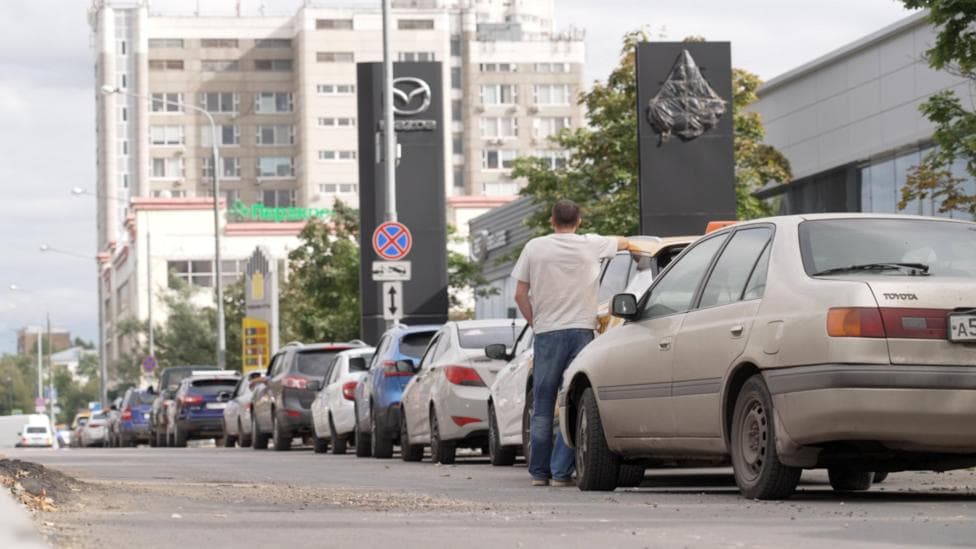
Motorists across Moscow and other Russian regions are confronting severe petrol shortages, with queues stretching for hours at fuel stations as Ukrainian drone attacks continue to disrupt refining capacity. The crisis marks the second major fuel shortage to grip Russia this summer, forcing authorities to impose purchase limits and resort to importing refined fuel—an extraordinary measure for a nation that ranks among the world's largest oil exporters.
At a petrol station in south-east Moscow, a driver named Svyatoslav has spent two hours waiting in his vehicle. The station's sign board now displays a message indicating no fuel is available. When asked why he doesn't seek fuel elsewhere, Svyatoslav explains he lacks sufficient petrol in his tank to reach another station. This predicament reflects the broader crisis: across Moscow and beyond, finding an open pump has become a daily struggle for millions of Russians.
What is causing the fuel shortage?
Ukrainian drone strikes targeting Russian oil refineries have triggered the shortages. The attacks have intensified since late July, forcing multiple refineries offline for unscheduled repairs. According to , the Orsk refinery was forced to shut completely following a Ukrainian strike, with repairs expected to take up to six months. The fuel crisis initially gained momentum in May and spread by July to almost all regions of Russia after several refineries were damaged by drone attacks.
Russian officials have attributed the shortages to "unscheduled repairs at oil refineries," but the underlying cause remains the sustained Ukrainian campaign against energy infrastructure. Before Russia's full-scale invasion of Ukraine in 2022, no drone attacks had struck Russian oil refineries or other facilities inside Russia. Despite the damage inflicted, the Kremlin has not altered its military strategy, continuing what it describes as the "special military operation."
How severe are the queues?
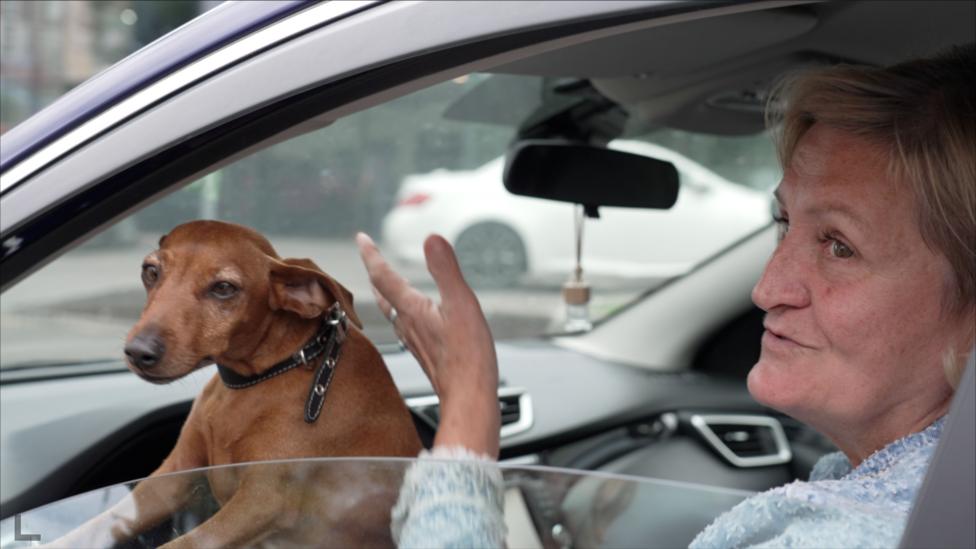
The queues this week are longer than those experienced during the first fuel crisis earlier in summer. At one Moscow petrol station, 80 vehicles were observed waiting in line. Elizaveta, who has queued multiple times for fuel, describes the frustration: she arrived at a station at 11 p.m. and reached the front of the queue by midnight, only to find the station closing until 2 a.m. Lyubov, who drove into Moscow from the provinces, encountered empty petrol stations throughout her journey.
The situation has prompted fuel retailers to impose strict purchase limits. According to , Gazprom Neft stations have capped purchases at 40 litres per customer, while Rosneft stations in Moscow and surrounding regions limit sales to 30 litres per vehicle. Lukoil has also introduced fuel-sales restrictions in Moscow and the surrounding region due to elevated demand and unscheduled refinery maintenance. Local authorities in at least 10 regions have tightened controls on motor-fuel sales, indicating the crisis extends far beyond the capital.
What measures is Russia taking to address the shortage?
To ease the crisis, Russia has begun importing refined petrol—a striking development for an energy superpower. According to industry reporting, Russia was set to import almost 270,000 metric tons of refined fuels from Asia in August alone. The government has also temporarily authorised the production and sale of lower-grade petrol, such as Euro 2, which can be produced faster than modern fuel standards. Euro 2 contains up to 50 times more sulphur than Euro 5 fuel and was banned in Russia in 2013.
The government newspaper Rossiyskaya Gazeta warned that regular use of lower-grade petrol in modern cars can increase pressure on fuel injectors, spark plugs, oxygen sensors, catalytic converters and soot filters. While Euro 2 will not damage an engine from a single refuelling, the publication noted it "sharply reduces the margin of safety."
How is the Kremlin responding to public concern?
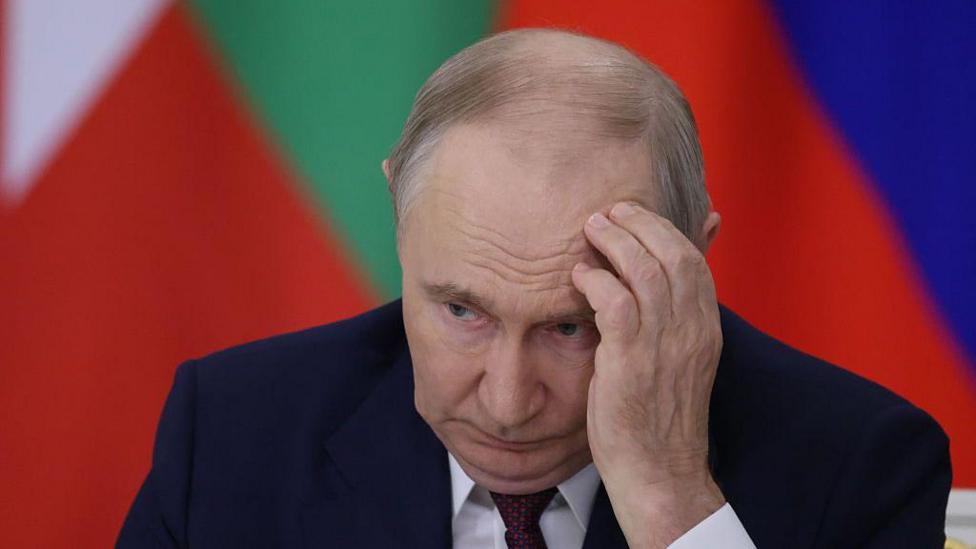
President Vladimir Putin has acknowledged that attacks on industrial facilities and infrastructure "do inflict damage; this is obvious. We understand this, we see it." However, he downplayed the consequences, stating: "There are no critical consequences from such attacks. There have not been and cannot be."

This message contrasts sharply with public sentiment. Andrei Kolesnikov, a columnist for independent news outlet Novaya Gazeta, observes a disconnect between official statements and reality. "It is a disconnect between people's feelings and the description of reality by Vladimir Putin, the description of his personal reality in his head," Kolesnikov said. "Maybe he's trying to hypnotise himself that everything is okay."
Recent polling inside Russia, including surveys by the Public Opinion Foundation, suggests that anxiety in society is rising. Kolesnikov notes that "this permanent feeling of anxiety is with everyone right now. You feel that something is wrong. Anxiety is the main sentiment." He adds that the regime offers no vision of the future: "We are 'great' right now. What are the qualities of this greatness? The petrol crisis? In that sense, the future is aborted. People are trying not to think about the future. The horizon of planning is very short."
How are Russians coping with the crisis?
Despite the fuel shortages, authorities have organised patriotic events to boost morale. On Russian Flag Day, local officials set up stalls, street concerts and displays of military hardware in Moscow. Volunteers distributed Russian tricolours to crowds, and speakers delivered messages of national pride. One speaker declared: "Dear friends, we live in a wonderful country! We know that we will always be victorious. I wish you peaceful skies, a good mood, comfort, prosperity and pride in our country."
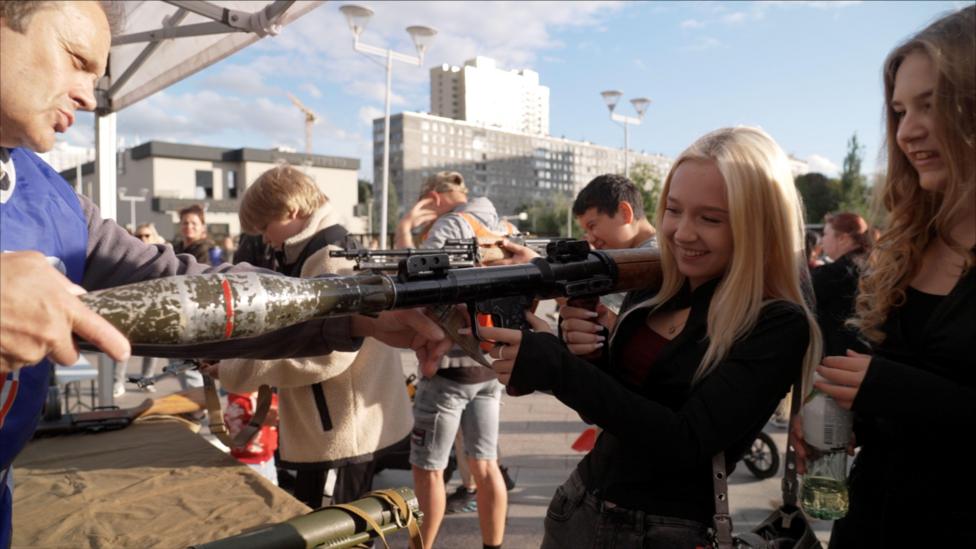
The contrast between fuel queues and patriotic celebrations is stark. While motorists wait hours for petrol, candyfloss stalls and military displays draw crowds. Children were shown an array of military hardware, including hand-held rocket launchers, and posed with the weapons—a visible sign of the growing militarisation of Russian society.
Some Russians find unity in hardship. Tatyana, a pensioner, told observers: "Difficulties unite us. The harder things are, the stronger we get." However, the war weighs heavily on people's minds, particularly the Ukrainian drone attacks on the Moscow region. Angelina expressed a stark concern: "When you go to sleep you don't know if you'll wake up in the morning. That's the only problem. Everything else is fine."
Another woman described the mounting pressures: "The problems we have are high prices, petrol shortages and last night, for the first time, my windows shook…I heard 'boom boom!'" She added: "Right now, it's important to take care of your psychological state, so that it's strong and unbreakable. So that, whatever happens, you can say: 'Oh well, never mind.'"
Comments like these suggest that many Russians feel powerless to influence events around them. Their focus has narrowed to adaptation and psychological resilience rather than expecting change or resolution.
What happens next?
The fuel shortage is expected to persist for months. The Orsk refinery repairs could take up to six months, meaning disruption is likely to continue into early 2027. Some of the regional and station-level purchase limits imposed in August remained in force as of late August, indicating the shortage response is ongoing. If shortages continue, more regional restrictions could follow, extending rationing measures across Russia's 59 regions and beyond.
Key Facts
- Ukrainian drone strikes on Russian oil refineries have triggered the second major fuel shortage in Russia this summer, with queues stretching for hours at petrol stations across Moscow and other regions.
- Fuel retailers have imposed strict purchase limits: Gazprom Neft caps sales at 40 litres per customer, while Rosneft limits purchases to 30 litres per vehicle in Moscow and surrounding areas.
- Russia is importing refined fuels from Asia and has authorised the production of lower-grade Euro 2 petrol, which contains 50 times more sulphur than modern Euro 5 fuel and was banned in Russia in 2013.
- The Orsk refinery was forced to shut completely after a Ukrainian strike, with repairs expected to take up to six months, likely extending shortages into early 2027.
- Recent polling indicates rising anxiety among Russians, with public sentiment diverging sharply from official Kremlin messaging that downplays the impact of Ukrainian attacks on infrastructure.