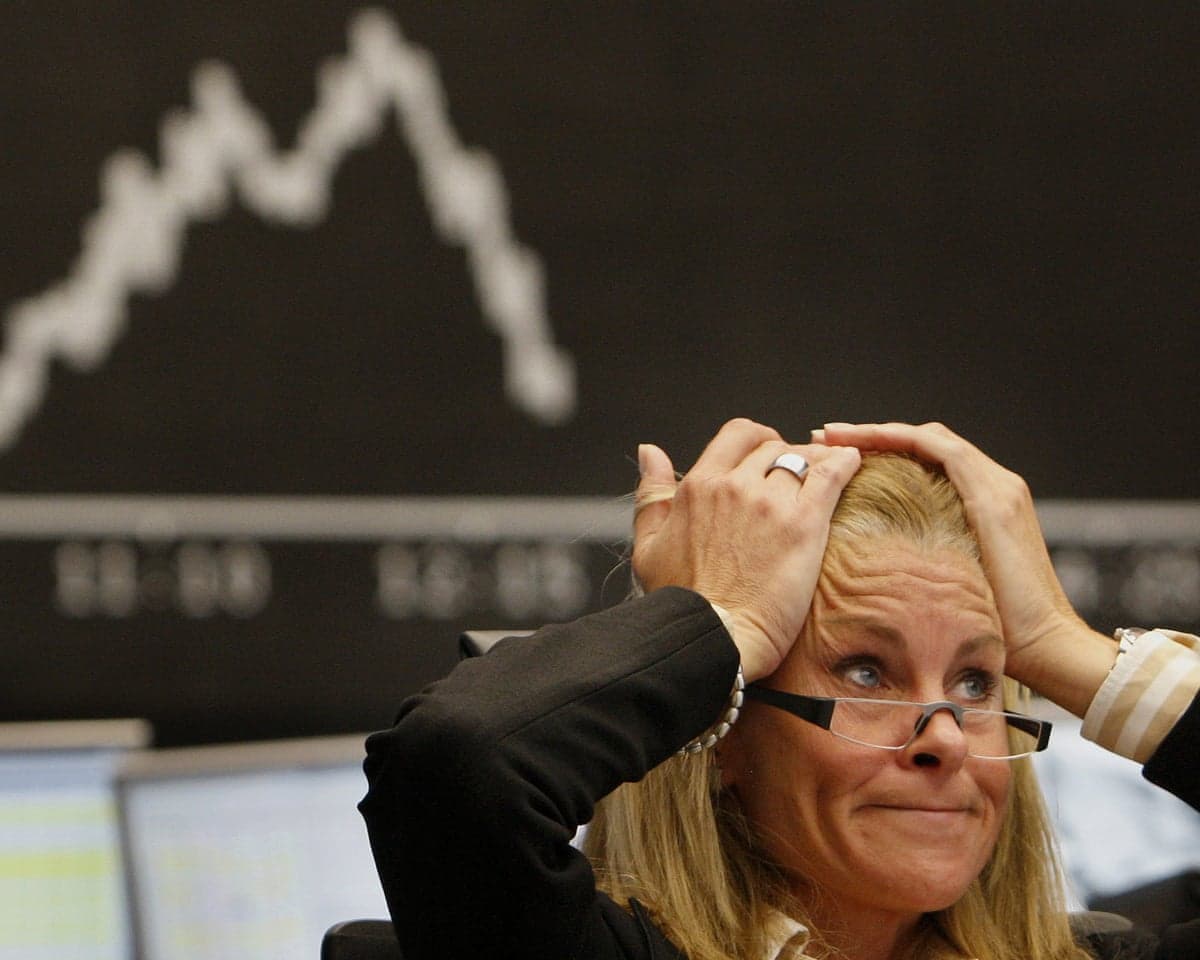
September has historically been a treacherous month for financial stability. The pound's ejection from Europe's Exchange Rate Mechanism occurred in September 1992. Britain faced severe economic strain in September 1931. Most notably, the collapse of Lehman Brothers in September 2008 triggered a global recession that reshaped economies worldwide. As September 2026 unfolds, similar warning signs are flashing across markets and policymakers' dashboards.
Multiple pressures are building simultaneously. Crude oil prices have climbed sharply, with Brent crude surging above $108 a barrel following renewed Middle East fighting. These elevated energy costs are compounding cost-of-living pressures on households and businesses. At the same time, leaders within the artificial intelligence industry have publicly called for a slowdown in frontier-model development, creating unexpected turbulence in technology stocks. When combined, these factors create conditions reminiscent of previous market upheavals.
The geopolitical backdrop remains volatile. The US and Israel launched military operations against Iran more than six months ago, yet markets continue to price in prolonged disruption rather than swift resolution. The surge in Middle East energy disruption is pushing economies toward a stagflation-like mix of high inflation and slow growth, combining the worst elements of both economic stagnation and rising prices. President Trump's repeated assurances that oil tankers will soon transit the Strait of Hormuz unimpeded have lost credibility with investors, who no longer expect a swift diplomatic breakthrough.
The impact on financial markets has been substantial. Bond markets are gripped by fear, and equity valuations face mounting pressure. For months, technology stocks—particularly those focused on artificial intelligence—have been buoyed by investor conviction that growth in this sector knows no limits. That assumption is now being tested. Warnings from Anthropic CEO Dario Amodei, OpenAI CEO Sam Altman and an Anthropic researcher's resignation helped drive a pullback in tech stocks, including a brief 1.7% drop in the Nasdaq-100. The timing of these industry warnings proved particularly disruptive to investor confidence.
The Trump administration's response to these market tremors has been telling. The president's rejection of tighter regulation on the artificial intelligence industry reflects not only the US-China competition for technological dominance but also political anxiety about stock market stability. With midterm elections approaching, preventing an AI-driven market collapse has become a policy priority. The US Treasury's recent interventions, designed to reduce upward pressure on mortgage interest rates, car loans and credit card debt, signal how nervous officials are about current financial conditions.
How does this compare to 2008?
Parallels exist between the current moment and September 2008, but so do critical differences. The 2008 crash stemmed from banks overextending themselves to finance US real estate speculation. Banks today appear far less exposed to similar excesses. While some technology stock investments may rest on unrealistic profit assumptions, artificial intelligence will almost certainly deliver genuine long-term economic benefits—unlike the pre-2008 housing bubble, which created no lasting productive value. Not all financial bubbles follow identical patterns.

Yet the 2008 experience offers crucial lessons for policymakers. When a financial crisis deepens into an economic slump, conventional economic orthodoxy collapses. Central banks abandon talk of interest-rate increases. Finance ministries stop insisting on budget-deficit reduction. Instead, governments deploy aggressive intervention to stabilize demand and employment. The Federal Reserve's first rate hike in three years, announced this week, reflects how monetary policy has already shifted toward restriction alongside the energy shock.
What should policymakers learn from past crises?
One vital lesson concerns what happens after a crash occurs. In 2008, the political left was caught unprepared and allowed the right to seize the narrative, resulting in years of austerity that deepened economic pain. Early signs suggest Britain may repeat this mistake. Chancellor John Healey faces mounting pressure to raise taxes or cut spending in next month's budget—a self-defeating approach that would contradict the case for economic renewal.
This pressure runs counter to arguments advanced by Andy Burnham that four decades of neoliberal economic policy represented a strategic error requiring correction. Markets have grown accustomed to US president Trump's posturing, but economists warn investors may be complacent expecting a brief Iran conflict amid rising oil prices and economic uncertainty, suggesting that policymakers should prepare for extended disruption rather than temporary shocks.
The case for a more interventionist approach has gained traction across Britain's labour movement. At the Trades Union Congress conference in Brighton, major unions including Unite, the RMT, the CWU, the GMB and Equity made clear their support for a comprehensive re-industrialisation strategy. A policy document has been published outlining what such a programme would require, emphasizing the need for state investment in productive capacity rather than austerity measures.
What happens next?
Markets are now focused on the Federal Reserve's policy decisions and the trajectory of Middle East tensions. Investors are watching whether energy disruption will persist and keep oil prices elevated in the near term. The coming weeks will test whether current market stress proves temporary or signals the onset of a more serious downturn.
Financial crises are not inevitable. It remains possible that current fears will dissipate, particularly if conflicts in Ukraine and the Middle East wind down and oil prices stabilize. Growth in the US and UK has not collapsed, and some economic resilience persists. Yet complacency carries its own dangers. History shows that financial markets can remain stable for extended periods before strains that have been allowed to accumulate suddenly trigger systemic stress. Policymakers would be wise to prepare contingency plans now rather than scramble to respond after a crisis has already begun.