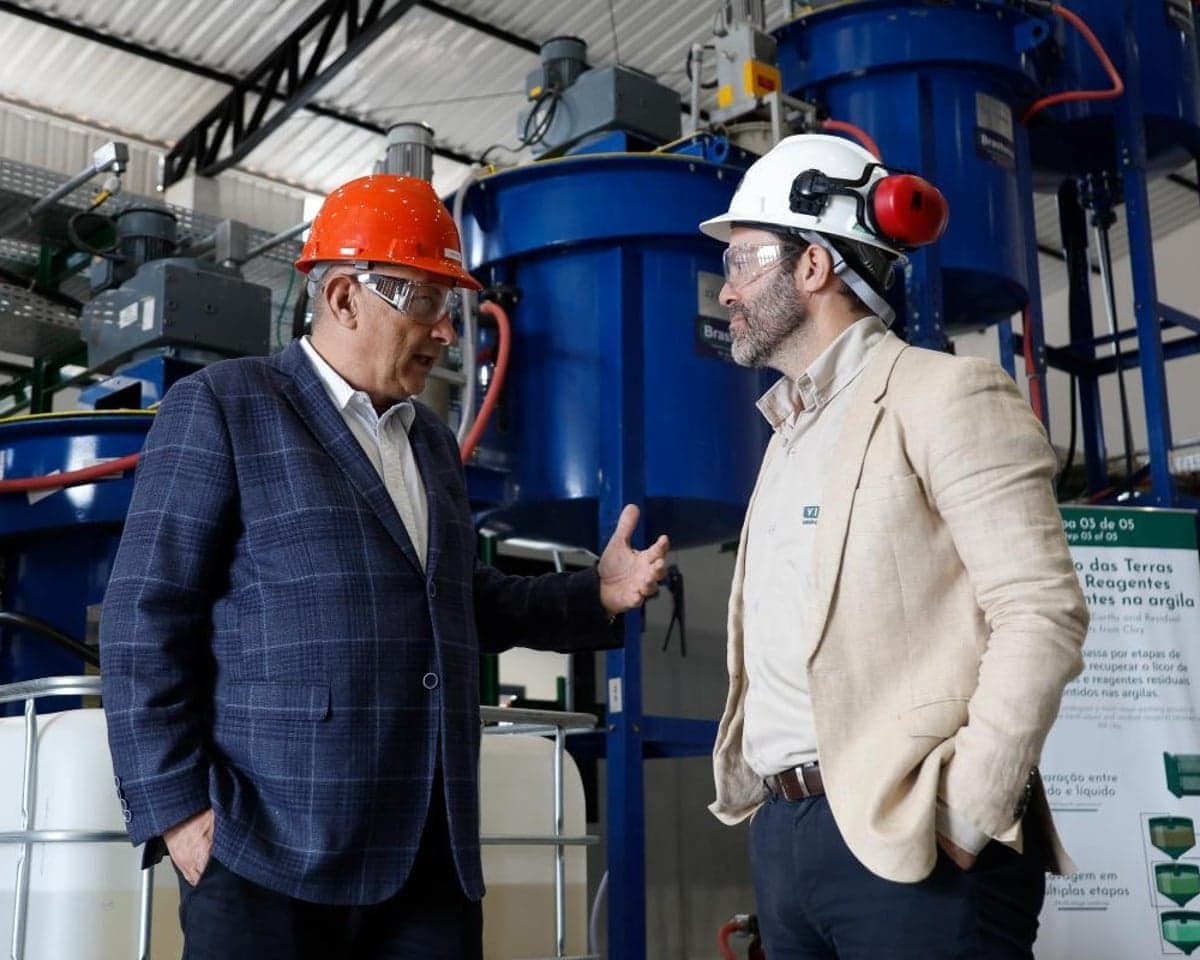
Rafael Moreno, managing director of Australia-listed Viridis Mining and Minerals, has stressed that breaking China's dominance over rare earth supplies is essential for the European Union and other industrialised economies. His company, which operates assets in Australia and Canada, has opened a demonstration plant in Brazil and aims to supply the EU with rare earths within two years, positioning itself as a potential counterweight to Beijing's market control.
The urgency of Moreno's message comes as Donald Trump and China's president Xi Jinping prepare for their second summit of 2026 on Thursday. A central question hanging over the meeting is whether Beijing will extend its suspension of rare earth export restrictions, which currently expire on 10 November 2026 unless renewed.
"The market is nervous,"Moreno said, reflecting widespread anxiety across industries dependent on these critical materials.
China imposed controls on rare earth exports in April 2025, disrupting supply chains across the automotive, renewable energy and defence sectors in the EU, UK, US and Japan. After a summit last October with Trump in South Korea, Xi agreed to suspend some of these measures for 12 months. However, industry leaders had hoped Trump would secure an extension at a previous meeting, leaving the question unresolved heading into this week's talks.
Kurt Tong, a managing partner of the Asia Group, a Washington strategic advisory and public policy firm, suggested that while a suspension deal might not be finalised this week, it could be delayed until November, when Trump is expected to attend the Asia-Pacific Economic Cooperation (APEC) forum of 21 countries in China.
"It cannot not be extended if they are to continue to have these presidents' meetings regularly,"Tong said.
The stakes are particularly high for the EU. China controls between 80% and 90% of the world's rare earth raw materials and processed end products, giving Beijing powerful leverage over global manufacturing. According to industry analysis, China's export controls specifically target scandium, yttrium, samarium, terbium, dysprosium and lutetium—materials essential for magnets, electronics and military applications.
The EU's trade deficit with China, now running at €1 billion per day, has become a flashpoint for Brussels. EU Trade Commissioner Maroš Šefčovič is scheduled to travel to Beijing on 8–9 October for talks focused on Chinese export controls and the broader trade imbalance. Meanwhile, some Chinese rare earth suppliers have halted shipments to the United States over fears of reprisals from Beijing, demonstrating that the controls continue to disrupt global trade flows.
European manufacturers face mounting pressure to source materials from China due to cost advantages. Eurometal, a trade group representing buyers of steel products, has warned that component manufacturers and original equipment makers (OEMs) are under daily pressure to opt for Chinese goods, which can sometimes be 30% cheaper than domestic alternatives. This dynamic threatens to undermine efforts to build alternative supply chains within Europe.

Viridis is already attracting significant attention in Brussels, where diversification of supply chains away from China is a top priority for European Commission President Ursula von der Leyen. The company's demonstration plant in Minas Gerais, Brazil, has begun producing rare earth powder from ore extraction. According to recent reports, the facility achieved mixed rare earth oxide recoveries above 80% in July, exceeding initial expectations. The plant operates with a feed capacity of approximately 100 kilograms per hour and will eventually supply further processing, potentially in France, to isolate individual rare earth elements.
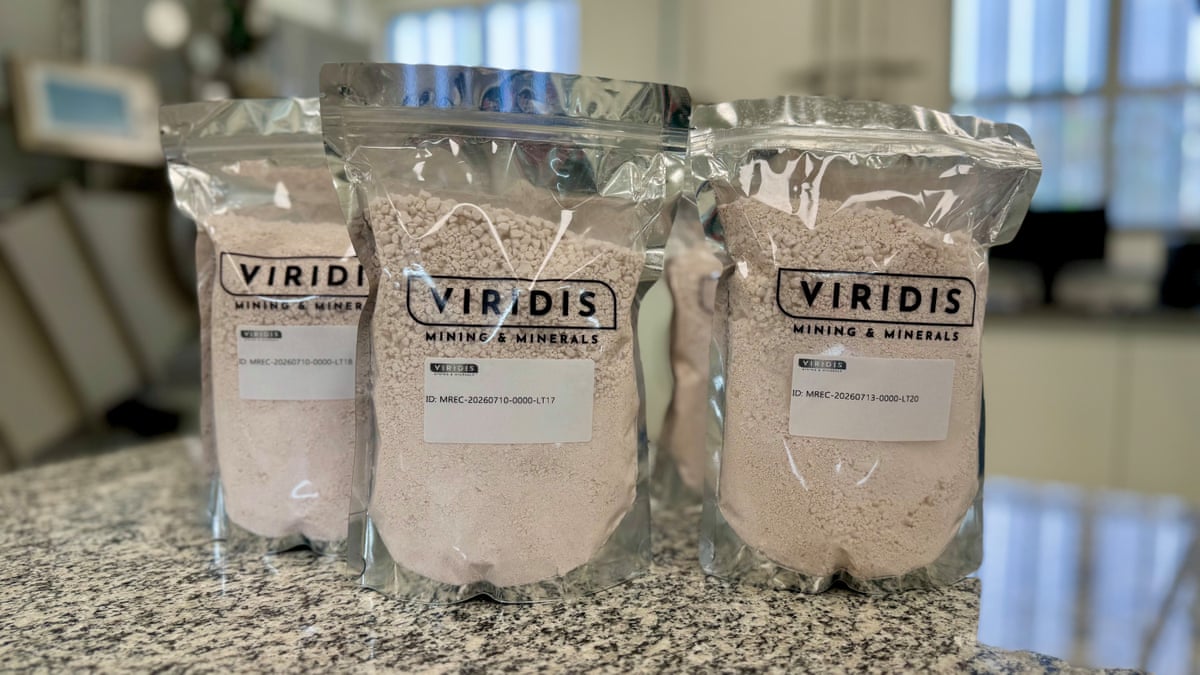
EU International Partnership Commissioner Jozef Síkela, a Czech politician, visited Viridis's demonstration plant in Brazil this year to assess the company's strategy. Viridis is working with French chemical company Solvay to process the rare earths and aims to capture 5% of the global rare earths market, with production starting at the end of 2028.
"It is natural for a company or OEM to want to buy the cheapest product, but then, you know, the impact of them not supporting a domestic supply chain means that the domestic supply chain just never gets off the ground,"Moreno said.
Moreno outlined his company's ambitions to supply European manufacturers across multiple sectors.
"We are looking forward to keep moving forward with our strategic partnership with Solvay to start to supply all the OEMs, car manufacturers, you know, wind turbine manufacturers like Siemens Gamesa, for example, all that sort of stuff here in Europe,"he said.
"What we've started to design and build now, is around 5% of the world's rare earths market share in terms of those precious magnets. So that's that's where we're starting. So this is not a small project, as you can imagine."
How urgent is the EU's supply chain crisis?
The challenge facing European policymakers is both immediate and long-term. In the short term, the expiration of China's suspension on 10 November 2026 poses an acute risk. EU officials are preparing to discuss possible tougher measures against Chinese trade practices at a mid-October leaders' meeting, signalling that Brussels is considering escalatory responses if negotiations fail. The EU has also launched the EU-China Trade and Investment Council as part of its current diplomatic track on market access and export controls, though progress has been limited.
Beyond the diplomatic calendar, the structural problem remains daunting. Building alternative rare earth supply chains requires years of investment and industrial development. Viridis's timeline—production beginning at the end of 2028—illustrates the lag between current shortages and future solutions. During this interim period, European manufacturers will remain vulnerable to Chinese export controls and pricing pressure.
What happens next in EU-China negotiations?
The immediate focus shifts to Beijing on 8–9 October, when Šefčovič will meet China's commerce minister Wang Wentao. The EU has signalled that it wants initial Chinese action on the trade gap by early October, underscoring the urgency Brussels attaches to these talks. If negotiations stall, EU leaders are expected to review the China trade situation in mid-October and consider further policy responses.
The November expiration date for the current suspension of some Chinese rare earth measures will be a critical juncture. If Trump and Xi do not reach an agreement by then, or if the suspension is not renewed, global supply chains could face renewed disruption. Viridis and other alternative suppliers will remain marginal players in the market until their production scales significantly, leaving the EU and its allies dependent on Beijing's goodwill for years to come.
Key Facts
- China controls 80–90% of global rare earth raw materials and processed products, giving it substantial leverage over manufacturing worldwide.
- The current suspension of some Chinese rare earth export controls expires on 10 November 2026 unless renewed by Beijing.
- Viridis's demonstration plant in Brazil has achieved rare earth oxide recovery rates above 80% and aims to begin full production at the end of 2028, targeting 5% of the global market.
- The EU-China trade deficit stands at €1 billion per day, with electric vehicles, renewable energy machinery and supply chain components driving the imbalance.
- EU Trade Commissioner Šefčovič is scheduled to meet China's commerce minister in Beijing on 8–9 October to address export controls and trade tensions.