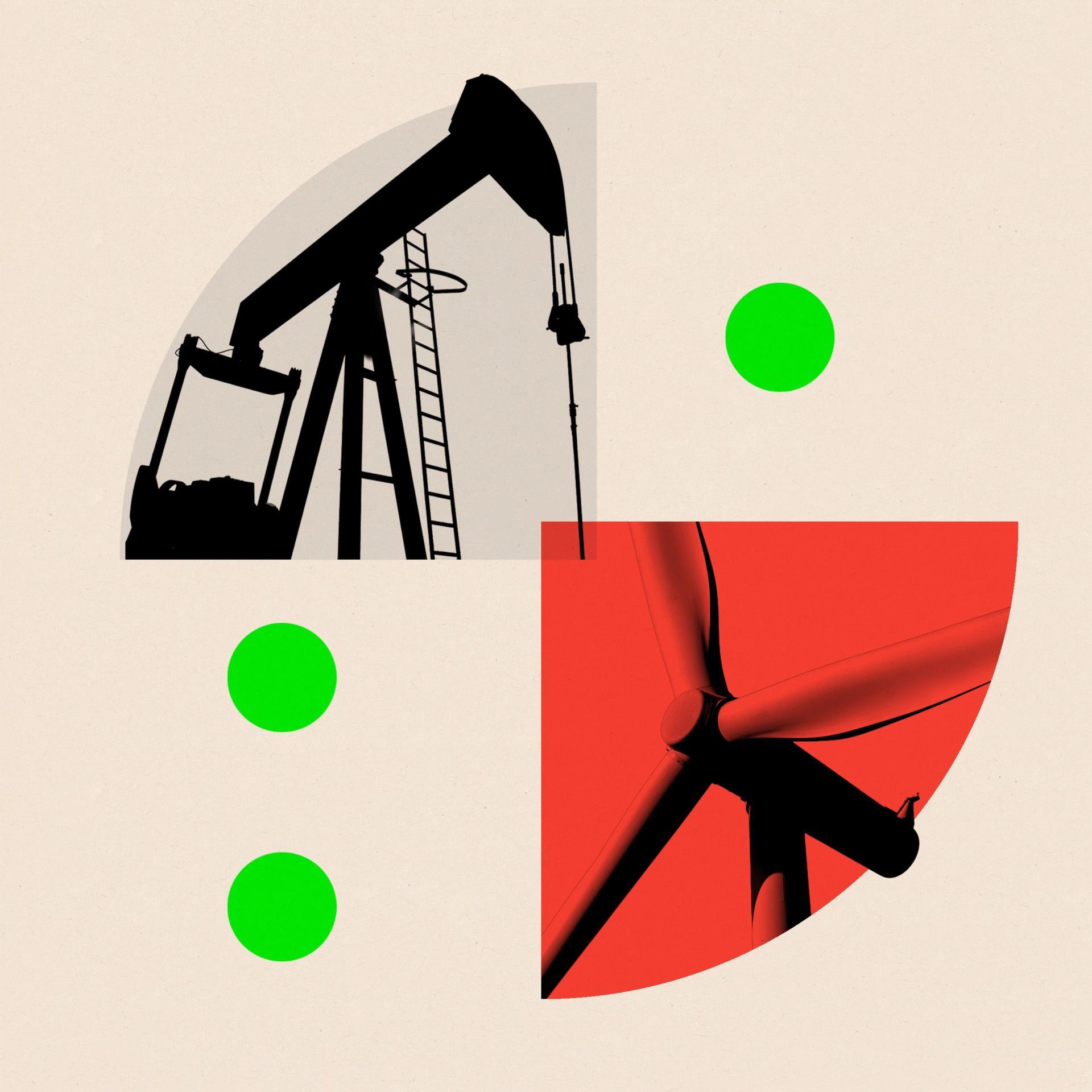
The global struggle between America's fossil-fuel dominance and China's renewable-energy push is reshaping energy markets worldwide, with British households caught in the crossfire. According to BBC News, January could bring energy bill increases exceeding 25% for typical UK households, driven by geopolitical tensions and competing energy strategies from the world's two superpowers.
Forecasts from major suppliers including British Gas, EDF and E.ON predict bills will climb by approximately £460 annually for the average household. MoneySavingExpert estimates average January 2027 price-cap forecasts at £2,189 per year, representing a 28.8% increase, with costs ranging from £2,193 for EDF customers to £2,250 for British Gas customers. This marks the second time in four years that distant conflicts have directly impacted British energy costs.
Since US and Israeli military operations against Iran in February effectively disrupted the Strait of Hormuz, oil and gas prices have surged. Winter demand for heating fuel is rising precisely when European gas storage levels have fallen to their lowest point since records began in 2011, creating a perfect storm for price increases.
Beyond immediate price shocks lies a deeper challenge: the need to cut carbon emissions while keeping bills affordable. This tension dominates discussions at COP31, the UN climate summit now underway in Antalya, Turkey. Nearly 200 countries are attending the conference, which opened on 9 November, with negotiators being urged to pursue concrete decisions on climate finance, clean energy and adaptation.
The United States is pursuing a strategy centred on fossil-fuel extraction, pumping record volumes of oil and gas while pressuring allies to purchase these commodities. China, by contrast, is flooding global markets with solar panels, batteries and electric vehicles designed to replace fossil fuels. The outcome of this competition will determine not only energy costs worldwide but also the pace at which global emissions can be reduced.
The UK, already importing nearly a quarter of its gas from America and substantial quantities of clean energy technology from China, faces pressure from both directions. Policymakers must decide whether to pursue domestic fossil-fuel extraction, accelerate renewable deployment, or attempt a balanced approach—each with distinct implications for household bills and climate commitments.
How is the UK choosing between fossil fuels and renewables?
Recent government decisions reveal the tension between these competing strategies. On the Moray Firth near Inverness, the Whiteness Head site once hosted a major North Sea oil platform construction yard for nearly three decades. Ming Yang, one of China's largest wind turbine manufacturers, proposed reviving the facility with a £1.5 billion factory capable of creating up to 1,500 initial jobs. In March, after US lawmakers urged the UK to block the investment, ministers rejected it on national security grounds—without publicly explaining the specific risk.
Two days later, the government approved the Jackdaw gas field in the North Sea. This sequence—rejecting Chinese renewable technology while approving new fossil-fuel extraction—signals the government's current direction. Energy Secretary Miatta Fahnbulleh has stated that affordability is her overriding priority given the cost-of-living crisis, yet she also acknowledges that tackling climate change remains essential after Britain experienced its hottest summer on record.

When pressed on whether bills or climate matters more, Fahnbulleh was unequivocal:
With the cost of living biting, affordability is my overriding objective, without a doubt.She added that the solution lies in homegrown clean energy, stating:
We are far too exposed to global markets we have no control over. What's the solution to that? Homegrown clean energy.
Britain can pursue energy independence through two routes: drilling for more domestic fossil fuels or constructing renewable-energy infrastructure. Each path presents distinct advantages and complications.
Would drilling for more oil and gas reduce household bills?
The government now faces a critical decision on Rosebank, located west of Shetland, which would be the UK's largest undeveloped oil field. The field is substantially larger than Jackdaw and produces primarily oil rather than gas. Fahnbulleh has indicated that Rosebank would generate approximately seven times the emissions of Jackdaw, and cabinet divisions over the proposal have been reported. A decision is anticipated within weeks.
Political pressure for approval is mounting. Conservative leader Kemi Badenoch has urged the prime minister to grant permission, calling drilling
the only way we can protect families from rising bills.Reform UK's Richard Tice similarly argues that using British gas would reduce bills. Last week's US midterms served as a cautionary reminder: soaring petrol prices are widely credited as a key factor in the Republican loss of congressional control.

However, Fahnbulleh directly contradicted this logic when asked whether producing more British oil and gas would lower bills.
No, it doesn't,she replied.
In the end, the oil and gas is sold on global markets.This reflects economic reality: North Sea production cannot insulate Britain from international price movements.
Critics argue that Rosebank offers minimal genuine benefits. Tessa Khan of the campaign group Uplift contends that
Rosebank doesn't really do anything for energy security. What it does do is send a very dangerous signal about the UK's seriousness about addressing climate change after the summer that we've just had.

The broader context undermines the case for expanded drilling. The North Sea is in structural decline, with output having fallen by more than two-thirds since peaking in 1999. The Office for Budget Responsibility projects continued annual declines of approximately 10% even if Rosebank proceeds. Jackdaw's reserves represent only a few months of UK gas demand, while Rosebank contains less than a year's worth of British oil consumption.
The government introduced legislation last week to enshrine a ban on new exploration licences into law. Since Rosebank is already licensed, it falls outside this prohibition, potentially allowing ministers to approve the final major field while pledging never to issue additional licences. This approach could satisfy both drilling advocates and climate concerns, a tempting combination as bills prepare to rise again in January.
Could renewable energy provide a more stable path?
Renewable energy offers a fundamentally different economics model. Gas requires continuous purchases and combustion, whereas wind turbines and solar panels involve upfront capital costs but then generate electricity for decades without requiring fuel shipments. This structural difference has profound implications for price stability.
The Climate Change Committee, the government's official climate advisers, has calculated that a future price shock comparable to 2022's would increase household energy bills by 59% if Britain remained on a high-carbon trajectory, but only 4% if it prioritised renewables. This analysis underscores the long-term financial case for clean energy transition.
Renewable costs have fallen dramatically. The International Renewable Energy Agency reports that solar power from new farms declined 90% in cost between 2010 and 2024, while onshore wind fell 70%. However, recent global inflation has begun reversing these gains. The Danish developer Ørsted cancelled plans for Hornsea 4, a major offshore wind farm off the Yorkshire coast, citing soaring supply-chain expenses. Higher interest rates have compounded the problem: since most wind and solar farm costs occur upfront, developers must borrow heavily before generating any revenue.
Additional infrastructure challenges complicate the renewable transition. Britain requires expensive new electricity networks to transport renewable power from generation sites to population centres. Furthermore, gas-fired power stations frequently set wholesale electricity prices, meaning cost savings from renewables do not automatically translate into lower customer bills.
Why is China's dominance in clean technology creating dilemmas?
China manufactures the vast majority of the world's solar panels and batteries, and approximately two-thirds of its electric vehicles. This dominance is expanding: in March, Chinese exports of solar panels, batteries and electric cars reached record levels, up 70% year-on-year, according to the think tank Ember.

The UK faces an uncomfortable paradox. To escape fossil-fuel dependence and the price volatility it creates, Britain must deploy renewable technologies. Yet much of the equipment needed for this transition originates in China, a country the government is increasingly reluctant to rely upon. When asked whether Britain was simply exchanging dependence on petrostates for dependence on Beijing, Fahnbulleh acknowledged:
Well, look, we are. We've got a diversified global market.She expressed a desire to see more turbines manufactured domestically.
The irony is stark: Ming Yang was offering precisely the UK-built turbines Fahnbulleh wants to see, yet the government rejected the investment on security grounds without public explanation.
Foreign investment is proceeding, but selectively. Two days before Jackdaw's approval, Japan's Sumitomo Electric opened Britain's first HVDC subsea cable factory at Nigg, a short distance up the coast from Whiteness Head, creating up to 250 jobs. This demonstrates the government's preference for non-Chinese foreign investment in clean energy infrastructure.
How is the global climate agenda shifting?
The geopolitical landscape for climate action has transformed dramatically. Earlier this year, the US formally withdrew from the Paris climate agreement and is not expected to send a delegation to COP31. This absence reduces pressure on other nations to make ambitious commitments. Current national pledges collectively amount to only a 6% reduction in global emissions by 2035—a tenth of what scientists deem necessary to limit warming to 1.5 degrees Celsius.
China is increasingly filling the vacuum left by American withdrawal. Li Shuo of the Asia Society Policy Institute describes this as a
role reversal.Once a conservative participant in climate negotiations, China now views advancing the global climate agenda as aligned with its national interests. The country aims to achieve one of COP31's flagship goals—obtaining 35% of its energy from electricity—five years ahead of schedule.
Chinese companies, rather than government pledges, are driving much of the global energy transition.
It's really just a China story,Li Shuo observes, highlighting how market forces and commercial competition are reshaping energy systems faster than diplomatic agreements.
COP31's presidency has launched the Antalya Compact for Energy Efficient Buildings, a framework designed to advance 2035 targets on building energy intensity and electrification. The conference is expected to begin the Paris Agreement's second global stocktake, a two-year assessment of collective progress toward long-term goals, and parties are anticipated to decide whether to continue the UN mitigation work programme, whose mandate expires in 2026.
What happens next at COP31?
COP31 is scheduled to conclude on 20 November, when final negotiations are planned. Outcomes from the summit will influence global energy investment patterns and climate commitments for years to come. Meanwhile, the UK government's decision on Rosebank remains pending, with implications extending far beyond energy policy to Britain's credibility on climate action.
The choices facing Britain—and the world—are stark. Pursuing fossil-fuel extraction offers short-term political relief but locks in long-term exposure to global price shocks and accelerates climate change. Investing in renewables requires upfront costs and infrastructure development but promises greater price stability and emissions reductions. China's commercial dominance in clean technology complicates the transition, while America's retreat from climate diplomacy removes a counterweight to fossil-fuel interests.
For British households already stretched by cost-of-living pressures, these geopolitical and energy-policy decisions translate directly into monthly bills. The outcome will shape not only what families pay for heating and electricity but also the pace at which the planet can address the warming that produced Britain's hottest summer on record.