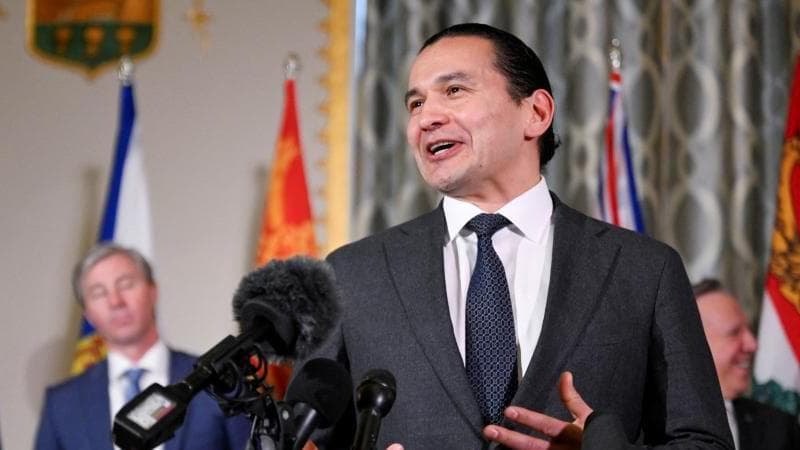
Manitoba Premier Wab Kinew has publicly opposed the prospective trade agreement being negotiated between the United States and Canada, describing Donald Trump as a "bad person" and urging his country to resist making hasty concessions. His stance reflects deepening divisions among Canada's provincial leaders just hours before a US-imposed deadline that could trigger sweeping new tariffs on Canadian goods.
Prime Minister Mark Carney is navigating a fractious political landscape as he attempts to secure provincial support for a deal that would require significant concessions from Canada. Negotiators must finalise an agreement by Friday night or face a fresh wave of additional US tariffs affecting a broad range of Canadian products. According to reporting from 21 August 2026, tariffs on roughly US$20 billion in Canadian imports were delayed until 12:01 a.m. on Saturday, giving negotiators a narrow window to reach consensus.
Carney's strategy hinges on persuading provincial premiers to restore the sale of American alcohol on liquor store shelves—a move the federal government hopes will convince the US to reduce tariffs on Canadian metals and automobiles. Yet Kinew's public resistance signals that securing this provincial cooperation will prove difficult.
What is driving the provincial disagreement?
Kinew's opposition stems from his conviction that Canada should not surrender negotiating leverage to an unpredictable administration.
"Everybody knows the American president by now, he's erratic, he's irresponsible, and he's not to be trusted,"Kinew stated on Thursday.
"And this is the person that we were supposed to make a deal with, and we're going to make additional concessions for it."
The Manitoba premier said he would reluctantly agree to restore US alcohol sales if it benefited all of Canada, but he urged consumers to reject the products.
"Let it sit on the shelf,"he said. According to reporting from 20 August 2026, Kinew had not agreed to put American liquor back on provincial shelves despite federal pressure tied to the trade negotiations.
Other provincial leaders have taken divergent positions. Quebec Premier Christine Fréchette, whose province has a substantial dairy industry, indicated on Thursday that she was evaluating the deal's implications for Quebec farmers before deciding whether to restore US alcohol sales. Premiers of Nova Scotia and the Yukon territory stated they were willing to restore such sales. Ontario Premier Doug Ford, who leads Canada's most populous province, has not yet commented publicly on the agreement.
What are the leaked terms of the deal?
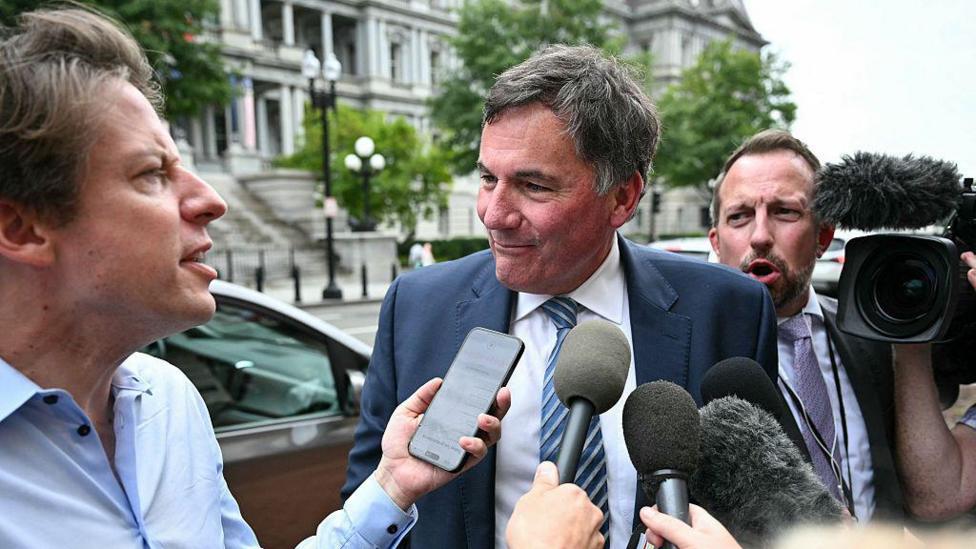
Canada's Trade Minister Dominic LeBlanc met with US Trade Representative Jamieson Greer for more than three hours on Thursday and told reporters the two sides were "very close." Details leaked to several media outlets suggest the US would agree to reduce tariffs on Canadian steel and aluminium from 50% to 25%, and tariffs on Canadian automobiles from 25% to 15%.
Beyond tariff reductions, the prospective agreement reportedly includes greater access for American dairy producers to the Canadian market and the removal of Canada's retaliatory tariffs on the US. According to reporting from the Globe and Mail, these terms formed the core of what negotiators were discussing as the deadline approached.

LeBlanc was scheduled to meet again with Greer on Friday morning to continue hammering out final details before the tariff deadline takes effect.
Who else is raising concerns about the deal?
Opposition to the agreement extends beyond provincial premiers. Matthew Shoemaker, mayor of an Ontario city home to Canada's second-largest steel producer, told the national broadcaster that a deal including 25% tariffs on steel "wouldn't be something to celebrate."
"I am worried with the news that's coming out that we are not seeing a deal that will benefit our community at the very least,"Shoemaker said.
Pierre Poilievre, leader of the Conservative opposition, has also criticised the emerging terms, arguing that "one-sided tariffs on Canadian industry would be a bad deal."
In a leaked audio recording reported by the Canadian Press, US Vice-President JD Vance told attendees at a private fundraiser on Wednesday that Carney has attempted to "out-tough Donald Trump" in trade talks.
"It's hilarious because Carney presents this as some victory for Canada when fundamentally, like, they climb down on a lot of issues,"Vance reportedly said.
What economic stakes are at play?
The pressure on Carney to reach a deal stems partly from the economic consequences of failing to do so. Canada could lose 90,000 jobs if the threatened 50% tariffs were implemented across a range of goods—from hockey equipment to wine to cement—according to estimates published on Thursday by Trevor Tombe, a Calgary-based economist.
Yet polling suggests most Canadians are wary of major concessions. A survey by polling firm Leger found that 56% of respondents wanted Canada to adopt a hardline approach in negotiations, reflecting public scepticism about surrendering ground to the Trump administration.
President Trump has characterised the possible deal as beneficial for American farmers and manufacturers, while Carney has said the two sides are approaching an agreement that addresses "Canada's most important strategic sectors."
What happens next?
Negotiators were expected to continue working through Friday morning to finalise terms before the deadline at 12:01 a.m. on Saturday. The immediate political test will centre on whether provinces, particularly Manitoba, agree to restore American alcohol to liquor store shelves as part of the final agreement. Kinew's public resistance suggests that even if a deal is reached at the federal level, securing provincial buy-in remains uncertain.
The outcome will shape not only Canada's trade relationship with the US but also test Carney's political standing after he campaigned on a tough "elbows-up" approach to dealing with Trump.