Californians have voted against a proposed wealth tax targeting the state's billionaires, rejecting a measure that would have been the world's first of its kind. According to BBC News, the ballot proposal aimed to levy a one-time tax on mega-wealthy residents to help fund healthcare. The vote count took nearly a week following the midterm election to establish a projection on the measure's outcome.
The Associated Press called Proposition 40 defeated on November 10, with 52.8% of voters rejecting it and 47.2% supporting it. The final tally showed 5,909,778 votes against the measure compared to 5,288,379 in favour.
California is home to approximately 200 billionaires, among them Meta founder Mark Zuckerberg, television personality Kim Kardashian, and media executive Oprah Winfrey. The state, with roughly 23 million registered voters, possesses the largest economy in the nation and ranks as the world's fourth-largest economy. Despite hosting one of the highest concentrations of billionaires globally, California also faces one of the most significant wealth gaps in the country.
What would the tax have done?
Proposition 40 would have targeted Californians with wealth exceeding $1.1 billion with a 5% tax on their total wealth, encompassing assets such as shares alongside income. The proposed tax would have applied to California residents who were billionaires on January 1, 2026, with payment due in 2027. The measure would have excluded real estate, pensions, and retirement accounts from taxation.
Had it succeeded, experts believed it would have represented the world's first wealth tax specifically targeting billionaires. Supporters projected the tax would have generated approximately $100 billion to compensate for federal healthcare funding reductions in California resulting from President Donald Trump's comprehensive tax and spending legislation.
Advocates for the measure contended it would guarantee that ultra-wealthy individuals contributed equitably and assisted in filling budget shortfalls. However, the proposal faced significant internal divisions within the Democratic party and among labour unions, ultimately contributing to its defeat.
Who opposed the measure?
The wealth tax encountered substantial opposition from prominent figures and organizations. Google co-founder Sergey Brin emerged as a vocal critic, as did California Governor Gavin Newsom, whose governorship is concluding. Labour unions also split on the issue.
Newsom raised concerns that the measure could prompt wealthy individuals to relocate from the state, potentially diminishing crucial income tax revenue. Some billionaire opponents of the proposal invested millions in efforts to defeat it, with a small number even leaving the state to avoid the potential tax. Brin contributed more than $100 million to a political organization funding ballot measures designed to block the tax, according to reporting from the Los Angeles Times.
What did supporters say?
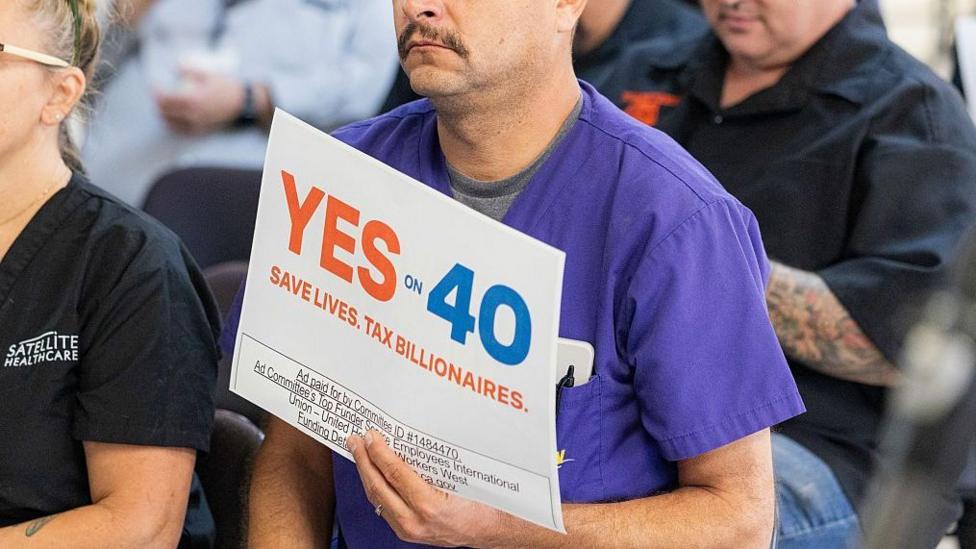
A lot of confusion and a lot of second-guessing among people who really in their hearts know what the right thing to do is, said Dave Regan, president of Service Employees International Union-United Healthcare Workers West, on election night. Regan led the union effort backing the measure and attributed the defeat partly to billionaires' campaign spending against it.
Despite the loss, Regan pledged to pursue another billionaire tax initiative in 2028, signalling continued determination from labour advocates to address wealth inequality through taxation.
Why was the measure's path difficult?
The proposition faced structural obstacles beyond public opinion. Two additional measures on the same ballot—Propositions 41 and 42—could have effectively reversed Proposition 40 even if it had achieved majority support, depending on vote counts across the measures.
Public support for the tax had also eroded in the weeks before the election. A Public Policy Institute of California poll released shortly before voting showed backing had declined to 46% of likely voters, down from 52% in September, indicating shifting sentiment among the electorate.
What happens next?
The defeat does not end efforts to address healthcare funding gaps in California. SEIU-UHW indicated it intends to pursue another billionaire-tax effort in 2028 if California's Legislature fails to deliver solutions to healthcare funding shortfalls. The union's commitment to revisiting the issue suggests wealth taxation will remain a contested policy debate in the state's political landscape.