Prime Minister Andy Burnham has instructed the Chancellor and Energy Secretary to devise a strategy for eliminating standing charges from household gas bills, linking the proposal to the government's approval of the Jackdaw gas field in the North Sea. According to BBC News, Burnham framed the decision as a "pragmatic" move that would enable increased investment in renewable energy while providing relief to households facing rising costs. The proposal has drawn support from research organisations, though industry bodies have cautioned that the actual impact on bills would depend on how the charges are restructured.
Standing charges are fixed daily fees that households must pay regardless of energy consumption, covering the costs of connecting to the supply network and maintaining infrastructure. These charges vary by region, with electricity standing charges averaging 54.8p per day and gas standing charges averaging 29.7p per day, equivalent to approximately £103.32 annually for gas. According to Yahoo News, Burnham linked the proposal directly to the Jackdaw approval, saying revenues would support renewables and help "substantially delink" gas and electricity prices during this Parliament.
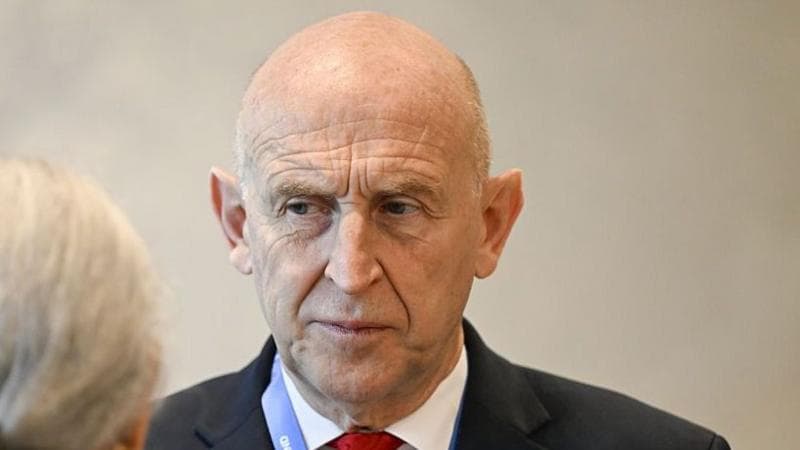
During Prime Minister's Questions, Burnham asked Chancellor John Healey and Energy Secretary Miatta Fahnbulleh "to look at whether we can remove standing charges from gas bills and to report back to this house at the earliest opportunity". No implementation details have been disclosed, though research firm Nesta has suggested that standing charges could be transferred to the unit rate, meaning customers would pay only for the energy they actually use.
Who would benefit from the change?
The shift would likely benefit low-energy users who cannot reduce their standing charge payments through conservation, but households with high gas consumption could face increased bills. Nesta director Madeleine Gabriel stated that "abolishing the gas standing charge and moving those costs onto the unit rate would help those worst hit by rising energy prices." However, Citizens Advice has warned about potential consequences for vulnerable customers, particularly those with limited incomes but high energy usage due to circumstances beyond their control, such as medical needs or poor insulation.
The proposal represents a response to sustained public pressure on standing charges. For nearly two years, regulator Ofgem has conducted extensive consultations on the issue, receiving substantial public feedback, particularly from low-energy users opposing the charges. Ofgem's consultation on requiring suppliers to offer at least one lower-standing-charge tariff closed on 23 October 2025, and the regulator is running a pilot scheme on low standing charge tariffs, though it has yet to reach firm conclusions, suggesting the issue presents complex trade-offs.
Why not remove electricity standing charges too?
When questioned about why electricity standing charges would not be scrapped alongside gas charges, the Prime Minister's official spokesman cited the government's earlier decision to cut VAT on electricity bills. Standing charges fund essential infrastructure costs such as transporting energy through pipes and wires, as well as schemes supporting low-income households. These costs must be recouped through some mechanism, creating a fundamental challenge for policymakers seeking to reform the system without simply shifting burdens elsewhere.
What is the broader energy price context?
The standing charge proposal emerges amid forecasts that energy prices will rise by 16% to a four-year high in January, intensifying pressure on household finances. Burnham has argued that investing in renewables would bring household bills down "substantially" by breaking the link between gas and electricity prices, a relationship that has long made UK electricity prices higher than in many comparable nations. The typical household bill is forecast to reach £1,999 in January, representing a significant increase from current levels.
What happens next?
The Chancellor and Energy Secretary are expected to report back to Parliament "at the earliest opportunity" with their findings, though no final decision or timetable has been announced. The Chancellor is due to present the Budget next week, where the standing charge proposal could be considered alongside other energy support measures. Ofgem's one-year lower-standing-charge tariff pilot is due to start in June 2026, with participating customers taking both gas and electricity tariffs potentially paying about £150 less annually in standing charges than on the price cap.