Prime Minister Andy Burnham has pushed back against criticism from a former Bank of England economist who warned that financial markets have lost faith in his government's fiscal strategy, characterising it as a "traditional tax and spend socialist" administration. The dispute reflects mounting pressure on the government as long-term borrowing costs have surged to 28-year highs, significantly constraining fiscal options ahead of the autumn Budget on 28 October 2026.
Speaking on 16 September, Andy Haldane, who previously advised Burnham on economic matters, told LBC radio that investors had grown sceptical of the government's willingness to make tough spending cuts. He argued that the administration faced a binary choice between raising taxes or reducing public expenditure when delivering its Budget. According to a national broadcaster's report, 30-year gilt yields have climbed to 5.89% and 10-year yields to 5.22%, marking a 28-year high and significantly constraining the government's fiscal options.
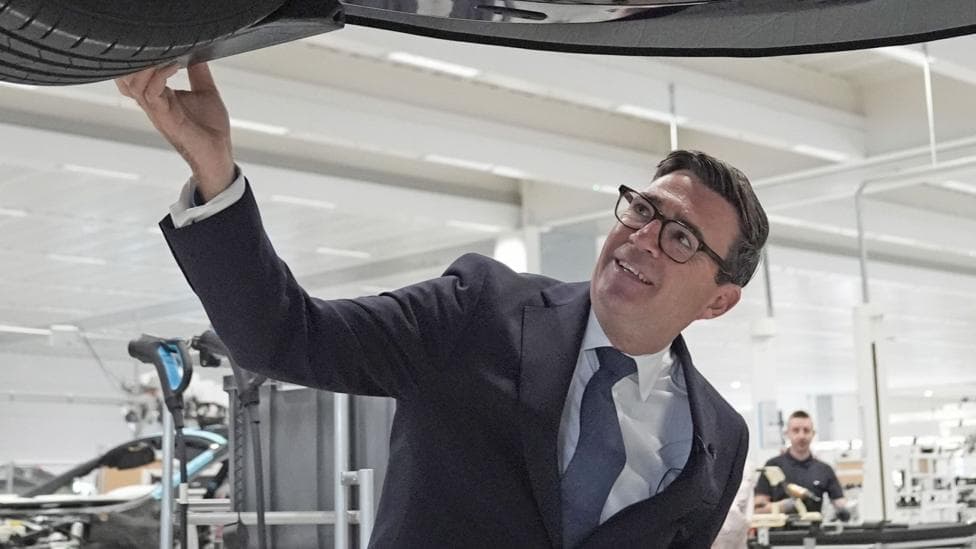
Burnham rejected this framing during a visit on Wednesday, insisting he had already made difficult fiscal choices since taking office and would continue to do so.
"So it's not the case that we aren't going to take difficult decisions. We will take difficult decisions to make sure the economy remains on track,"he told broadcasters.
What has Haldane said about the government's economic approach?
Haldane claimed that financial market sentiment towards the government has deteriorated sharply since the summer.
"Within financial markets, we've gone from the cautious optimism of the summer months to the studied scepticism of September. The market now suspects that this is a traditional tax and spend socialist government with better TikTok videos,"he said on the radio station.
The former Bank of England chief economist argued that investors were concerned about whether Burnham possessed the political will to reduce public spending, fearing instead that the government would rely on tax increases.
"The fiscal Achilles Heel of this government thus far has been its unwillingness and/or inability to cut public spending,"Haldane told LBC. He urged the prime minister not to raise taxes further, warning that the government faced a
"straight choice"between raising taxes and cutting spending at the yearly spending statement.
Haldane's criticism carries particular weight given his informal advisory role to Burnham's operation. Similar concerns have been voiced in recent weeks by prominent economist Lord O'Neill, another sometime adviser to the government, underscoring the breadth of concern among economic figures about the government's fiscal direction.
How has Burnham responded to these criticisms?
Burnham rejected Haldane's characterisation of market perceptions, telling broadcasters:
"That doesn't tell the story. We are not that."
The prime minister pointed to decisions he has already made, including reallocating government spending over the summer to fund early cost of living interventions and scrapping the rollout of digital ID. He identified the digital ID decision as an example of how he had already
"taken difficult decisions in this job in relation to reprioritising government spending."
However, the digital ID example illustrates the tension in the government's position. Burnham announced the scheme's abandonment in the days before becoming prime minister to focus on cost of living policies, but the spending was then reallocated within the new government's first few days to cut VAT on household electricity bills. In that sense, it represented a reprioritisation rather than a reduction in public spending. Former cabinet minister Darren Jones had criticised the move at the time on the grounds that the government had not yet allocated the money for digital ID in the first place.

During his visit on Wednesday, Burnham acknowledged that the forthcoming Budget would be
"challenging,"attributing recent inflationary pressures partly to
"the situation in the Middle East."According to Reuters, Burnham said on 16 September that he is ready to take "difficult decisions" to keep the economy on track after inflation rose and Budget speculation intensified.
What constraints does the government face?
Burnham has committed to manifesto pledges made by Labour at the last general election not to raise the main rates of income tax, VAT or National Insurance, substantially limiting his capacity to increase revenue. Simultaneously, he has pledged to maintain the previous government's debt and spending targets, a commitment that has become increasingly difficult as the cost of servicing the UK's existing debt has risen.
The combination of higher borrowing costs and the worsening economic backdrop is expected to significantly erode the £24bn buffer against those targets that Burnham inherited from the Starmer government. According to a national broadcaster's analysis, the 30-year gilt rise constrains spending choices because higher long-term borrowing costs raise the government's financing costs.
Since taking office, Burnham has committed approximately £1.8bn towards cost of living interventions, with some funding derived from reallocating money within existing departmental budgets. The prime minister has also committed to extra defence funding promised by his predecessor before his exit over the summer, though a decision on when to reach the target of spending 3% of GDP on the military has been deferred to next year.
Are Burnham and Chancellor Healey aligned on economic strategy?
Signs from Finance Minister Healey's first major speech as chancellor last week suggested he wants to reassure the markets, promising to "control public spending" and praising Rachel Reeves for beginning to "recover Britain's fiscal discipline." However, there are indications of potential tension between the prime minister and his chancellor over economic priorities.
Burnham and Healey would hardly be the first PM-chancellor double act to adopt different tones and emphasise different priorities in their public appearances. As a junior minister at the Treasury almost 25 years ago, Healey was engaged in the question of how to boost growth around the country, long before it became central to Burnham's vision for Britain. But there are people in government who are beginning to wonder whether their economic visions are quite as aligned as expected. One government source said:
"It's what everyone is thinking and some of us are vocalising."
There are also those who fear the adverse political consequences of a Labour government seeking to go out of its way to demonstrate its fiscal credibility. This tension presents a more fundamental challenge: are the kinds of policies needed to soothe the markets politically deliverable given Labour's electoral coalition and its need to shore up the progressive vote?
What happens next?
The Budget is scheduled for 28 October 2026, just over six weeks away. According to Reuters, Finance Minister Healey is due to make his first major speech on growth before that Budget, as the government attempts to balance its fiscal constraints with growth objectives. The Budget will be the first and most important sign of the new government's answer to the question of whether it can substantiate Burnham's rhetoric about offering the biggest change in British politics in 40 years.
Key Facts:
- Long-term UK borrowing costs have reached 28-year highs, with 30-year gilt yields at 5.89% and 10-year yields at 5.22%
- Burnham has committed £1.8bn to cost of living interventions since taking office, funded partly through departmental reallocation
- The government faces a £24bn buffer against debt and spending targets, expected to narrow significantly due to rising borrowing costs
- Burnham remains bound by manifesto commitments not to raise income tax, VAT or National Insurance rates
- The Budget will be delivered on 28 October 2026, with Finance Minister Healey to deliver a speech on growth beforehand