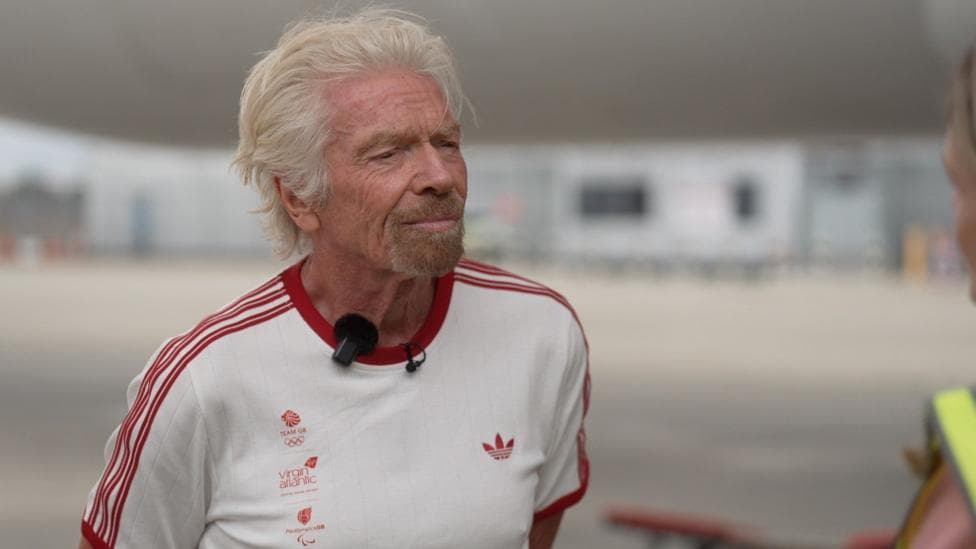
Virgin Group founder Sir Richard Branson has attributed rising airline ticket prices to geopolitical conflict, making a pointed reference to tensions involving the United States, Israel and Iran in the Middle East.
Disruptions to oil production and transportation across the region have driven up the cost of crude oil, which directly affects jet fuel prices. Airlines worldwide have responded by introducing fuel surcharges and, in some cases, reducing capacity.
Virgin Atlantic introduced a fuel surcharge in May, adding £50 to economy fares, £180 to premium economy tickets and £360 to business class seats. The surcharge appears separately on tickets under the airline's conditions of carriage.
What caused the fuel price spike?
Middle East tensions have disrupted millions of barrels of oil production and transportation, causing jet fuel costs to surge dramatically. The European benchmark jet fuel price had been around $800 (£590) per tonne before the conflict but spiked to over $1,800 in April. As of early September 2026, global jet fuel prices stood at approximately $156.85 per barrel, though they remain elevated compared to pre-conflict levels.
Branson criticised the decision to abandon a nuclear agreement with Iran that had been negotiated under President Obama and supported by European nations.
The Iran conflict was completely unnecessary. There was a nuclear agreement between Iran and the rest of the world that had been negotiated by President Obama and a lot of European people. It was working, so there was no need to rip it up... And this war has just resulted in much higher oil prices all over the world. And inflation has been one of the consequences.
US President Donald Trump has repeatedly defended the conflict as necessary for long-term peace and security. The White House was contacted for comment but has not yet responded.
How have airlines responded to higher fuel costs?
Multiple carriers have adjusted their operations and pricing in response to fuel price volatility. In April, analysis from consultancy firm Teneo found the conflict had led to a 25% increase in air fares across the industry.
Virgin Atlantic's chief executive, Corneel Koster, told the BBC that fuel surcharges were
absolutely requiredat this level of fuel pricing, and expressed concern about the Middle East situation.
It's hard to be optimistic at this moment about the situation in the Middle East.

Several of Virgin's competitors have taken more aggressive action. Ryanair announced it would reduce its winter schedule due to higher fuel costs and warned that European short-haul fares would
increase materiallyif jet fuel prices remain elevated through next summer. According to reporting on airline fuel concerns, Ryanair warned on 2 September 2026 that some carriers could struggle with jet fuel prices around $140 per barrel.
EasyJet has also been affected, with the carrier warning that the conflict increased its fuel costs by £25 million and delayed bookings, leading to an expected pre-tax loss of up to £560 million for the six months to March.
What is Virgin Atlantic's winter strategy?
Despite the higher costs, Koster said Virgin Atlantic did not plan to make significant changes to its winter schedule. Winter capacity had already been slightly reduced several months earlier, and the airline expects to operate 95% of its regular winter schedule. If demand falls on certain routes during the winter months, the airline will apply
capacity disciplinebut not reduce by
big percentages.
According to the International Air Transport Association's fuel monitor, global jet fuel prices were reported at about $156.85 per barrel on 3 September 2026, with the weekly average down 4.3% from the prior week, though prices remain well above pre-conflict levels.
What broader context shapes airline fuel strategies?
Fuel surcharges have become a standard industry response to volatile jet-fuel costs, with multiple carriers adjusting them throughout 2026. The European jet fuel market has remained elevated, with aviation kerosene prices continuing above $1,400 per tonne in early September 2026.
The wider concern for airlines is exposure to unhedged fuel costs, which has been a recurring issue across the industry in 2026, particularly among carriers cutting winter capacity. Travel industry analysis notes that Virgin Atlantic's fuel surcharge policy of £50 for economy, £180 for premium economy and £360 for business remained in place on new bookings as of April 2026.
Branson made his comments as Virgin Atlantic announced it had secured a contract to transport Team GB and ParalympicsGB to Los Angeles for the 2028 Summer Olympics. The airline took the contract from British Airways, which had held the role since the 2008 Beijing Games.
What happens next for airlines and fuel costs?
Industry observers remain uncertain about the trajectory of jet fuel prices and their impact on airline operations. Ryanair's winter capacity reductions are already underway, with the carrier warning that further fare increases are possible if jet fuel prices remain high into next summer. Virgin Atlantic's pricing and schedule decisions for winter remain contingent on demand levels and fuel market conditions, with no major winter schedule changes announced beyond the existing capacity discipline approach.