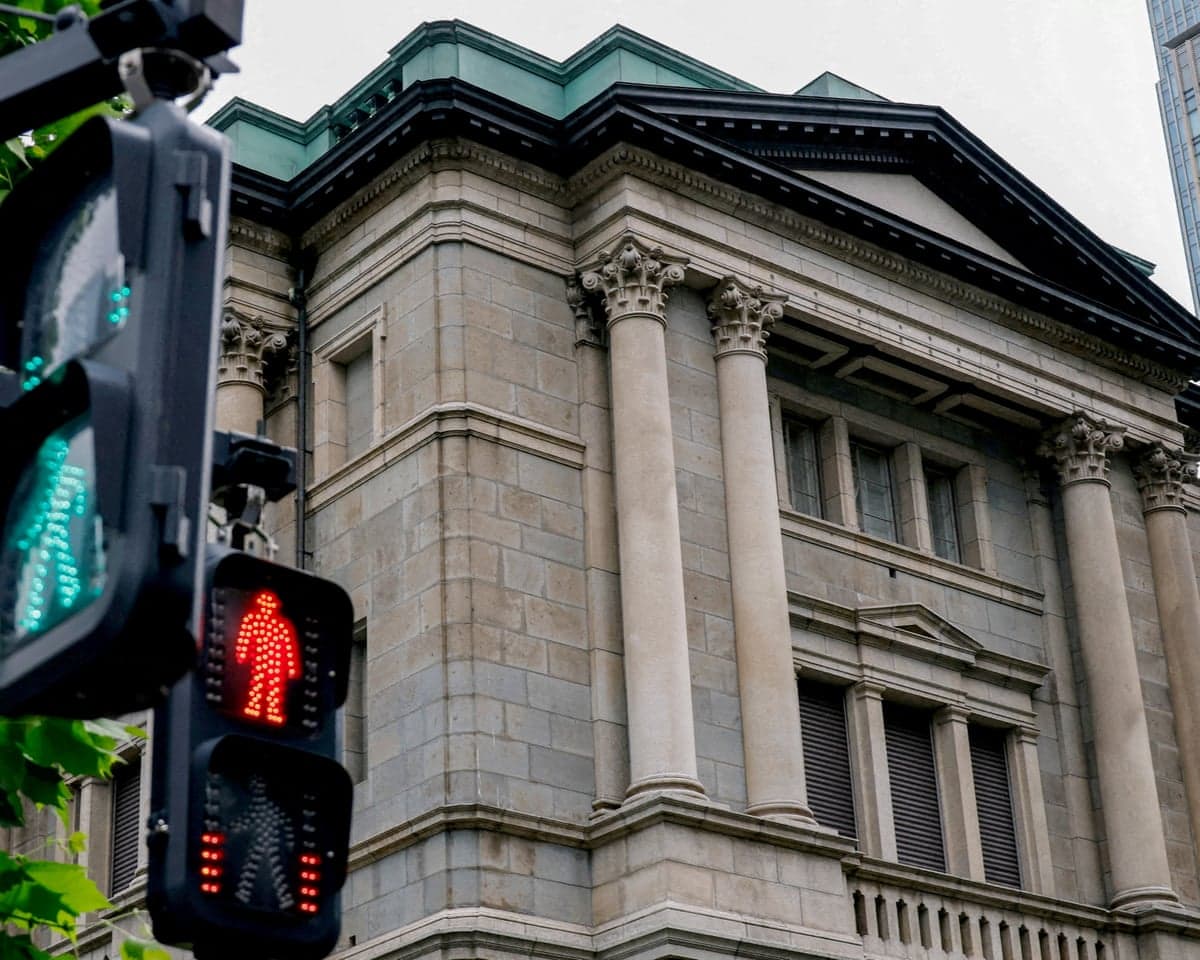
Japan's central bank has lifted its benchmark interest rate to the highest level in more than three decades on 24 September 2026, joining other major monetary authorities in tightening policy to combat persistent inflation driven by geopolitical tensions and elevated energy costs.
The Bank of Japan's policy committee voted to increase the target interest rate from 1% to 1.25%, marking the highest setting since 1995. According to , the vote was 7-2, with board members Toichiro Asada and Ayano Sato dissenting against the increase.
The decision positioned the Bank of Japan alongside the US Federal Reserve and the European Central Bank, all of which have tightened monetary policy this month in response to rising prices linked to conflict in the Middle East. The Bank of England had held its rate at 3.75% earlier in the week but signalled that further increases could follow as fallout from regional tensions continues to affect energy markets.
What does the Bank of Japan's shift in strategy mean?
Governor Kazuo Ueda announced that the central bank has fundamentally altered its approach to inflation management. Rather than attempting to push inflation upward from below-target levels, the Bank of Japan now focuses on preventing inflation from rising above its 2% target. According to reporting on the decision, Ueda signalled this represented a new phase in the central bank's monetary policy framework.
In August, Japan's inflation rate stood at 1.9%, approaching the bank's target. Ueda explained the reasoning behind this strategic reorientation:
Up until now, our short-term policy focus was to push up underlying inflation from levels below 2%. Now, underlying inflation is approaching 2%. If risks of underlying inflation overshooting 2% materialise, that could have a negative impact on Japan's economy. It's important to stabilise underlying inflation at 2%.
Will interest rates rise again soon?
Ueda declined to commit to a specific timetable for future rate increases, stating that the Bank of Japan's policy committee will not follow a predetermined schedule. The committee meets eight times annually, roughly every six weeks, and decisions will be made on a case-by-case basis.
That depends on how price conditions develop. There could be various possibilities. We shouldn't rule anything out. We're at a phase where we need to look at various data carefully. But that doesn't mean we can move slowly. We will analyse data carefully and take timely action as needed.
When asked about the possibility of consecutive rate increases, Ueda added:
As for the pace of future rate hikes, we don't have any pre-set idea in mind such as once every three months. We will determine at each policy meeting how best to ensure underlying inflation stabilises at 2%.

According to analysis, some market analysts now project the rate could reach 1.5% by the end of March 2027 and 1.75% in the second quarter of 2027, suggesting a faster tightening pace than previously anticipated. The next scheduled policy meeting is set for 29-30 October 2026.
How has the yen responded to the rate decision?
The Japanese currency weakened more than 1% against the dollar on the day of the announcement. According to , currency traders interpreted the Bank of Japan's guidance as insufficiently hawkish to guarantee additional tightening, prompting selling pressure on the yen.
The Bank of Japan has faced sustained pressure to raise rates due to the yen's steady depreciation against the dollar throughout 2026. In late July, the US Treasury and Japanese authorities jointly intervened in currency markets to arrest the yen's decline to a 40-year low, an action taken without prior notification to the European Central Bank. Earlier this month, US Treasury Secretary Scott Bessent warned currency traders against betting against the yen, stating:
I have asymmetric information. I am the house now. You can bet against me if you want.
Bessent added that he possessed
pretty good insightinto the intentions of Japanese policymakers.
How have financial markets reacted?
The Nikkei stock market index rose nearly 2% following the rate decision, supported by the yen's weakness, which benefits Japanese exporters. However, Japanese two-year government bond yields, which are most sensitive to monetary policy expectations, fell four basis points to 1.82%, suggesting market participants expect a cautious approach to further tightening.
European stock markets declined 0.5% on the day of the announcement. Fred Neumann, chief Asia economist at HSBC, expressed reservations about the Bank of Japan's commitment to aggressive tightening, noting:
The tone of the [BoJ] statement, along with two dissenters for the decision to raise rates, leaves lingering doubts that Japan's central bank will be cautious in tightening monetary policy further. While back-to-back hikes appear unlikely, investors will look for clues as to whether officials are prepared to raise interest rates again in December.
Prashant Newnaha, a senior rates strategist at TD Securities, observed that while the Bank of Japan reiterated concerns about inflation potentially deviating upward from its 2% target, the statement did not provide compelling evidence for consecutive rate increases. He stated:
We don't see a smoking gun supporting a back-to-back hike in October. We stick with our call for rate hikes roughly every quarter with the next 25 basis points hike in December.
What is happening with energy markets?
Brent crude futures declined as much as 1.5% to $103.29 a barrel on the day of the Bank of Japan's decision, as hopes emerged that alternative routes for Middle Eastern oil supplies could reach global markets. However, concerns persisted regarding potential strikes between Saudi Arabia and Yemen's Houthis, which could disrupt energy flows and sustain upward pressure on prices.
Key Facts
- The Bank of Japan raised its policy rate to 1.25% on 24 September 2026, the highest level since 1995, with a 7-2 vote that included dissents from board members Toichiro Asada and Ayano Sato
- The central bank has shifted from attempting to boost inflation toward preventing it from exceeding its 2% target, reflecting a fundamental change in monetary policy strategy
- Market analysts project further rate increases to 1.5% by end-March 2027 and potentially 1.75% in the second quarter of 2027, though the Bank of Japan has not committed to a predetermined timetable
- The yen weakened following the decision as traders viewed the Bank of Japan's guidance as insufficiently hawkish to guarantee additional tightening
- The next Bank of Japan policy meeting is scheduled for 29-30 October 2026