Australia's tax authority has uncovered that more than one-quarter of large corporations operating domestically paid no income tax during the 2024–25 financial year, according to the Australian Taxation Office's latest corporate transparency report.
The report indicates that companies predominantly attributed their zero tax liability to accounting losses, where expenditure exceeded revenue. According to prior reporting, some multinational enterprises have consistently avoided tax obligations by citing infrastructure investments and operational expenses. Roughly 27% of entities in the report declared zero tax, matching the previous year's proportion.
Among 4,299 entities with total income of at least $100 million, a combined $87.5 billion in tax was collected during 2024–25, with Australia's substantial mining sector leading contributions. The ATO's acting deputy commissioner, Michelle Sams, stated the agency remains
increasingly focused on making sure digital businesses and supply chains, including data centres, paid their share of tax. We look very closely if there's no tax being paid in significant industries, including things like data centres, to make sure that the level of tax being paid reflects the economic activity that's happening in Australia.
What is driving the zero-tax trend?
Accounting losses remain the primary explanation offered by companies for their nil tax position. However, the persistence of this pattern year-on-year suggests structural factors within Australia's tax system may be permitting legitimate but aggressive tax minimisation strategies.
How many first-home buyers are using the low-deposit scheme?
Government data reveals that 102,594 first-home buyers have accessed the 5% deposit scheme over the past 12 months following the Labor government's expansion of the initiative. This represents a significant uptake, with one in two first-home buyers nationally now utilising the scheme to enter the property market.
The scheme has generated substantial savings for Australian households. Government estimates indicate the policy has preserved more than $2.5 billion in lenders mortgage insurance overall, with approximately $1.4 billion of that amount saved within the last 12 months. Repayment performance has remained strong, with 99% of buyers either ahead of schedule or maintaining compliance with their payment obligations.
Prime Minister Anthony Albanese remarked in a statement that
this scheme is helping Australians, particularly young Australians, get their foot in the door and achieve the dream of home ownership. When it comes to housing challenges, we're tackling it from every angle – making it easier for first home buyers, boosting supply and helping renters get a better deal.
What support has been provided to Bell Bay Aluminium?
One of Australia's four major aluminium smelters has secured its operational future following a government intervention. Bell Bay Aluminium in northern Tasmania has obtained a five-year electricity supply agreement with state-owned Hydro Tasmania, backed by a $200 million joint support package from the Tasmanian and federal governments.
The smelter's electricity contract was scheduled to terminate at the end of 2026, and negotiations with Hydro Tasmania had stalled for months. According to recent reports, Rio Tinto, Hydro Tasmania and both governments have now secured the facility's operation through 31 December 2031, extending the arrangement significantly beyond the initial five-year agreement. The $200 million support package is funded equally by the federal and Tasmanian governments and operates separately from the electricity agreement itself, with the specific terms of the power deal remaining undisclosed.
The facility employs 550 workers directly, with an additional 1,000 workers across northern Tasmania dependent on its operations. According to the Australian Aluminium Council, Bell Bay contributes more than $250 million annually to Tasmania's economy.
Why is Queensland missing the Thriving Kids rollout?
Queensland's state government has missed the deadline to formally to the federal Thriving Kids program, leaving the state as the sole Australian jurisdiction absent from the scheme's initial rollout. The program commenced today across every state and territory except Queensland.
Thriving Kids is designed to provide early intervention services to children aged eight and under with mild to moderate developmental delays or autism. Unlike the National Disability Insurance Scheme, participation will not require a formal diagnosis, potentially accelerating access to services and reducing costs for families. The scheme will gradually transition eligible children away from the NDIS, with full replacement scheduled for 2028.
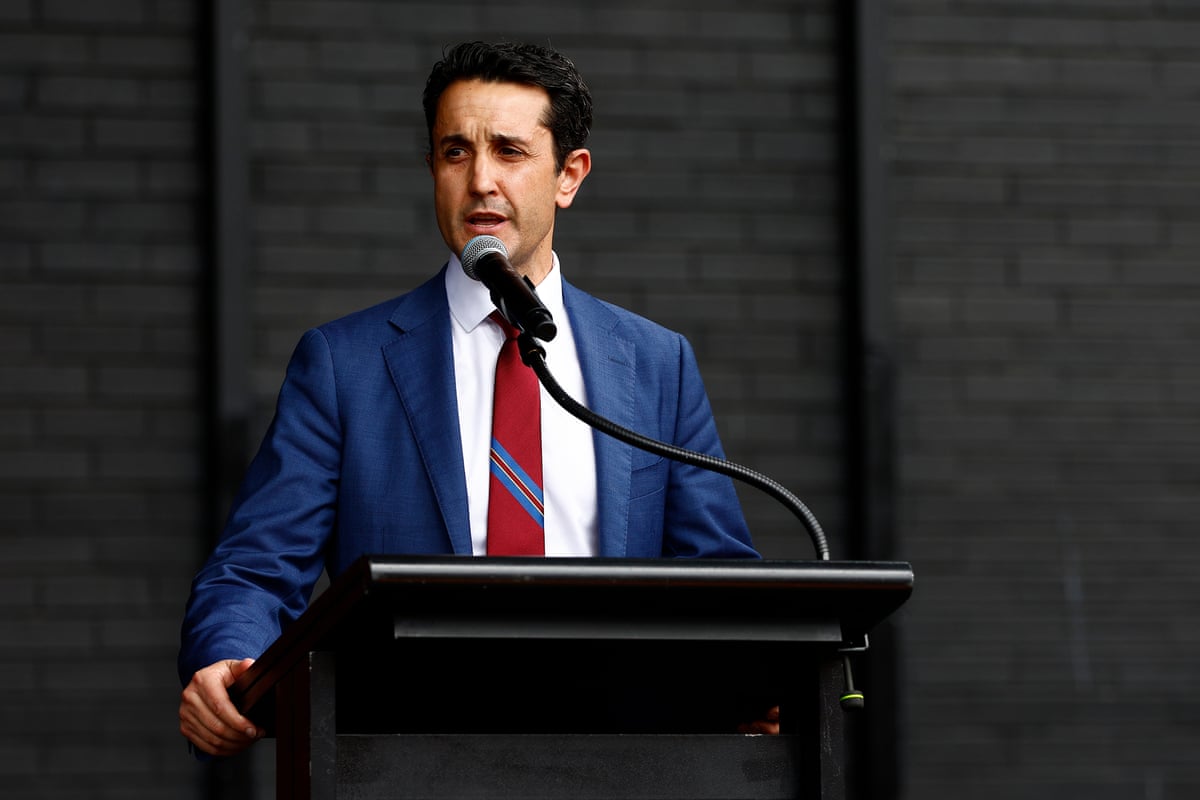
Queensland signed up to the arrangement in principle in January but has declined to implement it without additional information from the commonwealth regarding costs and other specifics. Premier David Crisafulli stated on Wednesday that he opposed the change becoming
a cost-shifting exerciseand complained of insufficient detail from federal authorities. He added:
I say to those families, we're on your side, and we're trying to get some common sense out of Canberra to make sure that you don't fall through the cracks.
Three disability advocacy organisations—People with Disability Australia, Children and Young People with Disability Australia, and the Queensland Independent Disability Advocacy Network—have urged the Queensland government to end the uncertainty affecting families. In an open letter, the groups stated:
While other jurisdictions move into implementation, Queensland families are being asked to live with continued uncertainty about what supports will be available here and when. If the government is not satisfied that the current arrangements protect Queensland children and families, it now needs to set out a credible pathway to arrangements that will. People with disability, families and the organisations that represent and advocate alongside them must be part of that work.
Health Minister Mark Butler has assured parents that no gap in government support will emerge for their children during the transition. According to disability services information, Thriving Kids' first services are expected to commence from October 2026, while Queensland and the Commonwealth continue working toward a bilateral agreement.
What is the latest research on technology and young people's mental health?
A new report from the National Mental Health Commission has found that the relationship between digital technology and the mental health of young Australians is considerably more nuanced than commonly depicted in public discourse.
The study, which examined Australians aged 5 to 25, discovered that mental health symptoms may be prompting individuals to engage with social media in harmful patterns, rather than technology itself causing mental health deterioration. The research calls for greater emphasis on designing safe digital environments for children, rather than focusing narrowly on restricting screen time.
David McGrath, the commission's chief executive, emphasised that policy development must be
guided by evidence and not assumptions. This landmark Australian study helps move the conversation beyond screen time and towards understanding the real experiences children and young people are having online. The evidence shows those experiences are complex, it is important that policy responses reflect that complexity.
The report concludes that digital technology is neither inherently beneficial nor harmful. What proves significant is the manner in which children and young people utilise it, the nature of their online experiences, and whether digital platforms are constructed with their wellbeing as a priority.
What changes are occurring in telecommunications disaster response?
Telstra, Optus and Vodafone have activated a new capability allowing them to temporarily route users to rival networks in areas where coverage has been disrupted by natural disasters such as cyclones, bushfires or floods. This arrangement commenced today and will enable affected users to maintain calling, messaging and basic internet access at no additional cost when their primary network is unavailable.
This capability extends beyond the existing system for networks to redirect emergency triple zero calls to competitors when the originating network cannot process them. The industry has acknowledged that certain scenarios—particularly power outages—may prevent switching from occurring.
The three carriers will manage activation of temporary roaming, with the process occurring automatically for customers once initiated. The arrangement permits activation across up to three affected areas simultaneously, with each area encompassing up to 15 mobile sites and activation lasting 24 hours at a time. Affected areas must be separated by a minimum of 400 kilometres, and metropolitan regions are excluded from the roaming arrangement.
What reforms are eliminating card payment surcharges?
Debit and credit card surcharges have been eliminated today as part of Reserve Bank reforms designed to remove additional checkout fees on Visa, Mastercard and Eftpos transactions. The RBA implemented these changes following a review of Australia's card payments infrastructure, which the bank's governor, Michele Bullock, determined was no longer appropriate for contemporary requirements.
Businesses have already implemented rapid policy adjustments as they determine how to manage fees they are no longer permitted to transfer to customers. The Australian Taxation Office has joined this transition, announcing that as a government agency, it determined the
cost of credit card merchant fees to be transferred to the communitywould be inappropriate.
While the majority of Australians do not settle tax obligations using credit cards, the ATO acknowledges that the changes may necessitate adjustments for the limited population of individuals and businesses who do employ this payment method. Taxpayers with direct debit arrangements connected to a credit card must modify their payment method before their next instalment due after 30 November to maintain compliance with their payment plan.
The ATO stated:
The ATO is committed to helping taxpayers transition to alternative payment methods and will continue to support those experiencing financial hardship or other circumstances that make it difficult to meet their obligations.
What is the Greens' new leadership position?
David Shoebridge, the newly appointed Greens leader, has declared that Australians are fatigued by
messaging without substance.Speaking to RN Breakfast this morning, Shoebridge characterised the Greens as occupying a
terrific positionwith solid electoral backing, while the major parties have experienced their support
getting decimated and ripped apart.

Shoebridge stated the Greens would persist in efforts to
not just deliver some message and some pathetic, half-baked pretend reform.He elaborated:
People are sick of the messaging without substance. What they're asking for is a political party that's going to go and fight for them and take on the 1% and take on the corporations. They want to see us fighting for that.
The Greens leader identified the rise of One Nation as a challenge confronting the broader political landscape. Shoebridge expressed his intention to expand the party's membership base amid shifting political dynamics, stating:
We have an incredibly united membership base. We have an incredibly united party across the country. And I expect that to be how we operate as a party room, how we operate as a leadership team and how we operate as a growing movement.
What disruptions are affecting Sydney rail services?
Sydney Trains has advised commuters to allocate additional travel time for journeys this morning due to an incident at Central station. Trains are anticipated to experience extended stops on platforms or between stations, or may alter stops with minimal notice.
Passengers are encouraged to consult trip planner applications for current service updates.
What happens next?
Bell Bay Aluminium's electricity supply arrangement will remain in effect until 31 December 2031, securing the facility's long-term viability. Thriving Kids services are anticipated to commence from October 2026 across participating jurisdictions, while Queensland continues negotiations with the Commonwealth toward finalising a bilateral agreement.