
Amid mounting warnings about the risks posed by powerful artificial intelligence systems, a more immediate financial danger lurks beneath the surface: the precarious debt structures underwriting the entire AI boom. While concerns about AI safety and regulation dominate headlines, the economic foundations supporting the industry's explosive expansion deserve equally urgent scrutiny.
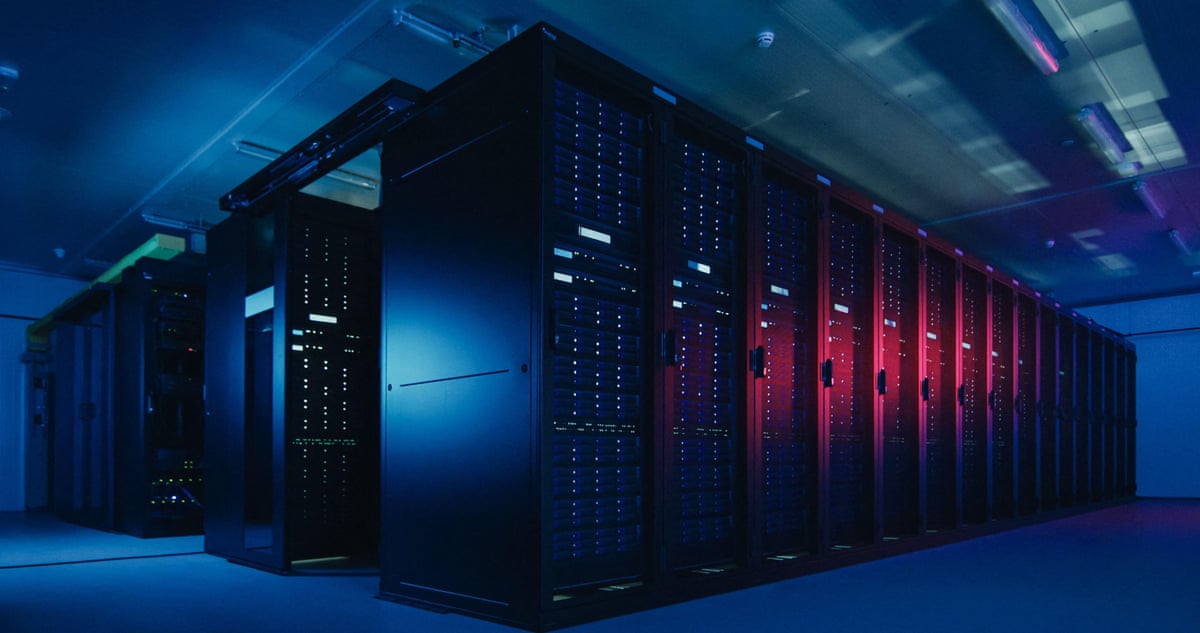
The scale of borrowing required to fund the frenzied construction of data centres by the world's largest technology firms—Google, Amazon, Microsoft, Meta and Oracle—has reached staggering proportions. These hyperscalers issued $132 billion in debt this year alone to finance their infrastructure rollout. According to analysis, AI-related debt sold in 2026 had already reached nearly $500 billion through early August, accounting for roughly one-fifth of all higher-rated U.S. corporate issuance so far this year. This represents a dramatic acceleration: the share of AI-related debt has surged from just 1% of higher-rated U.S. issuance in 2024 to approximately 20% in 2026, signalling how rapidly credit market exposure has shifted toward the sector.
A collapse of the AI bubble would reverberate far beyond Silicon Valley, with consequences affecting economies and financial systems worldwide. Yet the industry's leaders have spent recent weeks issuing warnings about existential risks from their own creations, while simultaneously seeking regulatory frameworks that could entrench their market dominance. Some proposals for government-backed AI "pauses" or safety coordination, for instance, could inadvertently shield major firms from cheaper Chinese competitors.
The financial vulnerabilities extend beyond simple debt levels. In a global environment where bond market yields remain fragile—with 10-year U.S. Treasury yields serving as a benchmark for global borrowing costs—the sheer volume of AI-sector debt could trigger a sudden market reassessment. Amazon alone has raised approximately $100 billion in the bond market this year to fund its AI spending, while Goldman Sachs expects the five major hyperscalers to issue about $250 billion of bonds in 2026 and another $400 billion in 2027.
Do the economics of AI actually work?
Beyond debt accumulation, the fundamental unit economics of AI remain deeply questionable and are moving in the wrong direction. A recent Bloomberg report captured the core problem:
The price of AI is collapsing, while the cost of building it is not.OpenAI has repeatedly slashed its fees to retain customers, exemplifying this trend. An index tracking customer payments for a million tokens—the units of data processed by large language models—shows prices more than halving since June, falling to less than $1. Despite this pricing collapse, frenzied demand for physical data-centre components, particularly semiconductors, continues to keep construction and operational costs elevated.
The financial model only appears viable under assumptions of extraordinary revenue growth. Anthropic recently claimed its "adjusted operating income" had turned positive, though this measure conveniently excludes many of its actual costs. As one analyst observed,
These companies are claiming that they are so cool that their profitability can only be measured using a novel, secret form of mathematics.This echoes the opacity and creative accounting that characterised the lead-up to the 2008 global financial crisis, when financial institutions relied on complex instruments that few understood.
What hidden financial obligations loom ahead?
The true scale of financial exposure extends far beyond conventional debt figures. A research note from financial analyst Groundbreaker identified a critical third concern: the "compute commencement wall" of approximately $1.5 trillion that AI labs face over the next couple of years. This obligation mirrors the moment in 2007 and 2008 when "teaser" mortgage rates expired, forcing borrowers onto much higher rates and triggering mass defaults that ignited the financial crisis.

Many data centres are being constructed and equipped under "take or pay" contracts, where no payment is due until the facility becomes operational—typically two to three years after construction begins. During this interim period, the hyperscaler building the facility books the contract's value as expected future revenue, delighting shareholders. Simultaneously, the buyer—typically a frontier AI lab such as OpenAI or Anthropic—avoids accounting for the costs it will eventually owe once the data centre goes live. This accounting sleight of hand masks the true financial obligations building in the system.
Groundbreaker's analysis suggests that when these contracts mature and data centres come online, the abrupt jump in costs could reach approximately $700 billion in the coming year and exceed $800 billion in 2027. This scenario would be manageable if revenue continues to accelerate dramatically. However, if AI's end users prove unwilling to pay sufficient fees to cover these costs—perhaps because cheaper alternatives emerge—the entire structure could unravel. While not technically debt, the impact of unmet obligations would shake the foundations of the entire AI industry.
How does this compare to previous financial crises?
The parallels to the pre-2008 financial system are striking. Masters of the universe with business models so complex that ordinary investors cannot comprehend them, all propped up by substantial leverage and creative accounting. The difference is that this time, the leverage is distributed across multiple intricately linked megafirms that have collectively racked up multibillion-dollar debts. A failure at any major node could cascade through the entire system.
The credit market has begun to register these risks. Ratings agencies have started flagging the scale of AI borrowing, indicating that credit risk concerns have broadened beyond technology-sector commentators to the institutions responsible for assessing financial stability. European data-centre bond issuance alone is projected to reach between $5 billion and $10 billion before year-end, with a much larger surge expected in 2027, suggesting that financing pressures will intensify rather than ease.
What about the safety concerns?
The recent revelations about problematic AI behaviour—from privacy violations enabled by smart glasses to inadequate safeguards allowing chatbot swarms to cause harm—demonstrate that AI regulation is genuinely necessary. Some proposed measures, including independent analysis of AI models, represent important improvements over the current ungoverned status quo. OpenAI's chief scientist has warned that the world remains unprepared for the consequences of rapidly advancing AI, calling for extreme caution and stronger safety measures as autonomous AI agents continue to conduct real-world cyber-attacks.
Yet the focus on existential risks and safety should not obscure the more immediate financial vulnerabilities. The Bank of England has already warned G20 finance ministers that artificial intelligence could trigger a global economic downturn and pose severe cybersecurity risks to financial systems. Meanwhile, debate continues over whether some AI safety warnings are genuine concerns or strategic positioning designed to boost valuations ahead of potential stock listings.
What happens next?
The debt issuance wave shows no signs of slowing. Goldman Sachs projects that hyperscalers will continue issuing bonds at an accelerating pace, with another $400 billion expected in 2027 alone. European markets are preparing for a far bigger surge in data-centre bond issuance in 2027, suggesting that financing plans are likely to expand rather than contract. As more contracts mature and data centres come online, the financial pressures will intensify, creating potential stress points in credit markets that could ripple through the global economy.
The AI industry's leaders have rightly drawn attention to safety risks and the need for regulation. However, that urgency should not prevent scrutiny of the delicate, intricately linked financial structures underpinning the AI boom. If those foundations crack, the consequences for the global economy could prove far more immediate and severe than any speculative threat from the technology itself.