American battery manufacturers are positioning themselves to capture a growing market for sodium-ion energy storage systems, driven by rising demand from Europe's extreme heat and data centre expansion. Unlike lithium-ion batteries, which depend heavily on Chinese supply chains, sodium-ion technology offers the prospect of domestically sourced materials and manufacturing—a strategic advantage that has attracted venture capital and partnerships with major automakers.
The opportunity emerged this summer as European heatwaves prompted homeowners to seek ways of storing electricity when grid rates were lowest, then using that stored power to run air conditioning during peak heat hours. San Diego-based Unigrid, which manufactures a 9.25 kilowatt-hour residential battery system, experienced a surge in orders from Spain, France, Germany and the Netherlands.
"We have requests coming from Spain, France, Germany, The Netherlands,"says Darren Tan, co-founder and chief executive.
"We've shipped the first 100 units and [expect to ship] 1,000 before the end of the year."
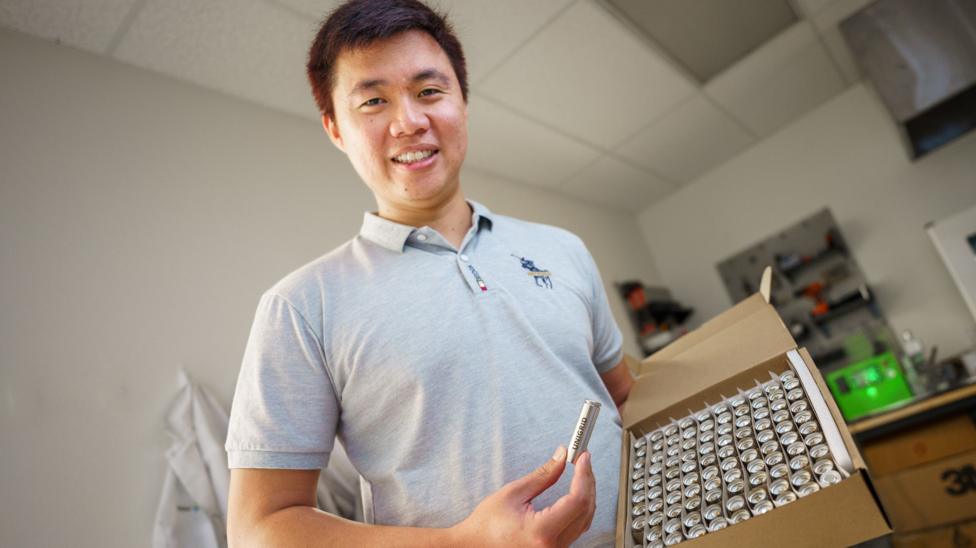
Unigrid's technology represents a shift in battery chemistry. Rather than relying on lithium-ion cells, the company manufactures sodium-ion batteries—a chemistry that has attracted significant attention from energy storage experts. Sodium-ion systems promise substantially lower manufacturing costs than their lithium counterparts, reduced fire risk, and the ability to operate across a wider temperature range, including conditions as cold as minus 40 degrees Celsius.
The company has achieved a significant milestone in validating its technology. Hyundai Motor Group and Unigrid completed a technology-validation program in August 2026, with Hyundai and Korean integration partners planning to jointly develop a sodium-ion battery energy-storage system. According to the validation results, Unigrid's cells passed Hyundai's safety-abuse tests without fire or thermal propagation and operated across a range of minus 20 degrees Celsius to 60 degrees Celsius.
What makes sodium-ion batteries different?
Sodium-ion technology differs fundamentally from the lithium-ion batteries that currently dominate consumer electronics and electric vehicles. The chemistry offers cost advantages because sodium is far more abundant than lithium and does not require the same complex supply chains. However, sodium-ion batteries are less energy-dense than lithium alternatives, meaning they must be larger and heavier to deliver equivalent power—a limitation that makes them unsuitable for smartphones and other compact devices but well-suited to stationary energy storage applications.
The design choices manufacturers make significantly influence performance and safety. Unigrid's battery uses chromium-3 in its cathode, the component through which electrons flow during charging and discharging cycles. This choice has drawn scrutiny from battery researchers. Prof Dame Clare Grey at the University of Cambridge, co-founder of battery firm Nyobolt, raised concerns that under certain conditions chromium-3 may convert to chromium-6, a toxic, cancer-causing material.
"If you're going to go for sodium […] and you're going to sell safety, then don't start putting elements in that are going to raise red flags,"she stated.
Ivana Hasa at the University of Warwick, who has no connection to Unigrid, acknowledged that chromium-3 conversion to chromium-6 is theoretically possible at very high states of charge, though she noted this risk can be mitigated through careful voltage management within the battery.
"Safety tests reported on the cell chemistry are very promising,"she said of Unigrid's technology.
Tan responded to these concerns by emphasizing that Unigrid's battery has passed certification and safety tests for sale in Europe and is undergoing evaluation for the US market.
"We've tried very hard to try and produce it, we've overcharged it as much as we can... We were unsuccessful in generating chromium-6."He characterized concerns around material toxicity as
"overblown."
Other manufacturers pursuing sodium-ion technology have chosen alternative cathode materials to avoid chromium entirely. Some employ hard carbon or sodium iron phosphate pyrophosphate (NFPP) instead, reflecting ongoing debate within the industry about optimal battery design approaches.
How do costs compare to lithium-ion?
Price remains a critical factor determining whether sodium-ion technology can achieve widespread adoption. As of December 2025, lithium iron phosphate (LFP) batteries—a relatively inexpensive form of lithium-ion technology—traded at approximately $81 per kilowatt hour. Unigrid's sodium-ion battery pricing stands at roughly $100 per kilowatt hour, a modest premium that reflects the technology's current maturity level. Some manufacturers have suggested sodium-ion costs could eventually decline to as low as $30 per kilowatt hour, though industry analysts caution that such dramatic reductions may require several years to materialize.
Which US companies are entering the market?
Multiple American firms are pursuing sodium-ion battery manufacturing, each targeting different market segments. Seattle-based Emerald Battery Labs is developing 12-volt auxiliary batteries for vehicles, currently supplying unnamed commercial fleets in the United States.
"We think sodium ion […] is going to make up 80% of the market,"says David Bell, co-founder and chief executive. The company's next objective is to develop new anodes for US-produced sodium-ion cells, moving beyond its current reliance on China-sourced components.
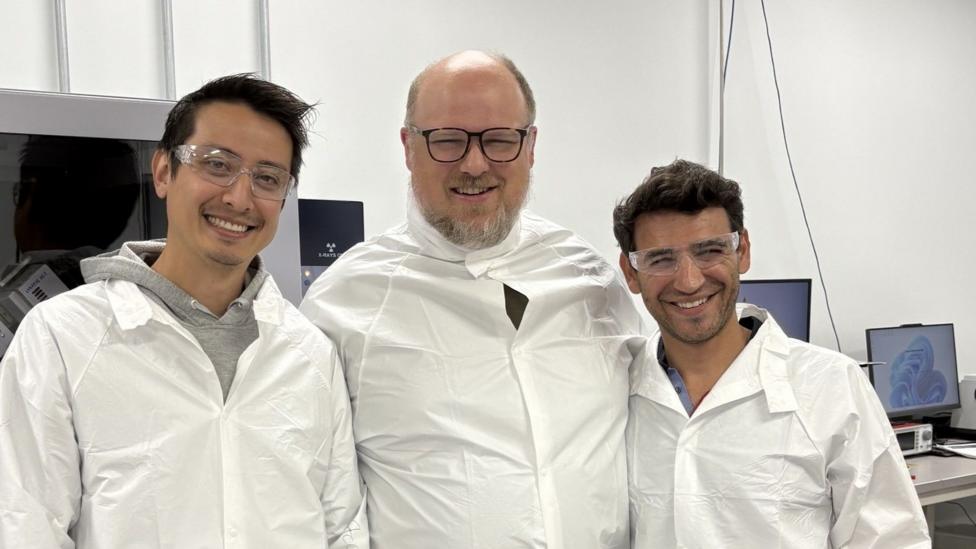
Peak Energy, operating from California and Colorado, has positioned itself as a grid-scale storage specialist. In June, the company announced a partnership with General Motors aimed at developing a complete US supply chain for sodium-ion batteries to support large-scale electricity grid storage. Peak Energy announced a $71 million California factory designed to produce up to 4 gigawatt-hours of grid-scale sodium-ion storage annually. Cameron Wiles, president and co-founder, stated that
"China does not have an insurmountable lead in sodium ion batteries"and indicated the partnership aims to enable GM to launch a US-based production facility in Michigan by the end of 2028.
Peak Energy has already secured substantial customer commitments. The company reported more than 6 gigawatt-hours in customer commitments through 2030, including agreements for projects scheduled from 2027 onward, demonstrating significant market confidence in its technology roadmap.
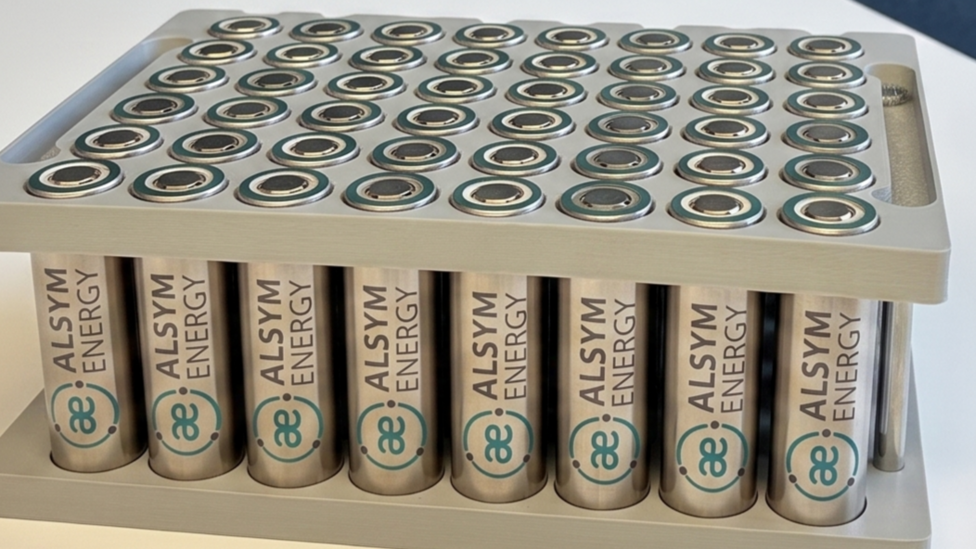
ESS Tech, headquartered in Oregon, is collaborating with Alsym, another US manufacturer planning to ship hundreds of megawatt-hours of domestically produced sodium-ion batteries by 2027. Drew Buckley, chief executive at ESS Tech, identified data centre electricity demand as a major growth driver.
"This is an 'opportunity'"he noted, explaining that sodium-ion batteries could help distribute renewable energy to data centres more cost-effectively than lithium alternatives, since they require less cooling infrastructure.
What strategic advantages does domestic production offer?
The appeal of US-based sodium-ion manufacturing lies in supply chain independence. Lithium-ion battery production remains heavily concentrated in China, which controls not only manufacturing capacity but also the upstream materials supply chain. Sodium-ion technology, by contrast, relies on materials available domestically, potentially enabling American companies to build end-to-end production without foreign dependencies.
Unigrid currently sources its sodium-ion cells from China while developing US manufacturing capabilities.
"We can switch back and forth and choose what battery we want to work with,"Tan explained, noting that future US-sourced cells may carry different costs. The company operates using a fabless, foundry-subscription model, partnering with manufacturing facilities rather than constructing its own gigafactories—a capital-efficient approach that accelerates time to market.
Unigrid's international expansion has already begun. The company began commercial-volume international shipments of its sodium-ion cells in January 2026, marking the first time a non-Chinese manufacturer exported sodium-ion batteries at scale. Additionally, Unigrid and Syntropic Power announced a partnership to commercialize Unigrid's sodium-chromium-oxide technology in North America and establish a route to US production.
What challenges remain for the industry?
Despite growing momentum, significant obstacles must be overcome before sodium-ion batteries achieve mass-market penetration. Ivana Hasa cautioned that establishing mass production of sodium-ion batteries will prove
"challenging"for companies attempting to scale operations. She also noted that while sodium-ion technology is frequently promoted as substantially safer than lithium-ion alternatives, it does not eliminate fire risk entirely.
The industry also faces competition from established lithium-ion manufacturers and must demonstrate that sodium-ion systems can match or exceed the performance and reliability standards consumers and grid operators expect. Confidence in sodium-ion reliability has increased significantly in recent years, enabling the technology to move into grid storage applications, but continued validation through real-world deployments remains essential.
Despite these challenges, Hasa expressed optimism about the technology's potential.
"I'm a strong believer in the technology,"she said, noting that successful commercialization could enable new strategic choices—helping to prevent wastage of renewable electricity and potentially maintaining low energy costs.
What happens next?
Unigrid expects to begin US residential installations of its Na+Casa system by the end of 2026, subject to completing additional North American compliance requirements. The company's residential battery is rated at 9.25 kilowatt-hours and is designed for 10,000 full-capacity cycles—equivalent to daily cycling for more than 27 years, according to the manufacturer's specifications.
Peak Energy's Sacramento factory is expected to begin shipments in the first quarter of 2027, marking a significant milestone in establishing US-based grid-scale sodium-ion production. These timelines suggest that American consumers and grid operators could have access to domestically manufactured sodium-ion storage systems within months, reducing dependence on imported battery technology and potentially lowering long-term energy costs.