Daisy Kelly built Glow For It from a personal problem that started years before her business took off: she had been pulling out her eyelashes. After hiding the habit with lash extensions, she decided during the Covid salon closures to create a serum to help her eyelashes grow back. She started the company from her mother’s kitchen table in 2020 while she was a student, and it now generates £6m a year in sales.
More than 40% of Daisy’s sales now come from TikTok Shop UK, increasingly through live streams, and she says the format has transformed her business. In one 12-hour TikTok live, Glow For It generated over £100,000 in revenue, she says.
“I think live shopping gives people that connection and interaction that we're all craving...We actually generated over £100,000 revenue in one 12 hour TikTok live,”
“It's categorically changed the trajectory of my business.”
Daisy Kelly, now 27, says Glow For It goes live from a studio for a minimum of six hours a day with different presenters. They demonstrate products and answer shoppers’ questions in real time.
“It's like having 500 people in your shop,” she says.
Live shopping is now being used across a range of platforms and marketplaces, including Instagram Live, YouTube Shopping, eBay and Amazon Live. While the services differ, all are designed to connect sellers and customers through livestreams.
Research from retail agency Savvy Marketing suggests the format is becoming part of everyday consumer behaviour. The survey found that 30% of shoppers questioned said they had bought something from a live shopping event.
“The big retailers have got to grab hold of this,”
“It's grown from nothing to a huge thing really quickly. If you haven't got a strategy for live selling, you're going to miss out.”
Catherine Shuttleworth, chief executive of Savvy, said larger retailers risk losing sales if they do not adopt live selling strategies.
TikTok Shop said its UK sales rose by more than 30% year-on-year in June, with live shopping its fastest-growing format. The platform says more than 6,000 livestreams now take place every day.
At an event in Covent Garden market, which dates back centuries, TikTok hosted 20 small businesses with stalls that were also selling live to customers across the UK.
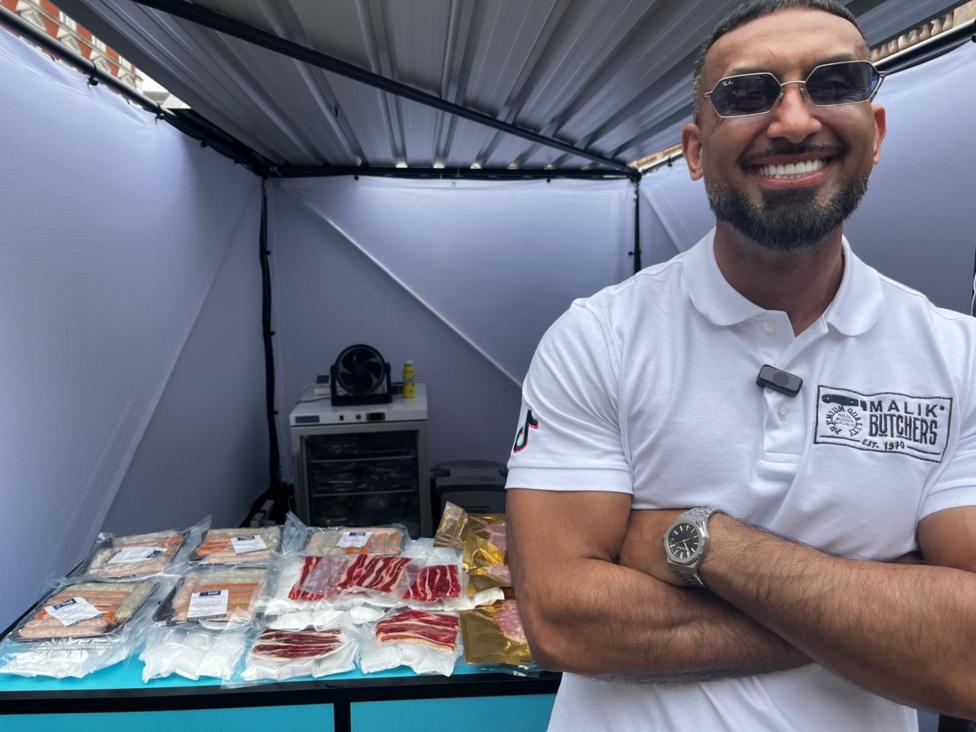
Among them was Manny Malik, a halal butcher from Wolverhampton, who used only a smartphone, a lighting kit and a fridge full of fresh meat. Around 200 people tuned into his session.

“Last week we did a TikTok live for three hours and we sold £8,000 worth of meat,” he says.
He says it would normally take his family shop, Malik Butchers, three to four days to sell that amount. The business is now opening a second store in Stoke, and Malik says TikTok is helping drive the expansion.
TikTok Shop UK keeps up to 9p from every £1 sold on the platform as its standard commission. By comparison, eBay marketplace sellers typically pay between 6.9p and 14.9p depending on the category, while businesses selling on eBay Live pay a combined fee of up to 8.42p, including payment processing.
“For us in the meat game, there aren't huge margins. However, it's opened up a new platform. We didn't have these sales prior to TikTok. We're not losing money, we've got enough profitability in there,”
Buket Sevic, 34, founded her jewellery brand Adorina in February after quitting her 9-to-5 job as a business manager. Since she started live selling on TikTok Shop UK in May, her business has grown from 50 orders a month to 500 orders a week.
She has moved from working at her dining table to live streaming from a small unit, where orders are now packed. Demand is so high that she is trying to hire someone to help.

For Sevic, the biggest benefit of live streaming is flexibility.
“I can go live whenever I want...which means it works absolutely perfectly for me as a Mum. I can put my daughter to sleep and I can just hit go live and do some sales.”
Savvy’s latest survey also found that 66% of Gen Y/Z shoppers said seeing products sell out or go viral made them more likely to buy. That trend worries the free debt advice service Money Wellness, which says live shopping events can encourage overspending.
“A recipe for overspending,”
says external relations manager Rebecca Lamb.
“Every time you snap up a bargain before it sells out, your brain gets a dopamine hit - the same rush you get from gambling,” she says.
“And because a lot offer one tap payment, there's no card, no basket and no total. Often you've spent money before your brain has caught up,” she says.
As live shopping continues to grow across major platforms, retailers and consumer groups are increasingly debating both its commercial potential and the risks of impulse buying.
How to avoid overspending on live shopping
Consumers watching live shopping events are being urged to slow down, check totals and think carefully before using one-tap payment options.
What is live shopping and will it take off?