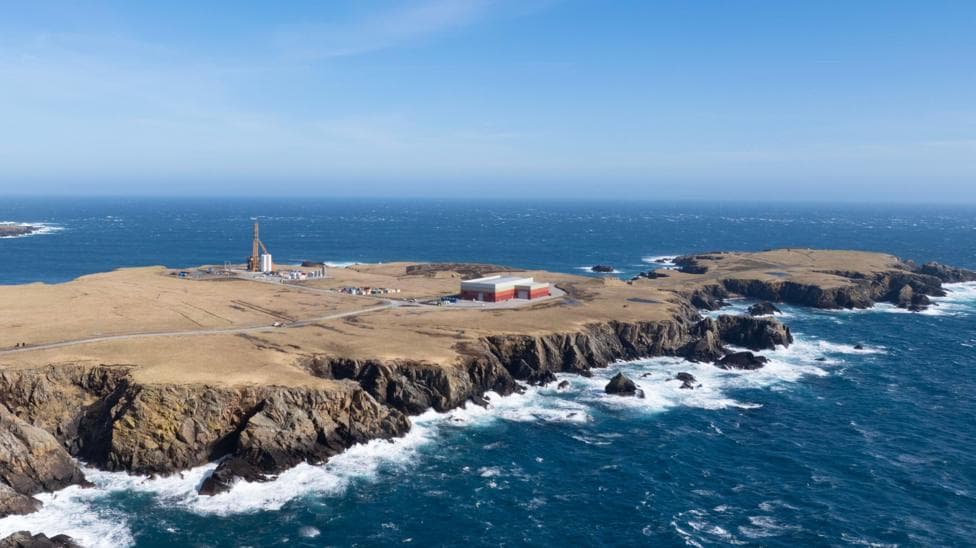
Google announced a record €13bn (£11bn; $15bn) investment in Finland's artificial intelligence infrastructure, marking the company's largest single commitment to any European nation. The package will establish three new data centres, expand an existing facility, and fund energy projects to meet the escalating power demands of AI services.
"This is Google's largest single investment in Europe and a testament to Finland's leadership in responsibly building AI infrastructure,"the company stated on Wednesday.
At the heart of the deal lies a 22-year power-purchase agreement with Finnish utility Fortum. According to Fortum's announcement, Google will acquire up to 50% of the electricity generated by the Loviisa nuclear power plant, with the arrangement beginning in 2028 at a smaller capacity before scaling to full 50% output between 2030 and 2049.
Finland's Prime Minister Petteri Orpo welcomed the announcement, stating:
"Google's decision is a clear testament to our strengths."He added that
"the value of the data economy extends far beyond direct investment into spurring innovation, research and development"and emphasised that
"deepening our collaboration with Google will deliver lasting benefits for both parties."
The investment comes as technology companies compete intensely to secure reliable power supplies amid the AI boom's explosive growth in data centre demand. The timing reflects broader industry trends: earlier this week, TikTok announced a separate $1bn investment in Finland to construct a new data centre in Kouvola, citing the nation's "strong digital infrastructure, clean energy mix, robust data governance and skilled tech talent".
Why is Finland becoming a data centre hub?
Finland has emerged as a prime location for data centre development due to several interconnected advantages. The country's cool climate significantly reduces the energy required to cool facilities packed with computer servers. Additionally, Finland benefits from plentiful low-carbon electricity generation and a relatively uncongested power grid compared to other European nations. These factors make the country particularly attractive as developers seek available land and power capacity within Europe's constrained energy landscape.

What infrastructure will Google build?
Google will construct new data centres in three Finnish municipalities: Kajaani, Muhos, and Vaala. The company will simultaneously expand its existing Hamina facility, which originated in 2009 when Google converted a former paper mill into a data centre. According to reporting on the infrastructure details, the expansion includes new wind-power agreements and a 94-megawatt battery system at the Kajaani site to help balance the grid. The data centres will also feature heat-recovery readiness, adding an efficiency dimension to the buildout.
The infrastructure will support Google's AI chatbot Gemini alongside core services including Search, Maps, and YouTube. Ruth Porat, president and chief investment officer of Alphabet and Google, stated:
"Google is proud to deepen our roots in Finland. This investment underscores Google's commitment to grow our presence responsibly, pairing the expansion of our technical infrastructure with new energy capacity, grid enhancements, and energy affordability initiatives."
What are the economic and employment impacts?
Google projects the investment will support more than 37,000 jobs during the construction phase and contribute €3.6bn annually to Finland's gross domestic product. Construction activity is scheduled for 2027 and 2028 across the new and expanded sites. Beyond direct employment, the company committed to funding "clean energy projects, and dedicated nature and community funds to support local biodiversity, education, research, and workforce development".
How does this benefit the Loviisa nuclear plant?
The Loviisa nuclear power station currently generates approximately 10% of Finland's total electricity supply. Fortum indicated that Google's long-term power commitment provides financial certainty that will support an investment programme aimed at extending the plant's operational life and increasing its generating capacity. According to Fortum's statement on the partnership, the plant-life extension period is set to begin in 2028, with the power agreement running through 2049.
What is the broader context for AI infrastructure investment?
Google's Finland commitment reflects intensifying competition for data centre capacity globally. Earlier this year, Google's parent company Alphabet raised its global spending plans to as much as $205bn to expand computing capacity for AI services. This investment surge underscores how technology companies are treating AI infrastructure as a strategic priority. The Finland deal also arrives amid a complex landscape of data centre development across Europe: while some projects advance rapidly, others face obstacles. Industry observers note that securing reliable, low-carbon power remains a critical constraint shaping where companies choose to build.
What happens next?
Google's construction phase will unfold across 2027 and 2028. The power-purchase agreement with Fortum begins in 2028 at reduced capacity, gradually increasing to 50% of Loviisa's output by 2030, with the arrangement continuing through 2049. The company will monitor progress on the energy projects and community initiatives throughout the buildout period.
Key Facts
- Google's €13bn investment is the company's largest single commitment to any European country
- The deal includes a 22-year power contract with Fortum for up to 50% of Loviisa nuclear plant output, beginning in 2028
- Three new data centres will be built in Kajaani, Muhos, and Vaala, with expansion at the existing Hamina site
- The investment is projected to support 37,000 construction jobs and add €3.6bn annually to Finland's GDP
- Construction is scheduled for 2027 and 2028