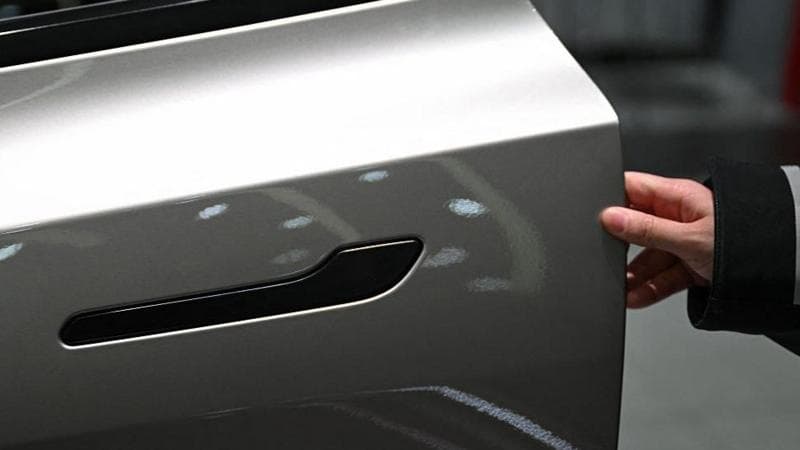
Retractable door handles that tuck flush into vehicle panels have become a defining aesthetic of electric vehicles, but their safety implications have now triggered China's largest automotive recall on record. The action affects approximately 2.98 million Tesla vehicles alongside roughly 1.3 million cars from other manufacturers, bringing the total scope to about 4.3 million vehicles across nine automakers.
The recall centres on safety concerns that concealed door handles are difficult to identify and operate during emergencies, potentially trapping occupants if a vehicle loses power following a collision. Tesla's filing with Chinese regulators indicates that the emergency door release mechanism is hard to locate because its colour blends with the surrounding interior trim, creating a hazard during situations requiring rapid evacuation.
Why are hidden door handles under scrutiny?
The design became controversial following two fatal crashes involving Xiaomi electric vehicles in which power failures were suspected to have prevented doors from opening. These incidents prompted Chinese authorities to examine the broader safety implications of the technology across the industry.
The hidden handle concept gained prominence after billionaire Elon Musk's Tesla popularised the feature, with the mechanism designed to extend outward only when an owner approaches their vehicle. Chinese manufacturers subsequently adopted the design widely, with Tu Le, founder of consultancy Sino Auto Insights, noting that the trend had
"snowballed"as domestic brands copied what they perceived as the sleek aesthetic of Tesla's Model S sedan since 2014.
What is Tesla's proposed solution?
Tesla announced on Friday that it would address the issue through two measures: applying warning labels to affected vehicles and deploying an over-the-air software update that automatically lowers windows following a collision. The recall encompasses both China-manufactured and imported variants of the Model 3, Model Y, Model S and Model X built between 4 March 2019 and 29 April 2026, with the breakdown including 973,156 Model 3s, 1,956,713 Model Ys, 35,590 imported Model 3s, 8,328 imported Model Xs, and 2,123 imported Model Ss.

However, Tu Le characterised the proposed remedy as more of a
"band-aid"than a lasting solution to the underlying design problem. The recall remedy is set to begin on 25 September 2026.
What regulatory action has China taken?
In February 2026, Chinese authorities announced a comprehensive ban on hidden or concealed door handles, making the country the first to prohibit the technology on this basis. Under regulations due to take effect on 1 January 2027, all new vehicles sold in China must feature a mechanical release mechanism on both the inside and outside of their doors. Existing models that have already received regulatory approval will have until 1 January 2029 to comply with the new standard.
Other manufacturers affected by the current recall include Chinese carmakers XPeng, Xiaomi and Geely, though it remains unclear whether these firms intend to implement similar recalls in markets outside China.
Has this issue emerged elsewhere?
Tesla's door handle design has also drawn scrutiny from United States safety regulators. The National Highway Traffic Safety Administration launched a probe after reports that the handles suddenly stopped functioning, leaving children trapped inside vehicles. In July, the agency suggested establishing a new formal safety standard applicable to all carmakers, though it has not yet confirmed whether such a standard will be formally adopted.
Key Facts:
- The recall affects 2.98 million Tesla vehicles in China, part of a broader action involving approximately 4.3 million vehicles across nine automakers
- Tesla's proposed fix combines warning labels with a software update that automatically lowers windows after a collision, beginning 25 September 2026
- China becomes the first country to ban concealed door handles, with new regulations taking effect on 1 January 2027 requiring mechanical releases on all vehicle doors
- The safety concerns stem from two fatal crashes involving Xiaomi electric vehicles where power failures prevented door operation
- Existing approved vehicle models must comply with China's new standard by 1 January 2029