Technology stocks across Asia climbed on Thursday following exceptional earnings from Nvidia, the world's most valuable chipmaker, which reported a doubling of quarterly revenue and signalled sustained demand for artificial intelligence infrastructure.
Nvidia disclosed second-quarter revenue of $96.2 billion, representing 106% year-over-year growth, with data centre revenue jumping 117% to $89 billion, according to investment market reporting. The company projected third-quarter revenue of approximately $108 billion, surpassing Wall Street expectations. Jensen Huang, Nvidia's founder and chief executive, declared the industry had entered a "golden age" of artificial intelligence, with demand accelerating across multiple customer segments.
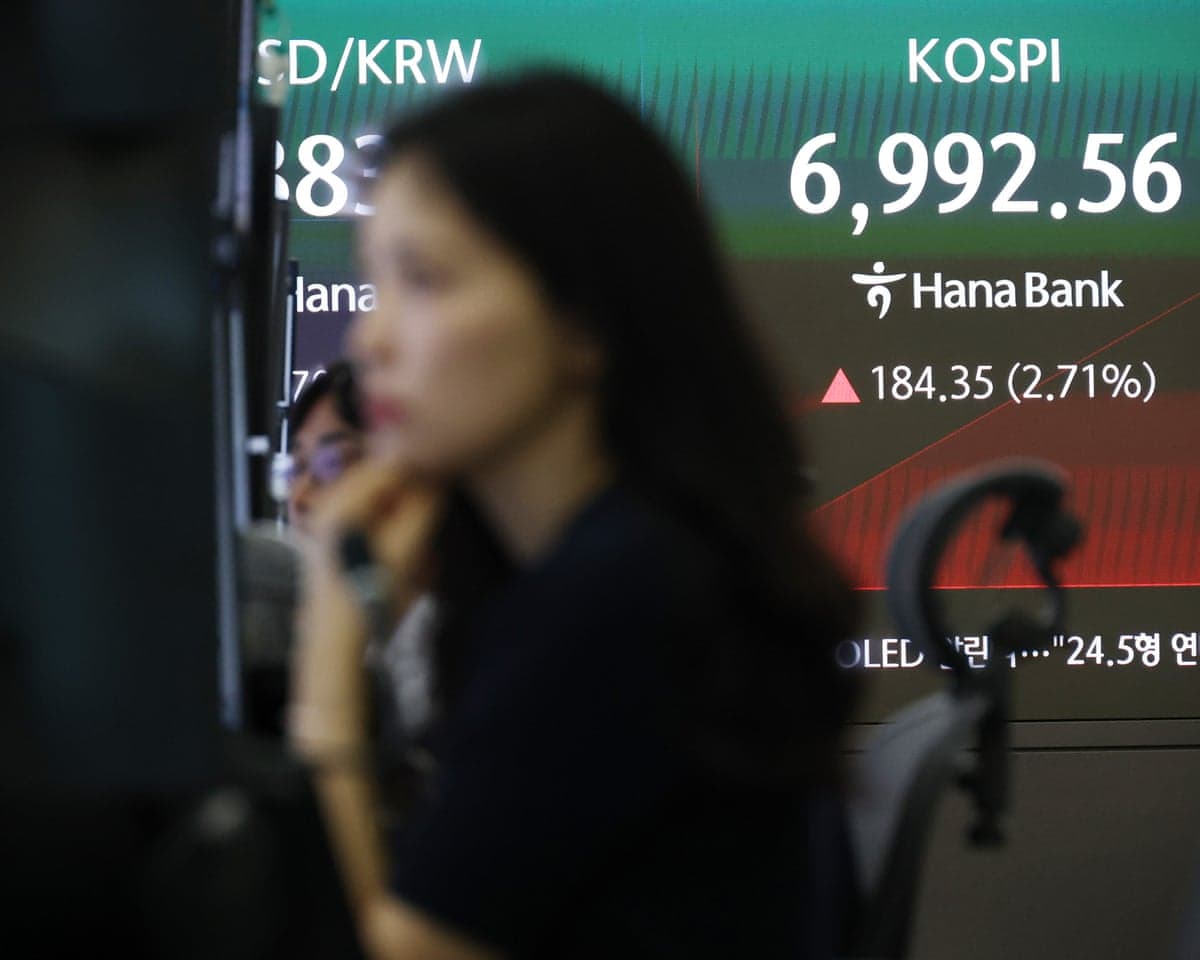
The results triggered a broad rally in Asian technology indices. South Korea's Kospi index rose 1.3%, with memory chipmaker Samsung Electronics advancing 3%. The Shanghai and Shenzhen exchanges climbed 0.95% and 1.37% respectively, while Singapore added 0.4% and Taiwan gained 0.3%. However, other major Asian markets retreated, with Japan's Nikkei edging 0.2% lower and Australia's exchange falling nearly 1%.
Nvidia shares rose 4.7% in post-market trading to $219.53, with analysts expecting further gains if momentum continues. Kathleen Brooks, research director at XTB, described the figures as "nothing short of stunning", noting that the stock could break through the $220 barrier and potentially reach the $235 highs seen in May.
What drove Nvidia's exceptional performance?
The chipmaker's revenue expansion reflects both a broadening customer base and sustained demand for its latest Blackwell chips. Rather than customers simply filling existing capacity, they are continuing to spend heavily on Nvidia's newest generation of artificial intelligence accelerators, indicating robust confidence in the technology's value. Demand remains constrained by supply, positioning Blackwell to power the next phase of artificial intelligence infrastructure development.
Beyond hyperscalers—the large cloud providers that dominated earlier spending—revenue from other market segments is accelerating. Nvidia Cloud customers, along with industrial and enterprise clients, generated $40.3 billion in revenue, up more than 100% year-over-year, while hyperscalers produced $48.7 billion. This diversification reduces Nvidia's reliance on any single customer category and suggests the artificial intelligence buildout is becoming more widespread.
The company also reported a $7.8 billion gain from equity investments in other artificial intelligence companies, including Intel and SpaceX. While some investors have expressed concern about circular financing arrangements, supporters argue that a cash-generating business of Nvidia's scale has both the capacity and rationale to invest broadly in the artificial intelligence ecosystem.

Ben Barringer, head of technology research at Quilter Cheviot, highlighted management's systematic response to investor concerns during the earnings call.
Investors came into the results with a laundry list of concerns around competition, the durability of AI spending, memory costs, margins, financing arrangements, open-source models and China. Management did a good job of systematically addressing each one.
On the question of competition, Nvidia pointed to Amazon Web Services as a customer, reinforcing its position even as major cloud providers develop proprietary silicon. Regarding durability, management cited approximately $2 trillion in backlog, suggesting demand remains exceptionally strong. Gross margins were reported at 75%, with guidance of 74% for the coming quarter, citing rising memory prices. Management suggested margins could decline to around 71% before recovering as pricing adjusts.
Susannah Streeter, chief investment strategist at the Wealth Club, observed that
The AI juggernaut is rumbling on with Nvidia smashing through expectations, amid voracious demand for the tech backbone of the AI revolution. The results solidified high expectations for the company's mega revenues going forward, and shares firmed up, leaving behind the post-results wobbles seen after previous updates.
Brooks added that
With revenues this big, and demand for its products getting bigger every month, it will be a brave trader who will bet against Nvidia in the aftermath of this report. For now, the company has proven that criticism of its investment and financing model for AI is overblown, and today's results could give the whole AI trade, and the US stock market, a shot in the arm, after a volatile few months for the tech trade.
What are the implications for Nvidia's suppliers?
Nvidia announced it would double its supply commitments to $279 billion, primarily related to memory costs. The company's largest memory suppliers—SK Hynix, Samsung and Micron—stand to benefit substantially from this expansion. Micron Technology shares rose 4.3% in pre-market trading following the announcement.
What longer-term questions remain?
Once the initial excitement settles, analysts caution that questions about the durability of the artificial intelligence revenue boom are likely to resurface. The focus is shifting from whether Nvidia can continue climbing the artificial intelligence mountain to how long it can sustain this extraordinary pace of growth and whether the vast sums being invested in artificial intelligence infrastructure will ultimately deliver the returns needed to justify the colossal expenditure.
What else is moving markets?
In commodity markets, oil prices declined as diplomatic progress emerged in the Middle East. Brent crude, the global oil benchmark, fell to as low as $86.22 per barrel and was trading down 0.6% at $87.35 per barrel on Thursday morning.
The decline reflects tentative progress in talks between Iran and Oman regarding the Strait of Hormuz, a critical waterway through which roughly one-third of global seaborne oil passes. According to reporting from a major news agency, Iran and Oman discussed a temporary joint shipping corridor and a mine-clearing mission, with a joint statement indicating that technical negotiations would continue toward a permanent corridor.
Shipping traffic through the strait has remained severely disrupted for nearly six months following the outbreak of conflict in the region. According to shipping data, vessel traffic through Hormuz had fallen to 33 vessels from Monday to Thursday in the week of 7 August, compared with 50 the week before. On 20 August, commodity vessel transits totalled nine, unchanged from the previous day.

Iran's foreign minister stated that an agreement on the Strait of Hormuz was in the "final stages", though reopening the waterway would still depend on other conditions being met. According to financial news reporting, Iran and Oman were pushing an "interim framework" for resuming shipping through Hormuz, including a "temporary joint maritime corridor" and a mine-clearance project.
On 20 August, commodity vessel transits through the waterway remained at nine vessels, unchanged from the previous day, reflecting the continued uncertainty surrounding the corridor's reopening. A tanker was struck by an unknown projectile in the waterway, causing a fire that was subsequently extinguished, according to the United Kingdom Maritime Trade Operations agency.
Traffic also slowed for a second consecutive day at the Bab el-Mandeb strait, another critical shipping route. A total of 19 commodity vessels passed through on 20 August, including six tankers that exited, down from 24 on the previous day.
What happens next in the Hormuz negotiations?
Iran and Oman are expected to continue technical negotiations toward a permanent shipping corridor after establishing the temporary corridor framework. Discussions are anticipated to extend for 30 to 60 days as the two countries work toward understanding on a new permanent and sustainable route.
What is happening in UK employment?
In the United Kingdom, the number of young people not in education, employment or training has declined in recent months after reaching a milestone of over one million earlier in the year. Between April and June, there were 981,000 young people aged 16 to 24 classified as Neets, down 30,000 from the first quarter but still 30,000 higher than the same period the previous year.
The figure had exceeded one million for the first time in over a decade earlier in 2026, prompting calls for enhanced support to help young people enter the workforce. The persistent challenge of youth joblessness has been documented in previous analysis, with officials and government reviews warning of a lost generation without urgent intervention.

Paul Nowak, general secretary of the Trades Union Congress, warned that
Almost one million young people stuck out of work is a crisis which has been a decade in the making, and will take time to turn around.He emphasised that
The prime minister has rightly made getting more young people into work a priority – from strengthening vocational education to delivering greater access to work placements and training.
Nowak stressed that
The evidence is crystal clear - good quality employment support, more good training places and a strong growing economy with more vacancies is what we need. Holding down workers' rights will only hold back young people's employment prospects.He called on the government to
keep going with measures to support young people into good quality work – including by delivering rights to guaranteed hours in full and ending the scourge of insecure work.
The government's jobs guarantee scheme represents an important step forward, though Nowak argued that
ministers need to put the turbo boosters on the scheme by expanding places and ending the 18-month wait.He noted that
early experience of good-quality, paid work can make a huge difference to young people's prospects across their lifetimes.
Alan Milburn, a former cabinet minister turned social mobility adviser, published the first part of a government-commissioned review in late May, presenting what he described as a "record of failure" in supporting young people into employment.
What is happening in UK manufacturing?
Car and van production in the United Kingdom declined in July as weaker exports and routine summer maintenance shutdowns at manufacturing plants took their toll. Vehicle production fell 11.6% year-over-year to 63,655 units, according to figures released by the Society of Motor Manufacturers and Traders.
The decline reflected weaker exports, which fell 15.9% to 47,377 vehicles, combined with earlier scheduling of routine summer maintenance shutdowns at some facilities. Car production specifically declined 10.6% to 61,767 units, as a 9.3% rise in output for domestic buyers failed to offset a 15.8% fall in exports. Shipments to all major markets contracted, including the European Union (down 15.2%), the United States (down 17.7%), Turkey (down 18.5%), China (down 36.9%) and Japan (down 24.4%).
Commercial vehicle output fell sharply, declining 34.4% to 1,888 units, with deliveries to domestic customers and export markets down 49.6% and 18.5% respectively.
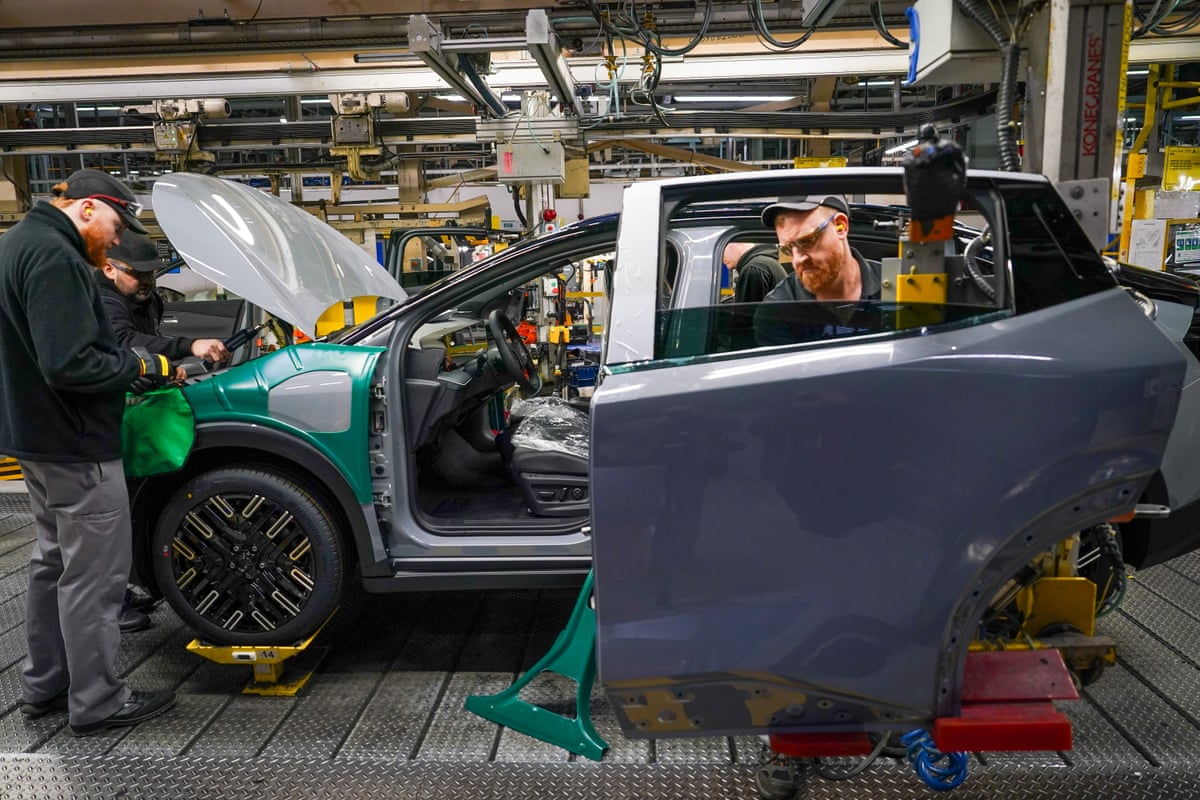
A bright spot emerged in electrified vehicle production. Output of fully electric and hybrid models recorded the first monthly increase of the year, rising 6.8% to 25,678 units. Electrified models accounted for more than four in 10 cars built in July, up from around three in 10 a year earlier.
Year-to-date, United Kingdom factories have produced just under 450,000 cars and commercial vehicles, down 8.1% compared with the same period in 2025, reflecting model changeovers, the closure of a manufacturing plant the previous year, and trade and investment uncertainty. The latest independent forecast expects United Kingdom car and light vehicle output to remain broadly stable this year at 740,000 units, before growth resumes in 2027.
Output could still reach one million units by the turn of the decade, but only if the United Kingdom addresses its competitiveness and secures fresh model investment. The Society of Motor Manufacturers and Traders has welcomed the government's recently launched review of its zero emission vehicle mandate, hoping for "meaningful reforms" to the regulation that would help reduce the high cost of selling electric vehicles in the United Kingdom.
What is driving retail sector optimism?
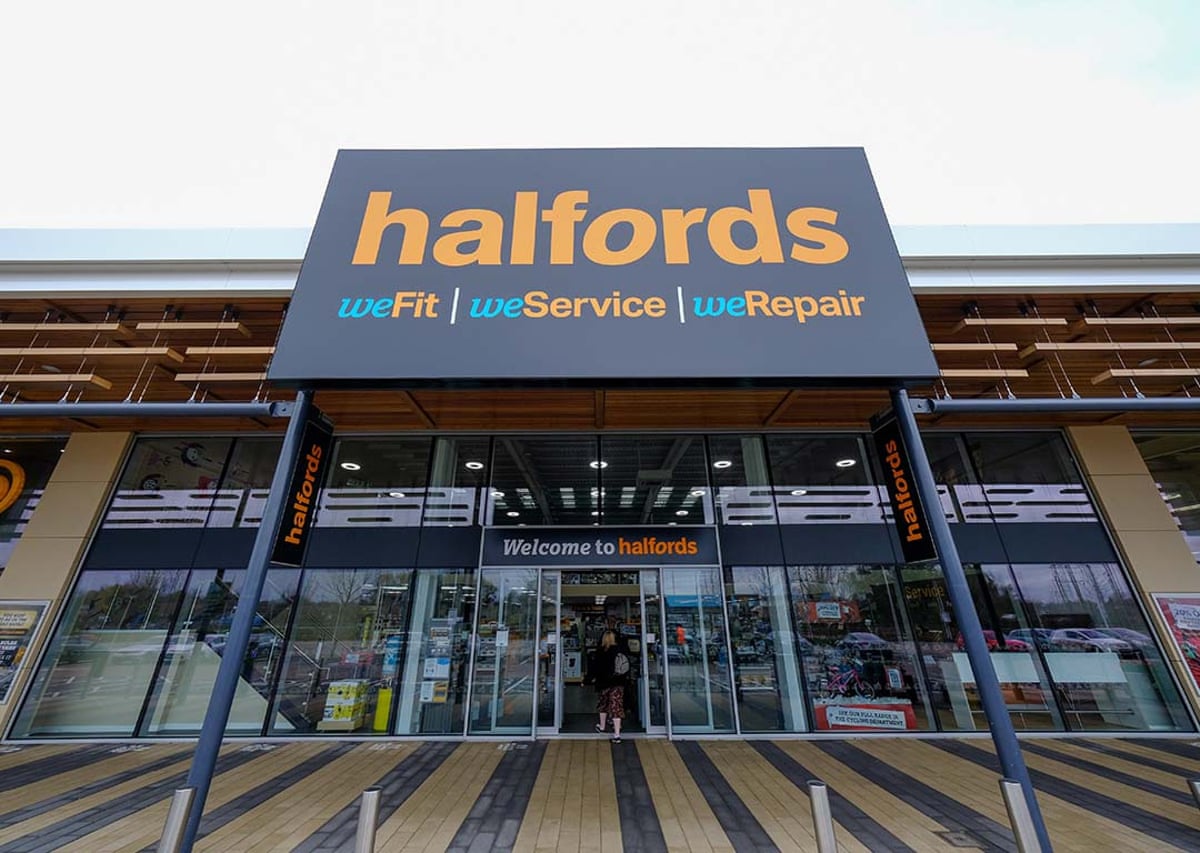
Halfords, the bicycle and car parts retailer, raised its profit forecast for the year following strong demand for air conditioning services during an exceptionally warm summer. The company reported seeing "strong demand in seasonal categories" that was "in part reflecting unusually warm summer weather". A spokesperson confirmed this included air conditioning services such as regassing air conditioning units, along with cycling, and touring and camping equipment.
Halfords shares jumped more than 10% on Thursday morning following the announcement. Analysts at Peel Hunt, one of the company's brokers, estimated that warm weather added approximately £5 million to profit in the first half of the year, with "extremely strong" sales across the three categories.
The analysts noted that
Of course, this may be difficult to replicate next year, when presumably the weather will normalise, but it is in the bag for this year now, and this incremental c.£5m is at the heart of our upgrade.
The update followed Britain's hottest and driest summer in years, marked by five separate heatwaves and drought declarations across large parts of England and Wales. The retailer now expects annual profit of between £55 million and £65 million, above the £52.6 million analysts had previously forecast.
Halfords attributed the remainder of the upgrade to "continued momentum" in its core business as it advances a turnaround plan under chief executive Henry Birch. Ben Hunt, a retail analyst at Panmure Liberum, upgraded his Halfords forecasts, stating that
Favourable summer weather has driven a meaningful 2027 upgrade, but importantly there is also a clear underlying improvement, reflecting strong exit momentum from 2026.
Hunt added that
Management expects a more first-half-weighted profit profile, reflecting strong trading to date and increased technology and marketing investment in the second half. Even so, we believe guidance retains some prudence and would not be surprised to see further upgrades before year-end.He noted that
Longer-term we expect momentum to be sustained by further benefits from Fusion garage conversions, the return of the cycling replacement cycle and the rollout of Fusion learnings across the wider Autocentres estate. With tyres finally showing signs of stabilisation and operational expenditure growth moderating, all areas of the P&L [profit and loss] are now moving in the same direction.
What is happening with Shein's Hong Kong listing?
The online fashion retailer Shein is proceeding with its Hong Kong initial public offering, pricing shares at HK$48.56, near the midpoint of its HK$47.60 to HK$49.50 range. The flotation will value the company at approximately a quarter of its nearly $100 billion peak valuation in 2022, and well below the $66 billion valuation it received in a 2023 fundraising round.
Shein, headquartered in Singapore and founded in China, launched its Hong Kong offering on Monday, with the final price announcement expected the following Monday and trading anticipated to begin the day after. The listing represents one of the longest-awaited initial public offerings of recent years, following the blocking of plans to list in New York by regulators over forced labour concerns. The company subsequently considered a £50 billion float in London but faced opposition from campaigners, Members of Parliament and investors.
Cornerstone investors, led by existing shareholders Boyu Capital, Tiger Global and General Atlantic, have d for $383 million of shares. Tencent, Greenwoods, Taikang Life and UBS Asset Management will also purchase shares.
Shein has stated it will use 80% of the proceeds to improve its technology and expand its brand and global reach. The company has also agreed to pay up to $3.5 billion in cash to certain investors who purchased special shares in earlier private funding rounds.
The retailer, which sells dresses priced at £5 and jeans ranging from £11 to £15, is grappling with slower revenue growth, weaker earnings and shrinking profit margins.
What regulatory action has been taken against nuisance call operators?
The Information Commissioner's Office has fined Elderly Aids Ltd, a company selling call-blocking devices, £190,000 for conducting 758,053 cold calls between May 2024 and February 2025 in an attempt to sell its products. The company targeted vulnerable people, many of whom had explicitly requested not to be contacted.