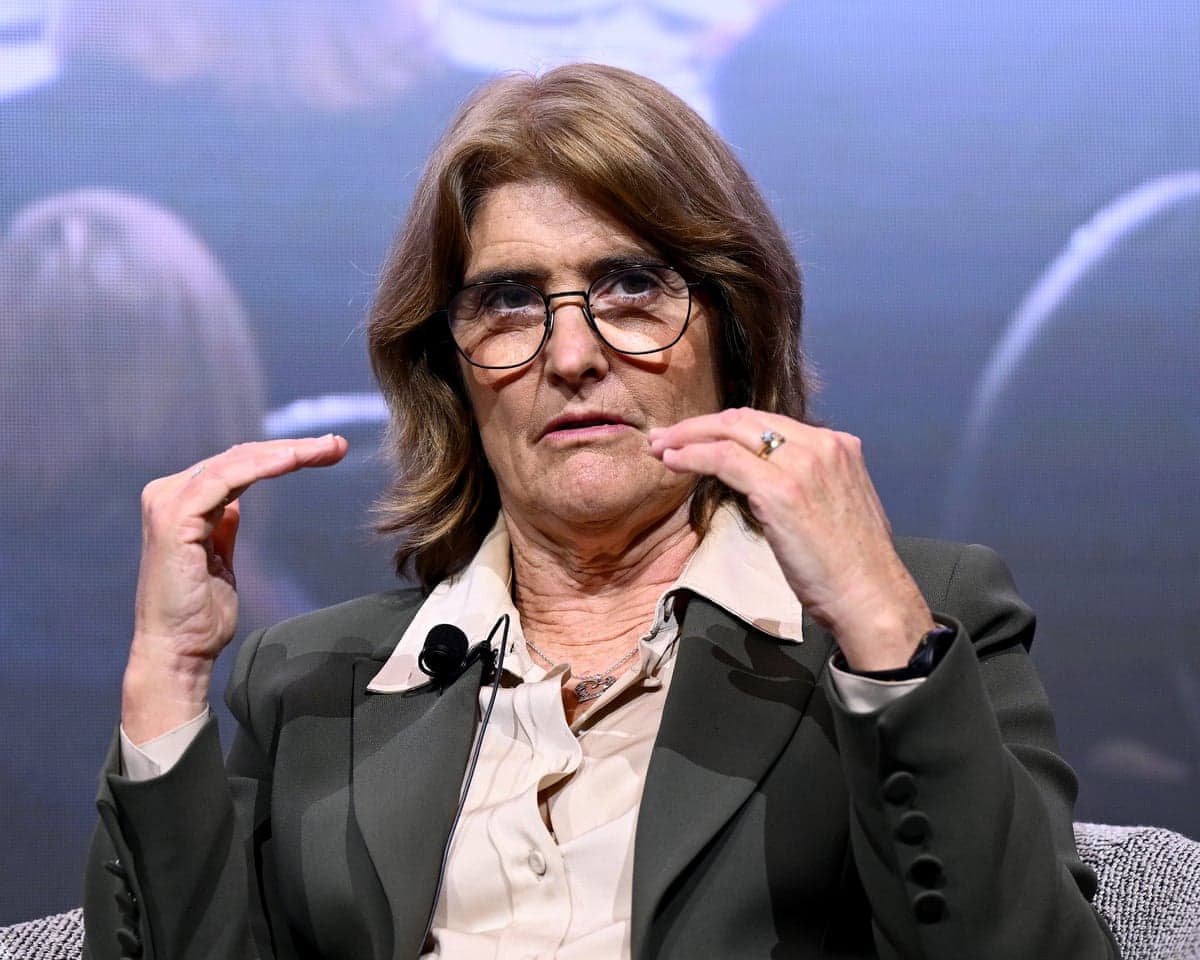
Australia's central bank governor has cast doubt on whether artificial intelligence will deliver the economic productivity gains the government is banking on, warning that rapid AI adoption is currently fuelling inflation rather than growth and that the technology could represent a financial bubble.
Michele Bullock told a business audience in Sydney that while central banks globally view AI as potentially transformative, there is scant evidence of genuine productivity improvements so far. She highlighted research showing workers adopting AI tools tend to maintain output while working 1.5 hours less per week—a sign that efficiency gains remain elusive during the learning phase.
"[While] people fiddle around and try and figure out what to do with this new technology, productivity actually can decline," Bullock said. "But once we reimagine our business processes… then you might see productivity take off."
Her comments come as the Albanese government released its intergenerational report on 21 September 2026, which assumes AI will drive a substantial boost to Australia's long-term economic performance. The government projects that inflation-adjusted per-person economic activity will rise from A$99,200 today to A$157,300 by 2066, with AI positioned as a defining influence on the economy for the next four decades.
Bullock's scepticism extends to the financial risks posed by the AI sector itself. She warned that a disorderly unwinding of the AI boom could damage both financial systems and real economies, and acknowledged that some observers view current valuations as unsustainable.
"Some people think it's a bubble, some people don't. I don't have a particular view one way or the other, but it's a risk that I think we're watching."
The RBA governor's caution aligns with broader international concern about AI's financial stability implications. Bullock also flagged that AI could trigger a difficult period marked by higher unemployment, as the technology may worsen the trade-off between inflation and joblessness.
Government's Productivity Assumptions Under Scrutiny
Treasurer Jim Chalmers has described AI as
"the most transformative thing that will happen in our lifetime,"and the intergenerational report relies heavily on this premise. The government's modelling assumes productivity will return to its historical long-run improvement rate of 1.2% annually. However, economists have questioned whether this target is realistic.
If productivity growth slows to 0.8% per year instead, the report's own figures show per-person economic activity would reach only A$136,600 by 2066—roughly A$20,700 less than the government's central projection. Treasury's own fact sheet acknowledges there is not yet evidence of significant labour-market impacts from AI, despite rapid adoption and investment in data centres.
Bullock acknowledged the government's position but expressed reservations about the underlying assumptions.
"Many have put it, 'well, it's an unrealistic assumption, we're not going to get that.' I guess the way I'm trying to think about it is, 'OK, that's what we've got to aim at."

The intergenerational report does offer some quantified economic scenarios. Treasury's economic modelling suggests AI could contribute between A$95 billion and A$116 billion to GDP by 2036 and create between 36,000 and 44,000 jobs by that date. These figures, however, remain projections dependent on successful implementation and productivity realisation.
Housing Market Downturn Deepens Amid Rate Pressure
Bullock also addressed the deteriorating housing market, describing the recent decline as deeper than comparable downturns in Australia's recent history. House prices have fallen 3.1% over the past three months following rate increases and government reforms to property investor tax concessions.
The RBA governor noted that home loan approvals have contracted sharply, particularly for investors.
"They've dropped for everyone but they've really dropped a long way for investors, so it has changed the dynamic for investors, whether it's worth investing in housing or not,"she said.
Bullock characterised the housing market as having become
"pretty unaffordable"before the recent correction, which she described as
"a slight dip down after a very long run up."While she acknowledged the downturn sits in the lower range of historical precedent, she stopped short of endorsing further rate increases.
Immigration has emerged as a central factor in both housing pressure and broader economic growth. Bullock stated that immigration was almost entirely responsible for Australia's economic growth over the past year, and that new arrivals typically do not add to inflation because they work and spend simultaneously. The exception, she explained, is housing, where new supply cannot keep pace with demand from migrants.
"Where it bites is the housing market, because the housing market can't respond,"Bullock said.
The government has announced plans to tighten immigration intake as part of its housing crisis response. Home Affairs Minister Tony Burke has cautioned that more severe cuts could
"trash the economy,"signalling the tension between addressing housing affordability and maintaining economic growth.
Inflation Pressures and Rate Decision Ahead
Bullock's comments come ahead of an expected interest rate decision on 1 October 2026. Financial markets are pricing in a greater than 90% probability that the RBA will raise the official cash rate from 4.35% to 4.6%, which would mark a 14-year high.
The RBA governor declined to signal her position on the forthcoming decision, maintaining the bank's customary pre-announcement silence. However, her emphasis on inflation risks from AI investment and data centre expansion suggests the board remains focused on price pressures despite economic headwinds.
On 18 September, the RBA chief had already warned that both AI and Middle East geopolitical tensions were placing upward pressure on inflation, signalling the bank's multi-faceted concern about price stability.
Key Facts
- RBA Governor Michele Bullock stated there is no evidence AI is yet improving economic productivity, despite rapid adoption adding to inflation.
- The government's intergenerational report projects per-person economic activity will rise to A$157,300 by 2066, assuming AI drives productivity gains of 1.2% annually—a target economists question as unrealistic.
- House prices have fallen 3.1% in three months; home loan approvals for investors have dropped sharply following rate rises and tax reform.
- Bullock warned that a disorderly unwinding of the AI boom could damage financial systems and real economies, and flagged risks of higher unemployment if AI worsens the inflation-unemployment trade-off.
- Financial markets are pricing in a greater than 90% probability of an RBA rate rise to 4.6% on 1 October 2026.