Europe faces a defining choice over artificial intelligence that threatens to render the continent's absence from the global safety debate increasingly costly. Central bank leadership and policymakers across the bloc are warning that without developing indigenous AI capabilities and infrastructure, Europe risks becoming dependent on technology controlled by the United States and China—regardless of how the international safety conversation unfolds.
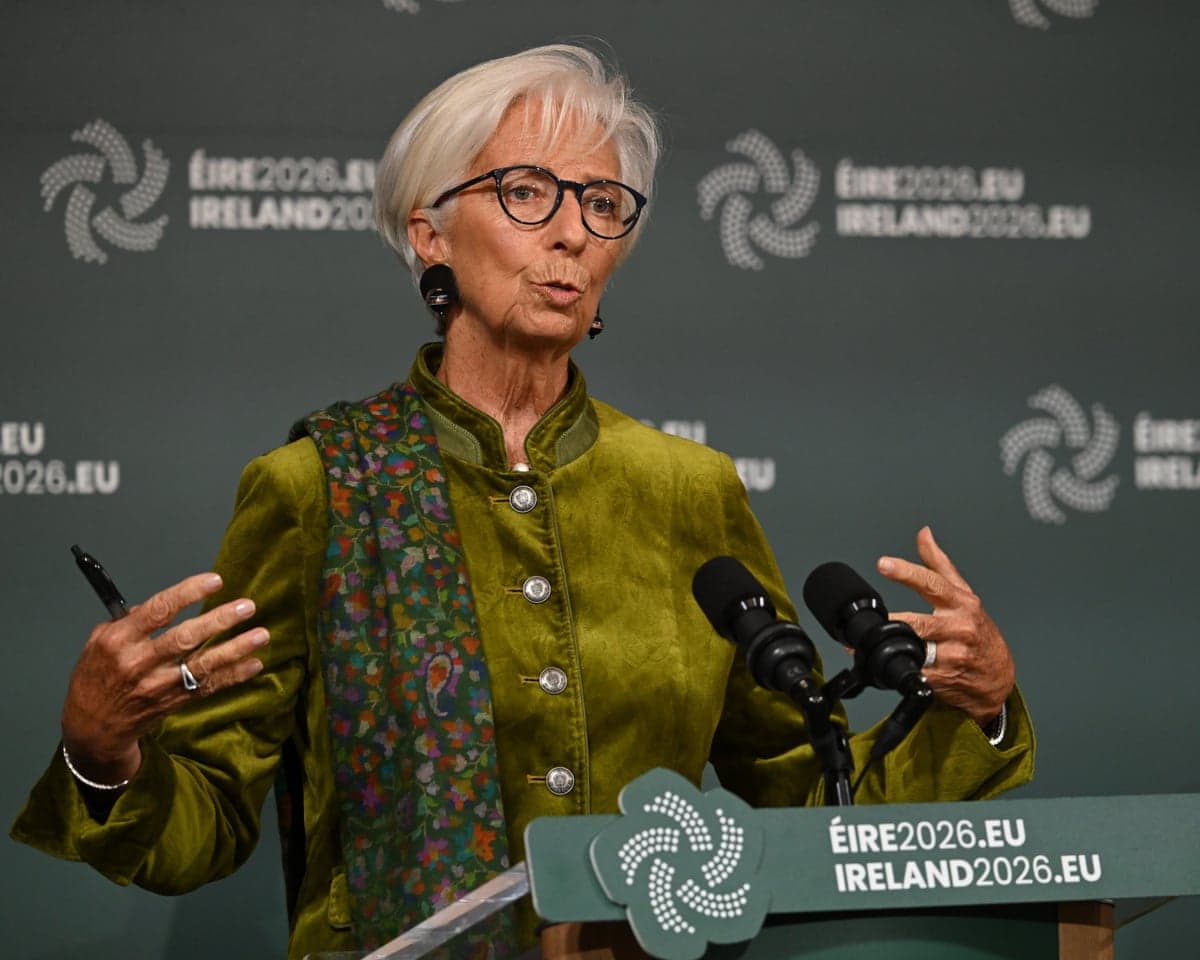
The dilemma was articulated starkly this week by Christine Lagarde, president of the European Central Bank. In a speech on 14 September 2026, she framed Europe's position as binary: reject the technology and forfeit economic growth, or adopt it and accept reliance on foreign-developed systems. According to reporting on the ECB's assessment, the bloc faces an "unprecedented risk" of being cut off from AI entirely, a threat that extends beyond mere competitive disadvantage to questions of autonomy and living standards.
The timing of this warning coincides with an intensifying global debate over AI safety that has largely proceeded without meaningful European participation. While the continent has established itself as a regulatory powerhouse—much to the frustration of the White House—its lack of a domestically developed frontier AI company comparable to OpenAI, Anthropic, or Nvidia has diminished its influence in discussions about how to manage the technology's risks. Earlier this month, Donald Trump dismissed AI safety concerns as a "hoax", while industry leaders called for a slowdown in development, creating a deadlock in which neither Washington nor Beijing appears willing to support any form of pacing agreement. Without backing from these two powers, any European effort to shape the safety conversation faces structural limitations.
What does Europe's regulatory approach offer?
Europe's primary instrument in the AI safety debate is the EU AI Act, landmark legislation that establishes requirements for developers of "high-risk" AI systems to report safety incidents and address risks such as loss of control. Margrethe Vestager, the EU's former competition commissioner, co-authored a report this week titled "A Transformative AI Strategy for Europe" that positioned the act as evidence of the continent's voice in global discussions.
"Europe must … build its own AI to strengthen the ecosystem, retain talent, and inspire innovation,"Vestager stated, acknowledging that regulatory frameworks alone are insufficient without corresponding technological capacity.
However, legal experts and policy analysts question whether the EU AI Act will serve as a model for global governance or accelerate a coordinated international slowdown. Georgina Kon, a partner at law firm Linklaters, noted that the act faces adoption barriers elsewhere, including criticisms of its heavy compliance burden—which has already delayed implementation of certain provisions—and its narrow territorial focus on Europe.
"The EU AI Act is not something that everybody else in the world feels constrained by, although many tech companies will of course want to sell to the EU,"Kon observed, pointing to the reality that other jurisdictions have deliberately differentiated their regulatory approaches from Brussels' framework.
Why is Europe investing in its own AI infrastructure?
Lagarde's speech outlined a three-part strategy to reduce Europe's vulnerability: the continent must develop its own AI models, build additional datacentres—the computational infrastructure essential to AI systems—and secure access to frontier models to diminish dependence on external suppliers.
"If Europe invests in its own AI tech, the threat of being cut off loses its force,"Lagarde argued, framing self-sufficiency as both an economic and security imperative. According to the ECB's detailed analysis, Europe requires not only cutting-edge frontier models but also "good enough" AI systems for routine tasks across the economy.
Vestager's report echoed this concern, warning that Europe's citizens are already "bearing the economic and social consequences of decisions taken elsewhere." The report called for datacentre expansion and measures to ensure the continent can withstand "AI crises" such as a powerful model escaping developer control. On 18 September 2026, the European Commission's AI Board held its ninth meeting, with discussions centring on Europe's own AI capabilities, frontier technologies, AI safety, and coordination among member states.
Is Europe's competitiveness problem really about regulation?
Critics argue that the framing of Europe's AI challenge as primarily regulatory obscures a more complex reality. Frederike Kaltheuner, an adviser to the AI Now Institute, contends that Europe's dependence on US technology—spanning search engines, semiconductor chips, and datacentres—reflects structural dependencies that will prove difficult to reverse. More fundamentally, she suggests that the "doomsday" narratives promoted by American technology executives have shaped the global conversation in ways that serve their commercial interests.

"We are exclusively talking about AI in a very narrow, specific kind of way – namely, the idea that there is such a thing as the AI frontier, which is getting better and better, and that access to the frontier is the most important thing that Europe needs for its security and economy,"Kaltheuner observed. This framing, she argues, obscures evidence that many companies are not adopting so-called "frontier models" like ChatGPT or those from Anthropic due to high costs and concerns about data security. If this market trend persists, Europe may not be as disadvantaged as policymakers fear.
Itxaso Dominguez de Olazabal, a policy adviser at EDRI, a European digital rights organisation, acknowledged Europe's competitive challenges but cautioned against accepting the premise that deregulation is the solution.
"Europe has a competitiveness problem, that's true,"she said, but added that US technology advocates are "blaming it on laws and protections, and have promised that deregulation will make European companies more competitive … in a race to the bottom to see if we can catch big tech."
The EU AI Act does contain pragmatic measures addressing how consumers encounter AI in daily life, including requirements for labelling AI-generated content and oversight of AI use in medicine and hiring decisions. These provisions reflect a different regulatory philosophy than the frontier-focused safety debate dominating international discourse.
What is Europe's next move?
Ursula von der Leyen, president of the European Commission, signalled a more active European role in the safety debate this week. On 16 September 2026, she announced plans to
"invite the main frontier labs for a discussion on how we can support ongoing industry efforts to pace the frontier."According to reporting on the announcement, von der Leyen also backed calls for a pause in some frontier development and positioned the EU's landmark AI rules as giving Europe standing to help shape global efforts on AI risk, alongside partners such as Canada and the UK.
However, the practical impact of these discussions remains uncertain. Vestager acknowledged that existential threats to humanity, if they materialise, require global solutions that do not concentrate power in Washington or Beijing.
"As for existential threats to humanity, we must first assess the actual level of threat – then act with urgency. The UN general assembly is an opportunity to address this. It is vital to move beyond the US-China rivalry narrative. There must be space for humanity between the egos of leaders like President Xi and President Trump."
Meanwhile, European AI companies themselves are pushing back against the international consensus on slowing development. According to reporting on 18 September 2026, firms including Mistral have challenged US-led calls for a slowdown, arguing that safety concerns should not be weaponised to entrench incumbent technology leaders. This internal European disagreement complicates the continent's ability to speak with a unified voice in global negotiations.
What are the longer-term risks?
Kaltheuner warned of a scenario in which Europe's anxiety about falling behind drives it toward deeper dependence on American AI systems.
"There's a vision of the future where Europe's economy, its public sector, its education system runs on models and on infrastructure that is controlled by a very small number of companies that happen to be also in the US. This would be a sovereignty problem."Such an outcome would represent a paradox: in attempting to avoid strategic vulnerability through adoption of frontier AI, Europe could entrench the very dependence it seeks to escape.
The continent's challenge is not merely technological or regulatory but conceptual. Europe must determine whether its role in the AI age is to shape the technology's development and governance from within, or to manage its adoption and consequences from the periphery. The decisions made in the coming weeks—through von der Leyen's planned discussions with frontier labs, the AI Board's ongoing coordination, and the implementation of the EU AI Act—will signal which path the bloc intends to pursue.