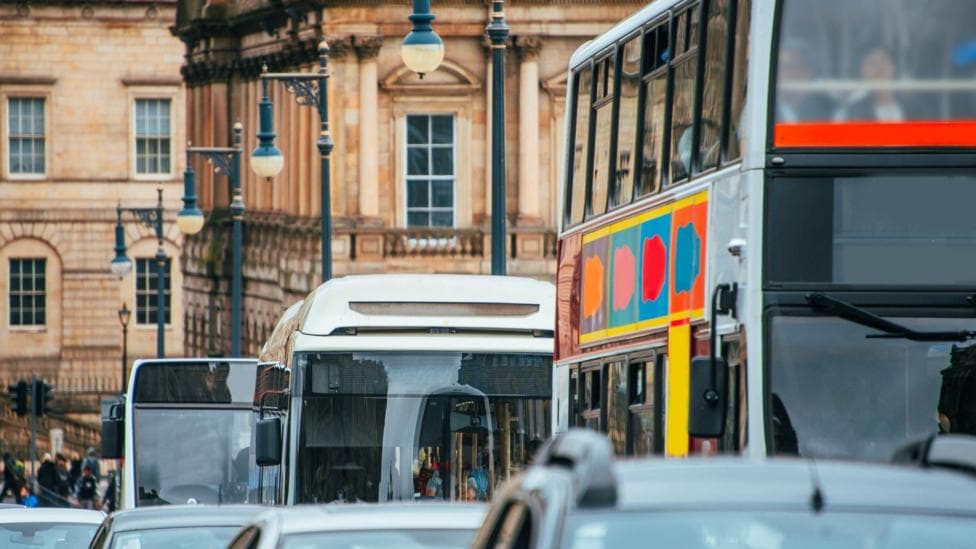
The UK government has confirmed that disabled bus pass holders in England will be able to travel free at any hour of the day from a new date next year, ending long-standing time restrictions that have limited when the concession can be used. Announced on Tuesday 18 August 2026, the change is expected to benefit around one million people and is being presented by ministers as part of a broader "bus revolution" agenda, according to a government announcement. The reform is being framed as a genuine "24/7" entitlement rather than simply an adjustment to existing weekday cut-off times.
Under current rules, disabled bus passes can only be used free of charge between 09:30 and 23:00 on weekdays, a restriction that has made it difficult for many pass holders to commute to jobs or attend evening events. Free travel has already been available at any time on weekends and bank holidays. According to the government's own guidance on applying for a disabled bus pass, these off-peak weekday limits currently apply unless a local authority chooses to fund an extension itself.
Why is the government making this change?
Ministers say the policy is intended to cut living costs and help more disabled people into employment by removing a barrier that has effectively excluded them from peak-time travel. The Department for Transport has described bus travel as the most widely used form of transport in England and called it "a lifeline for so many."
The disability charity Scope said the reform would help "remove barriers to everyday life" for pass holders across the country.
What have officials and campaigners said?
Prime Minister Andy Burnham argued that the existing rules were unfair to disabled travellers who found themselves unable to use their passes at certain times of day.
"Simply not right that many disabled people cannot travel using their pass during certain times of the day."
Burnham said the government intended to fix that nationally, pointing to his own earlier decision as mayor of Greater Manchester to scrap similar restrictions on the city's Bee Network bus system. On the day of the announcement, Burnham visited a bus station in the West Midlands, where he was scheduled to give a pooled interview to broadcasters at 11am followed by questions from regional media.
"I'm proud to do it now for the whole country."

Liberal Democrat MP Tom Gordon, the member for Harrogate and Knaresborough, who has campaigned on the issue for almost two years according to some reporting and for a full two years according to other accounts, welcomed the announcement enthusiastically.
"Disabilities don't start at 9 o'clock, neither should disabled bus passes and soon enough they won't. This is a huge win for the disabled community."
James Barber of the disabled-led charity Transport for All also praised the move, calling it a "real win for disabled people" and "very welcome news." He added that it would help end what he described as a confusing and unjust postcode lottery created by inconsistent rules between different areas.
Kurtis Crossthorn, a registered blind resident of Sheffield, said the change would come as a relief to many disabled people and would leave them feeling heard.
"Disabled people need to get to work and need to live their life as well."
He described buses as a lifeline, particularly for disabled people who are unable to drive.
Not everyone is convinced by the funding plan
A Conservative Party spokesperson pressed the prime minister to explain how the policy would be paid for over time, accusing the government of relying on internal reallocations rather than new money.
"This is simply the shuffling around of existing departmental budgets. Andy Burnham needs to come clean about how he is going to fund this growing list of policies."
The scheme is costed at £60 million, which according to reporting on the announcement and confirmed in the official government release, will be split between £40 million from the Department for Work and Pensions and £20 million from the Department for Transport. Government sources cited in that reporting said the funding has no fixed end date and is not intended as a one-off payment, though the wider concessionary travel system remains costly: the English National Concessionary Travel Scheme runs at around £700 million a year in total, and parliamentary written answers have previously noted that extending time restrictions would need careful consideration for long-term financial sustainability.
How has the scheme worked until now?
Disabled pass holders in England have generally been entitled to free off-peak weekday bus travel since 2007, according to the charity Transport for All, with the scheme administered locally by councils under the English National Concessionary Travel Scheme rather than issued as a single pass directly by central government, as explained by the House of Commons Library. Earlier this year, Manchester became an early adopter of the reform when Burnham lifted time restrictions on disabled passes for the city's Bee Network buses, a move detailed in a report on Greater Manchester's transport changes. Some other local authorities have also gone beyond the national minimum; for example, Brent Council in London already offers a disabled persons' freedom pass with broader free travel terms than the national scheme, according to the council's own guidance.
Elsewhere in the UK, arrangements differ. Disabled people in Scotland and Wales already receive free bus travel at all times, while in Northern Ireland blind people and disabled war veterans travel free and other disabled pass holders receive half-fare tickets.
What other cost-of-living transport measures has the government introduced?
The bus pass change follows a series of other transport-related measures aimed at reducing living costs, including free bus travel for under-16s during August and a £2 cap on single bus fares that operators have been encouraged to adopt. The government has also cut business rates for pubs and removed VAT from electricity bills as part of the same broader cost-of-living push. Since Burnham came to power in July, he has announced a range of similar policies aimed at relieving pressure on financially squeezed households and businesses, though he has faced ongoing scrutiny over how these commitments will be funded alongside promises to boost defence spending and raise infrastructure investment.
What happens next?
According to a report on the policy timeline and confirmed by the government's official announcement, the round-the-clock free travel entitlement is due to come into force on 1 April 2027, giving local authorities and bus operators time to adjust their systems ahead of implementation. The government has framed the change as applying to eligible disabled people across England, removing time restrictions on concessionary passes nationwide.
Key Facts
- Roughly one million disabled people in England are expected to benefit from the change.
- Current rules limit free weekday travel to between 09:30 and 23:00, with unrestricted free travel already available on weekends and bank holidays.
- The £60 million scheme will be funded with £40 million from the Department for Work and Pensions and £20 million from the Department for Transport.
- The wider English National Concessionary Travel Scheme already costs around £700 million a year.
- Some councils, including in Greater Manchester and Brent in London, already offer broader free travel terms for disabled pass holders than the national minimum.
- The new round-the-clock entitlement is scheduled to take effect on 1 April 2027.