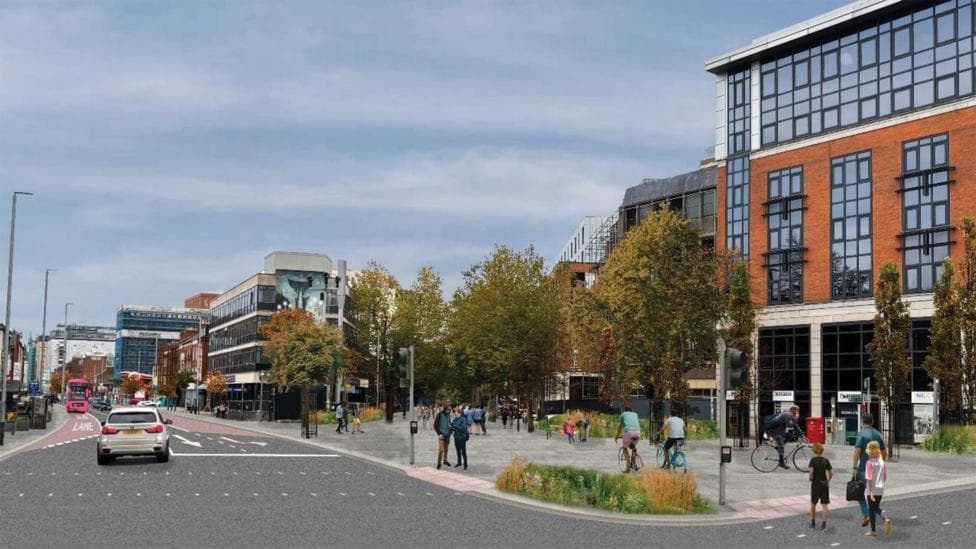
Ambitious plans to transform Belfast's city centre through widespread pedestrianisation and traffic-calming measures have been released for public consultation. According to BBC News, the proposals form part of the draft Eastern Transport Plan 2035, a comprehensive strategy designed to guide transport investment decisions across the region through 2035, including priorities for sustainable growth, connectivity, accessibility and climate objectives.
A city centre-wide 20mph speed limit will be introduced under the proposals, which also include expanded pedestrian-priority streets, a new civic spine, an expanded segregated cycling network, reduced through-traffic and parking management reforms. The 12-week public consultation on the 270-page Eastern Transport Plan runs until 5pm on 25 January 2027, with responses submitted through an online questionnaire.
The consultation covers the first phase of the Eastern Transport Plan, which focuses on proposals for Belfast city centre and the wider metropolitan area. According to the Department for Infrastructure, the first phase is intended to be followed by consultations for the remaining four council areas later, with the wider-area proposals including new Glider corridors, upgraded cycling infrastructure, targeted 20mph zones, public-realm improvements in local centres, and new or expanded Park & Ride sites.
What changes will happen in the city centre?
Several key areas of Belfast city centre will be substantially altered under the proposals. The Bridge Street area beside the old Assembly Rooms will be transformed into a new public realm space, while Donegall Square West, which currently serves Metro buses, will be closed to traffic to become a pedestrianised zone. Royal Avenue and Donegall Place will return to two-way public transport traffic to accommodate the planned expansion of the Glider service to north and south Belfast.

How does this fit into broader transport planning?
The Eastern Transport Plan is intended to replace the Belfast Metropolitan Transport Plan 2015 and is being developed in phases to align with councils' Local Development Plans. The plan was published alongside another policy document called Transport Strategy 2035, which seeks to deliver a "cleaner, smarter and more inclusive transport system". These proposals build on recent temporary measures: Belfast city centre was car-free during the Fleadh Cheoil na hÉireann festival from 2-9 August, an event that demonstrated how pedestrianisation could accommodate large numbers of visitors while enhancing the city centre experience.
What is the government's vision for these changes?
Stormont's Infrastructure Minister Liz Kimmins emphasised that the plan prioritises people and accessibility.
I am committed to building a transport network that is accessible and welcoming for people of all backgrounds, incomes and abilities, enabling them to access opportunities and reach their full potential,she said in a statement.
This draft plan is an important first step in transforming how people move around the region, and public feedback will play a vital role in shaping its future.
Kimmins added that
at its heart, the ETP is about peopleand encouraged public engagement with the consultation process.
I encourage everyone to share their views and engage with the consultation process so that, together, we can create a better transport system for all,she said.
What happens after the consultation closes?
Following the consultation deadline on 25 January 2027, responses will be analysed to shape the final plan. However, any proposals emerging from the plan remain subject to funding and statutory processes, including further consultation at the detailed design stage where required, according to the Department for Infrastructure. This means that while the consultation will gather public feedback, implementation of individual schemes will depend on securing funding and completing detailed design work.
Key Facts
- The consultation runs for 12 weeks until 5pm on 25 January 2027
- Bridge Street and Donegall Square West will become new pedestrianised public spaces
- A city centre-wide 20mph speed limit will be introduced alongside expanded cycling infrastructure
- The plan is the first phase of a wider Eastern Transport Plan covering five council areas
- The strategy is designed to guide transport investment decisions through 2035 with a focus on sustainability and accessibility