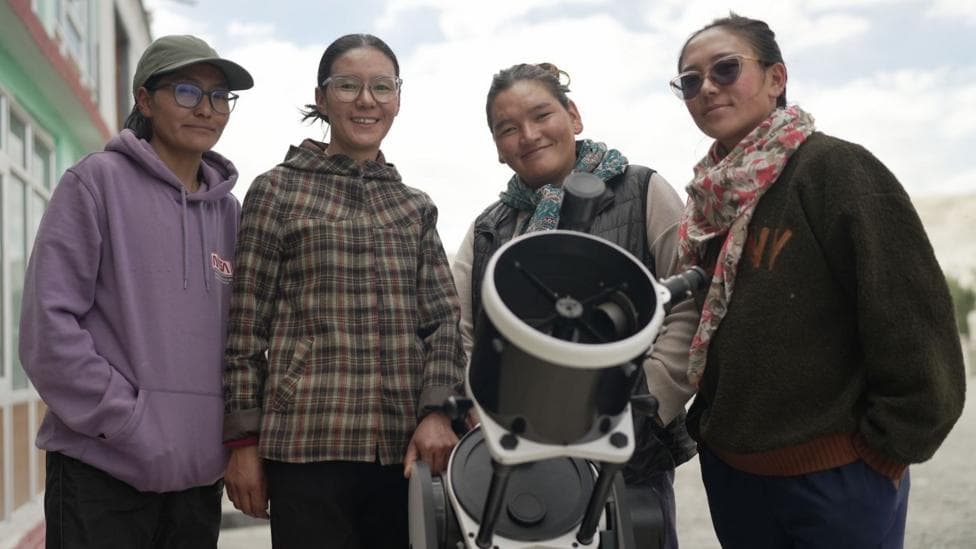
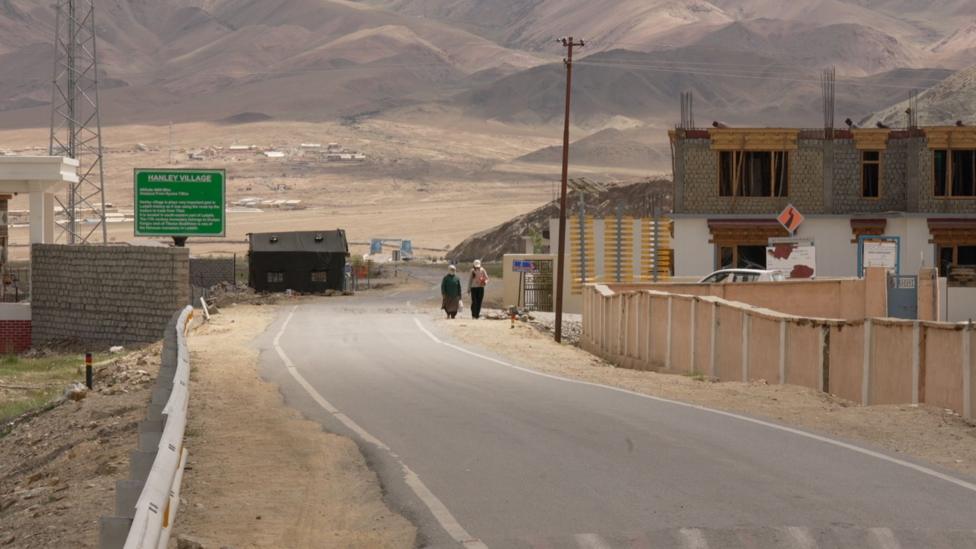
At 14,764 feet above sea level in Hanle, a remote village nestled in India's Himalayan Ladakh region, four young women have transformed themselves into astronomy guides, welcoming hundreds of thousands of visitors annually to witness one of Earth's clearest night skies. Palzes Angmo, Tsering Dolker, Tsering Yangdol and Padma Chamchot—all in their late 20s—now spend their evenings setting up telescopes, tracing constellations with laser pointers and explaining celestial phenomena to tourists who travel hundreds of kilometres to experience what locals have long taken for granted.
The transformation began in 2022, when the Ladakh administration and Indian Institute of Astrophysics launched a training programme. According to the Indian Institute of Astrophysics, 24 local villagers were selected as Astronomy Ambassadors, with two-thirds being women, each receiving an 8-inch telescope funded by the Ladakh territorial government. The programme has since expanded: a 2025 report indicated 25 residents had completed training as astronomy ambassadors, including 18 women, demonstrating growing investment in the initiative.
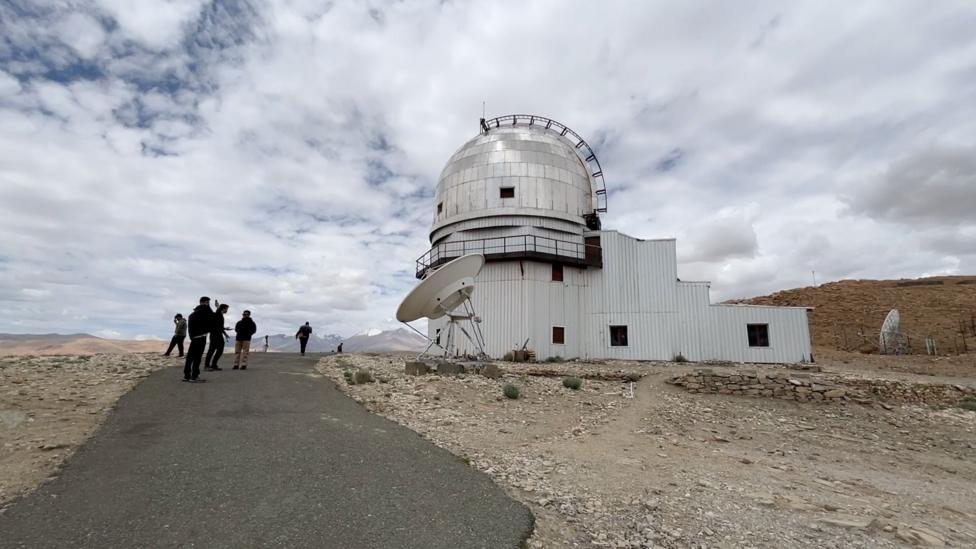
Hanle's exceptional conditions for stargazing stem from its remote location, high altitude of approximately 4,500 metres, dry desert air and minimal light pollution. The site offers suitable observing conditions on roughly 260 nights annually, making it invaluable for astronomical research. The Indian Astronomical Observatory, operated by the Indian Institute of Astrophysics, conducts major research from this location. In December 2022, Hanle was formally notified by the Government of Ladakh as an astronomy-based socio-economic development initiative combining light-pollution control and astro-tourism, becoming India's first Dark Sky Reserve.
How did visitor numbers change after the reserve's designation?
Tourism to Hanle has surged dramatically since the reserve's establishment. Visitor numbers climbed from approximately 3,000 annually five years ago to nearly 30,000 in 2024-25, according to government figures. This growth has been fuelled partly by social media posts showcasing Hanle's night skies and its location on the route to Umling La, one of the world's highest motorable mountain passes.
What do the astro-ambassadors do each evening?
The four women divide their time between daytime hospitality work and evening astronomy guidance. During daylight hours, they cook meals, clean rooms and manage guests at their family-run homestays—small establishments that form the backbone of local accommodation, as Hanle has few hotels or resorts. From 9pm onwards, their focus shifts entirely to the night sky.
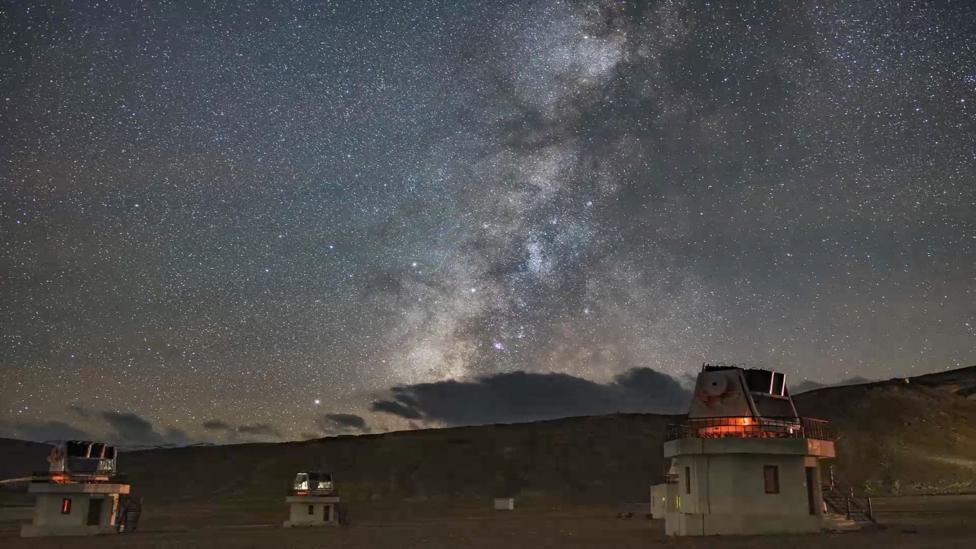
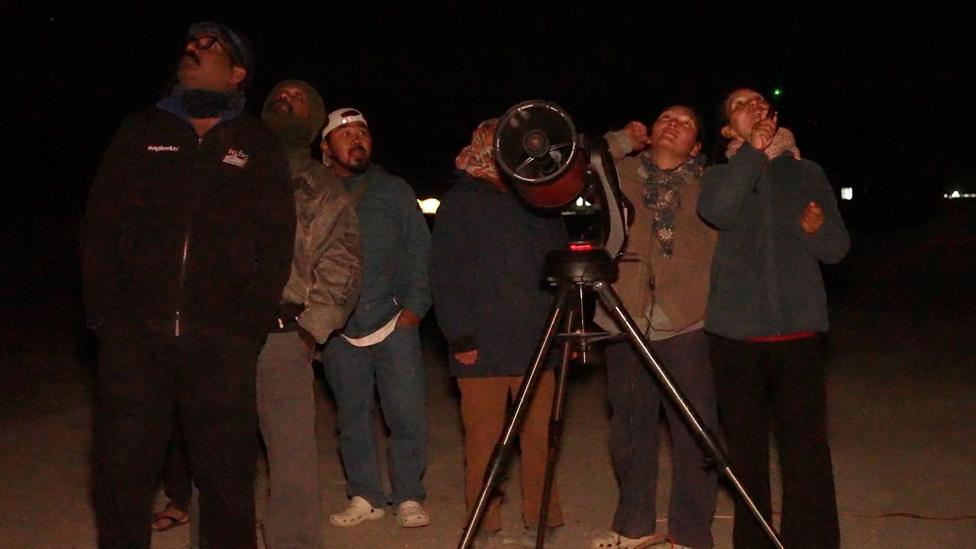
They position telescopes for the evening's planets and constellations before welcoming visitors from local homestays. Using optical equipment and laser pointers, they guide tourists to observe the Moon's craters, Saturn's rings, Vega—the brightest star visible in the night sky—and numerous other celestial objects. At 11pm each night, the village switches off its lights, plunging Hanle into complete darkness as visitors attempt to photograph the now-brilliant Milky Way.
When people look through the telescope and capture a photo alongside the Milky Way, they experience immense joy. We also help them with their mobile phone settings so they can capture the Milky Way.Padma Chamchot explains. What often begins as assistance for a single visitor frequently develops into a lengthy queue, with the women also capturing images for their own social media accounts and comparing observations from each night's stargazing session.

How has this work affected the women financially and personally?
The astronomy work has provided meaningful financial independence. Each woman earns approximately 25,000 rupees ($260; £193) monthly from astronomy sessions, charging 200 rupees per session. While family homestays remain their primary income source, these additional earnings have allowed them to save money and make personal purchases without requesting funds from their parents. Income fluctuates seasonally, declining during harsh winters when few tourists visit, but the overall economic impact has been transformative.
Beyond financial gains, the women describe profound personal development.
Before taking on this work, we lacked confidence,they reflect. Four years ago, handling astronomical equipment felt intimidating—they feared breaking expensive instruments. Gradually, through hands-on experience and repeated use, they developed expertise and self-assurance. Today, they operate telescopes and guide visitors with proficiency, a transformation that extends beyond technical skills to broader confidence in their capabilities.
The women have also deepened their connection to their community. They frequently set up telescopes for family members, introducing relatives to celestial phenomena through optical equipment.
If one of us takes even a single day off, the families ask why the telescope was not set up,Yangdol jokes, indicating how thoroughly stargazing has become woven into local life.
What challenges threaten Hanle's dark skies?
The same tourism that supports local livelihoods poses risks to the darkness that makes Hanle unique. Rapid construction, increased traffic and artificial lighting—inevitable consequences of growing visitor numbers—threaten the pristine conditions essential for both astronomical research and astro-tourism. Longtime residents have already noticed changes. Padma's father, Dhuntup Chamchot, in his 70s, remembers when skies were even darker.
Back then, when the weather was good, people would often sleep outdoors under the open sky,he recalls.
Sonam Jorphail, a senior engineer and head of outreach at the Indian Astronomical Observatory, acknowledges this tension. Tourism creates jobs and drives development in Hanle, but growth must be carefully managed to preserve the dark skies that attract visitors in the first place.
They bridge the gap between the science community and common people - locals and visitors,Jorphail says of the astro-ambassadors, recognising their role in balancing scientific and economic interests.
What are the women's aspirations for the future?
The four astro-ambassadors express no desire to leave Hanle or abandon their work with the night sky. Instead, they hope for advanced training opportunities and access to improved telescopes and eyepieces to enhance visitors' experiences. Their commitment to the work reflects a broader shift in how they view their futures—no longer constrained by limited local opportunities, they are building lives around astronomy and tourism in their home village.
Recent developments underscore the growing significance of Hanle's astro-tourism initiative. The fourth Hanle Dark Sky Reserve Star Party took place from 7–12 September 2026 at the Indian Astronomical Observatory, bringing together expert astrophotographers and amateur astronomers, demonstrating sustained interest in the site as both a research facility and tourism destination.
Key Facts
- Hanle sits at 4,500 metres elevation with exceptionally clear, dark skies offering suitable observing conditions on approximately 260 nights annually
- Visitor numbers increased from roughly 3,000 annually five years ago to nearly 30,000 in 2024-25 following the reserve's 2022 designation
- The astronomy ambassador programme has trained at least 25 local residents, including 18 women, each equipped with an 8-inch telescope
- Women earn approximately 25,000 rupees ($260; £193) monthly from astronomy guidance work, providing financial independence alongside family homestay income
- Light pollution from tourism development poses an ongoing threat to the dark skies that make Hanle valuable for both research and astro-tourism