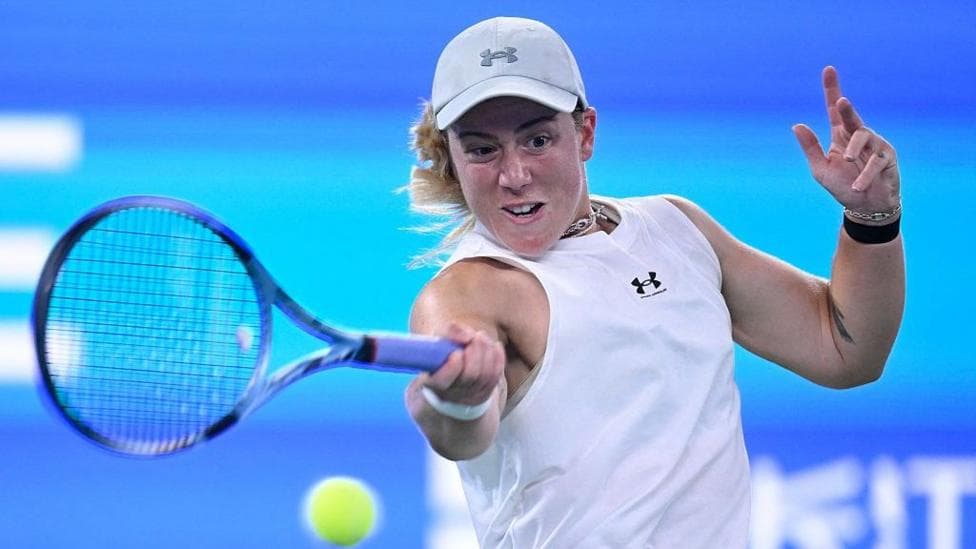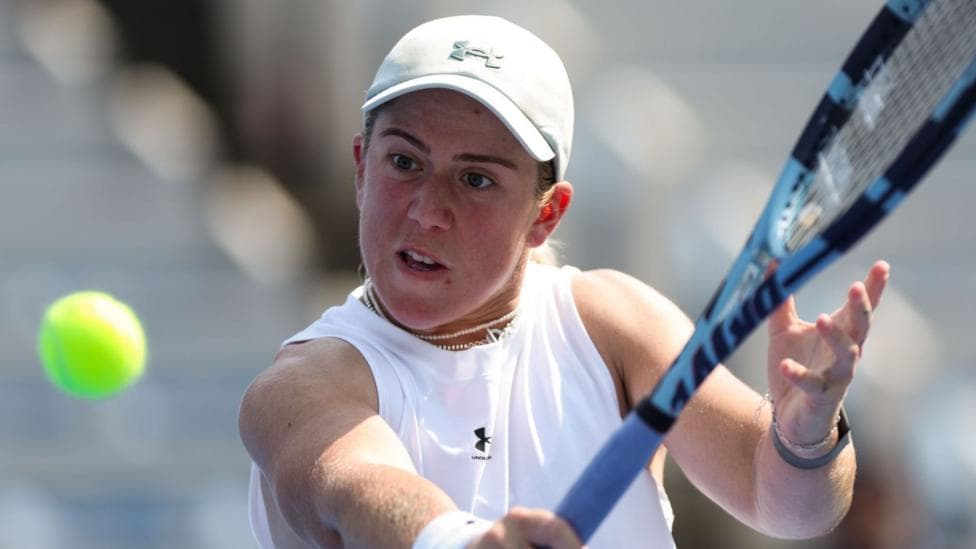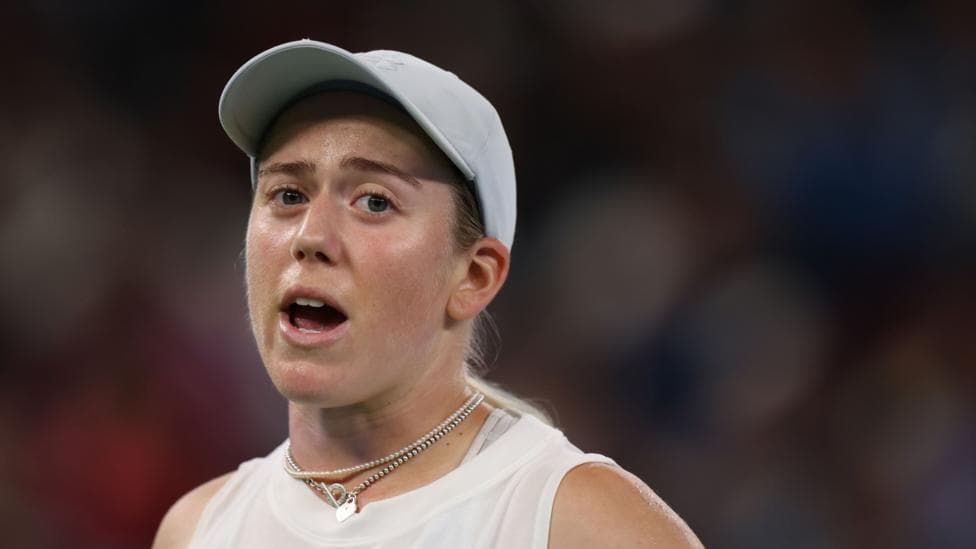
Sonay Kartal came up short in her bid for the biggest title of her career as she lost to Polish opponent Maja Chwalińska in the Wuhan Open final on 18 October 2026. The British player, 24, suffered a 2-6 6-4 6-2 defeat after an exhausting run through the tournament, but her remarkable comeback from injury has already secured her promotion to British number one when the WTA rankings update on Monday. According to BBC Sport, Kartal's week in Wuhan represented a transformational period in her recovery, while The Guardian noted that fatigue appeared to catch up with her as she faded in the closing sets.
Kartal had returned to competitive tennis only three weeks earlier following a six-month absence caused by a back injury that had seen her ranking plummet from 44th to 170th in the world. Entering the Wuhan Open as the lowest-ranked player in the draw, she progressed through the tournament by defeating a succession of top-tier opponents, including ninth-seeded Belinda Bencic and former French Open finalist Jelena Ostapenko. In the semi-final, Kartal defeated Ostapenko 7-6 (11-9) 7-6 (7-5), saving six set points to become the lowest-ranked player to reach a WTA 1000 final since the format began in 2009.
How did the final unfold?
Kartal dominated the opening set, immediately breaking Chwalińska's serve and establishing control throughout. She broke serve twice more to clinch the opening set 6-2. However, the physical and mental demands of her deep tournament run began to show. After the first set, Kartal called the trainer and was given medical attention, a sign that fatigue was setting in after six months away from competitive tennis.
In the second set, Kartal broke serve to lead 2-0, but Chwalińska's unconventional game—relying on spins, slices and angles rather than pace—gradually began to trouble the British player. A brief delay occurred when Chwalińska broke a shoelace chasing a wide ball, but the Polish player's defensive skills proved increasingly effective. Chwalińska won the second set 6-4 to level the match.
In the deciding set, Kartal attempted to regain the initiative but was constantly pushed back by high balls from her opponent. Chwalińska, weathering some nervous moments as she approached victory, ultimately converted her third championship point when Kartal sent a forehand long, securing the 6-2 final set.
How did Chwalińska reach the final?
Chwalińska earned her place in the final by defeating world number one Iga Świątek in the semi-finals. The Polish player defeated Świątek 7-5 6-1, with the world number one struggling with a leg injury during the match. This victory set up Chwalińska's first WTA 1000 final appearance and proved to be a breakthrough moment in her career. The 25-year-old had already made headlines earlier in 2026 when she reached the French Open final as a qualifier, and her Wuhan triumph marks her first WTA 1000 title at any level on the tour. She will now move to the brink of the top 10 in the world rankings.
What does this mean for Kartal's career?
Despite the loss, Kartal's performance in Wuhan marks a historic moment for British tennis. She will climb to 50th in the world rankings on Monday, just below her previous career high, and will become the British number one for the first time. This achievement comes in only her tenth match since returning from injury and represents a remarkable acceleration in her comeback trajectory.
Kartal's path to the final was particularly impressive given the calibre of opposition she faced. Beyond Bencic and Ostapenko, she defeated other notable players and former major champions during her run. The physical and mental demands of such a deep tournament run, combined with the intensity of the final itself, ultimately proved too much for Kartal to overcome in the closing stages.
How significant is this for British women's tennis?
Kartal's achievement in reaching a WTA 1000 final is historic for British tennis. Before her, only Johanna Konta had reached a WTA 1000 final, doing so in Beijing in 2016, Miami in 2017 and Rome in 2019. Konta remains the last British woman to win a WTA 1000 title, which she achieved in 2017. Kartal had previously won a WTA 250 title in Monastir, Tunisia, in 2024, making the Wuhan final her second career tour-level final.
The 24-year-old's comeback from a pars stress fracture sustained at Indian Wells in March has captured attention across the sport. Her return to competitive tennis began with a victory over Andrea Lazaro Garcia at the China Open on 1 October, marking her first WTA match in six months. The speed with which she has progressed from that initial comeback win to a WTA 1000 final demonstrates both her resilience and her underlying quality as a player.
What happens next?
Kartal will now look ahead to future tournaments with the confidence of having proven she can compete at the highest level despite her recent injury layoff. Her new ranking of 50th in the world should provide her with improved seeding and access to stronger fields in upcoming events. The British number one status represents a significant milestone in her career and signals her return as a major force in women's tennis.