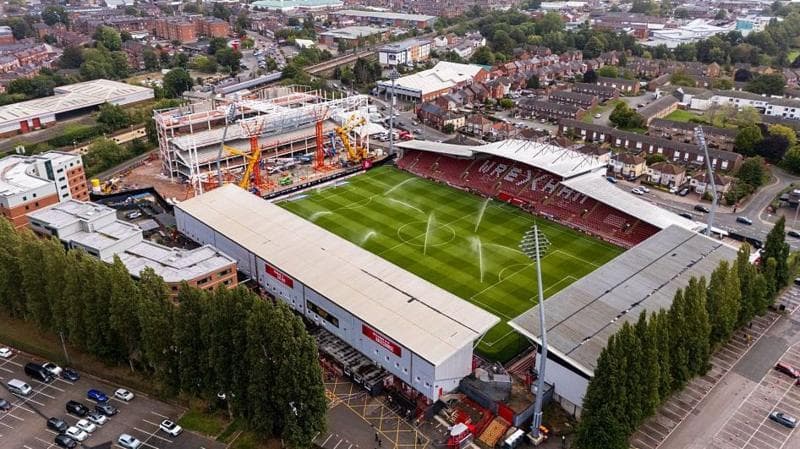
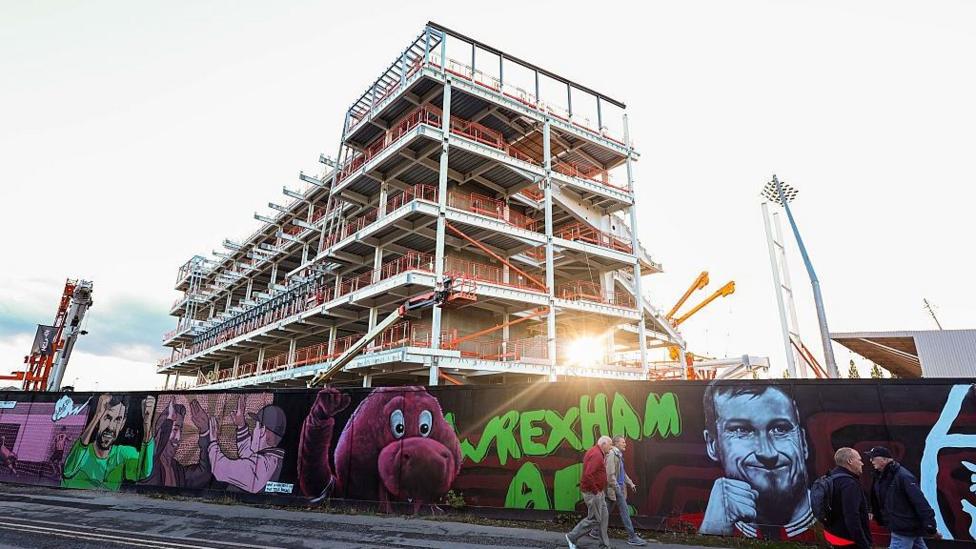
The Racecourse has been Wrexham's home since their formation in 1864, making it the oldest international football ground still in use. The club's new Kop stand is being constructed at a pace that rivals the team's own ascent through the football pyramid in recent years.
The £70m development represents far more than a building project for the north Wales club. The stand, which stood derelict for years as a physical manifestation of the organisation's struggles, has been characterised as a "real symbol of hope" by club leadership. Under the ownership of Hollywood figures Ryan Reynolds and Rob McElhenney, Wrexham are targeting promotion to the Premier League, with the Kop rebuild integral to those aspirations.
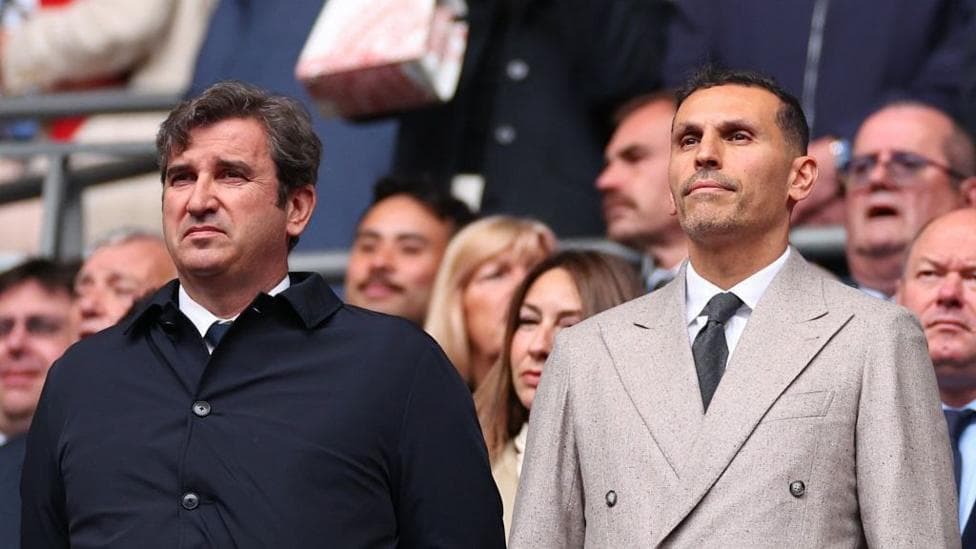
Aidan Miller, Wrexham's chief strategy officer, oversees the long-term development of the Championship club. Just three years ago, Wrexham were competing in non-league football before securing three consecutive promotions. Miller explained the philosophy driving the club's infrastructure investment:
"The speed at which we've got through the leagues has been incredible. We are playing catch-up and we're trying to make ourselves ready for the next level. We've always gone to the next level from the footballing side before the rest of the club is necessarily ready to. Now we're trying to do it a bit more proactively, rather than necessarily just reactively."
The new Kop stand will accommodate 7,500 seats, increasing the ground's overall capacity to more than 18,000. According to the club's planning documents, councillors backed increasing the Kop's capacity from 5,500 to 7,750 seats, with the extra 2,250 planned for a second tier. The council's decision also requires the combined capacity of the Kop to be capped at 7,750 for both football and non-football events. The stand will incorporate dressing room facilities, media provision and hospitality areas, making the Racecourse suitable for Premier League standards should Wrexham achieve promotion.
Wrexham County Borough Council officially approved the club's application this week. However, formal permission for the additional seats remains pending a habitat regulations assessment concerning the River Dee and Bala Lake Special Area of Conservation, along with phosphorus calculations from the club.
The timeline for completion has shifted since earlier announcements. According to recent statements from co-chairman Rob McElhenney, the stand is now expected to be open for spectators in the 2027-28 season, rather than the start of next season as previously indicated.
Reynolds and McElhenney completed their takeover of the then National League club, which had been owned by Wrexham Supporters' Trust, in February 2022. The pair have been transparent about their ambition to see Wrexham reach the top flight and have provided backing to manager Phil Parkinson. The team secured three successive promotions to reach the Championship, though they narrowly missed out on the play-offs in the 2025-26 season, finishing seventh in the table.
Beyond their financial backing, Reynolds and McElhenney have championed local community projects and ensured the football club's influence extends beyond match days. Miller reflected on the tangible impact of their ownership:
"They've delivered in terms of the optimism, the confidence. You notice it as soon as you walk around the place - the optimism, the buzz. There are people who've worked here that been through thick and thin for several years and you can see that they've got a spring in their step. You can see that as you go around the city as well. It's great to see it flooding out of this stadium to other elements."
Why the Kop has become symbolic for Wrexham's transformation
The derelict stand served as a visible reminder of the club's troubled past. Its reconstruction now embodies the organisation's revival under new ownership and investment. The project also reflects broader infrastructure development across the club's operations.
Before joining Wrexham, Miller spent seven years working on Everton's stadium development at Bramley-Moore Dock on the banks of the River Mersey. He drew parallels between that experience and the current project:
"Premier League clubs don't necessarily build new stadiums and they tend to happen in certain intervals. They're difficult to deliver and therefore when you do deliver them, they're brilliant. They're great to see in action, in operation. It's a testament to all the people that go into that. That club had a long period of trying to develop a stadium and put various phases to it. Eventually we managed to do it. A lot of people put so much into that making that happen and making it work. I am really proud of that - it's a brilliant stadium."
What other developments is Wrexham undertaking?
The Kop rebuild is one component of a wider infrastructure programme across multiple sites. The academy facility at Darland High School in Rossett has undergone significant development with the laying of new pitches. The women's team base at The Rock in Rhosymedre, which the club purchased in 2025, has received major upgrades including a new pitch and gym facilities. At Colliers Park, a new pavilion for the first team has been constructed at the complex operated by the Football Association of Wales.
Miller emphasised the interconnected nature of these projects:
"They're all important and big developments in their own right. They're all important from a club perspective in terms of this long-term piece that we're talking about. The club wants to be in a position where its academy is reaching improved levels, improved statuses and we get the players coming through that. That's what's needed for this club to be sustainable in the long term. The owners have been really clear about their appetite to invest in the women's team and how they're going about doing that. We bought The Rock just over a year ago, so it is a really important step to continue to refurbish that and make changes to it."
What are Wrexham's longer-term stadium plans?
The new Kop represents merely the beginning of further development at the Racecourse. Chief executive Michael Williamson has stated that the ground's ideal capacity would be between 26,000 and 29,000. According to recent announcements, Wrexham completed the purchase of the final plot of land for the Kop project from the Welsh Government, at the corner of Crispin Lane and Mold Road. The club now owns the enlarged stadium footprint and land for a public-realm approach from Mold Road.
The club has also acquired The Turf, the historic pub located adjacent to the ground, as well as land formerly occupied by the Dickens Car showroom. These acquisitions are intended to protect the club's future and provide space for continued expansion. Miller summarised the philosophy guiding these efforts:
"It's just continuing to take those steps forward. It's continuing to make it bigger, larger, better and just continuing to improve the experience."
What happens next with the Kop project?
Before formal permission for the additional 2,250 seats can be issued, Wrexham County Borough Council must complete a habitat regulations assessment concerning the River Dee and Bala Lake Special Area of Conservation and receive the club's phosphorus calculations. Councillors also heard concerns about matchday parking during the approval process, including claims that wheelchair users had been forced into roads and struck by vehicles, and that residents had faced confrontations with fans. The council has committed to examining a residents' matchday parking scheme to address these safety issues.
The original planning permission for the replacement Kop, granted in January 2023, covered a 5,500-seat stand with hospitality facilities and exhibition space. The recent approval to increase capacity to 7,750 represents a significant expansion of that initial vision. Once all regulatory requirements are satisfied and construction is completed, the stand is expected to welcome spectators in the 2027-28 season.