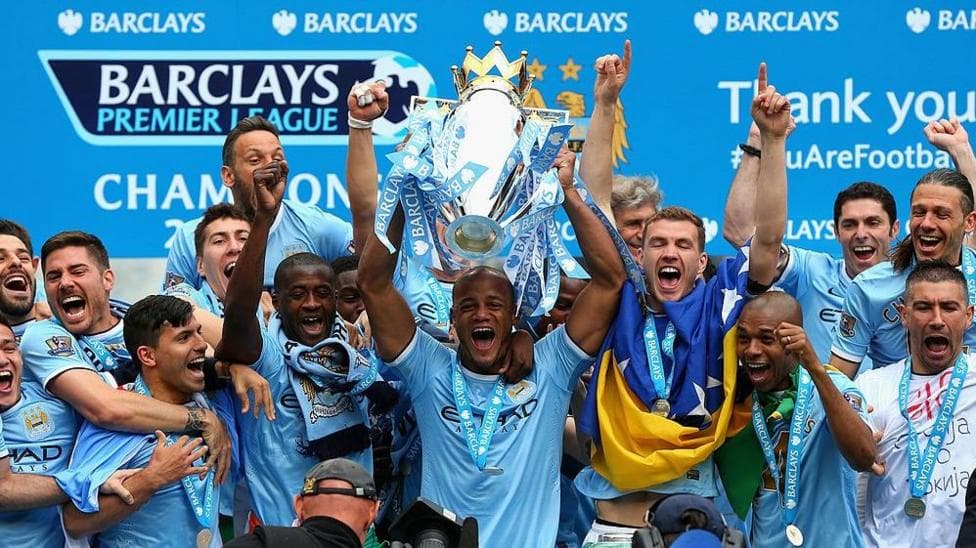
Manchester City won the Premier League title three times during the period covered by the investigation into their financial rule breaches, yet the prospect of retrospective punishment remains one of the most contentious questions facing the sport.
The independent disciplinary panel that found City guilty of 114 of 115 financial charges has not yet held its sanction hearing, meaning the final penalties remain undetermined. While stripping titles has captured public imagination—particularly among supporters of rival clubs—those within the Premier League structure have expressed limited enthusiasm for such a drastic measure.
However, the panel's broad discretionary powers mean title removal cannot be entirely dismissed, even if other sanctions such as points deductions, substantial fines, or potential expulsion are considered more probable outcomes.
What powers does the panel actually have?
Premier League regulations do not explicitly list title stripping as a sanction. The rulebook identifies fines, points deductions, and expulsion as standard penalties. Yet the disciplinary framework grants the panel authority to impose any penalty as it shall think fit
, a formulation that theoretically encompasses retrospectively-applied points deductions or the removal of titles won during the period of rule-breaking.
City were accused of inflating sponsorship revenue from connected companies and making undisclosed payments designed to circumvent financial regulations. The scale and nature of these breaches—spanning from 2009 to 2018—have led some observers to argue that titles won during this era were secured through unfair competitive advantage and therefore warrant nullification.
Could titles be reallocated to runners-up?
The question of what happens to titles if they are stripped opens a complex debate. Should they be left blank in the record books, as occurred with Juventus in Italian football's Calciopoli scandal, or reallocated to the teams that finished second?
Former Manchester United manager Jose Mourinho raised this possibility nearly two years ago when he joked that United—who finished 19 points behind City in 2018, his final full season in charge—might yet receive that title. Such reallocation would create immediate complications: Liverpool finished runners-up to City twice during the period from December 2018 to February 2023, when City also stand accused of failing to cooperate with Premier League investigations. Former Liverpool manager Jurgen Klopp previously joked he would host a garden party if his former club were suddenly awarded those titles.
What precedents exist in football and sport?
While English football has no precedent for stripping league titles, international examples exist. Juventus had their 2005 and 2006 Serie A titles revoked following the Calciopoli match-fixing scandal; the 2005 title was left blank while the 2006 title was awarded to Inter Milan. In British football, Elgin City were stripped of the 1992-93 Highland League title after fielding ineligible players.
Other sports have applied similar punishments. In 2012, cycling's governing body stripped Lance Armstrong of his seven Tour de France titles following doping violations. Athletics has seen widespread medal reallocation as a result of positive drug tests discovered years after competition.

Why is this case more complicated than doping?
Financial rule breaches present a different moral and practical calculus than doping or match-fixing. Many argue it would be unjust to penalize players and supporters who had no involvement in any wrongdoing by erasing their achievements from history. Rodri, City's former midfielder, dismissed talk of title stripping on Friday, stating:
What we did, they cannot take out of us. It's something that is not paid by money. It's paid with effort, with the damage, with, you know, being shoulder to shoulder every day. I can tell you that everything was deserved, and I'm glad that I could live one of the best eras of English football in here.
Others counter that rewriting the official record is the only means of restoring integrity to competition and properly crediting clubs that operated within the rules.
Where does the scope of punishment end?
Determining the boundaries of retrospective action presents profound difficulties. Should sanctions apply only to the 2009-2018 period when City were accused of rule-breaking, or extend to the subsequent years when they stand accused of failing to cooperate with investigations? If City's breaches warrant title removal, should Chelsea face similar action for the secret agent payments they made between 2011 and 2018, for which they were previously sanctioned?
Some legal experts warn that opening this door could create cascading liability. One lawyer explained the dilemma:
The question isn't whether the clubs can take legal action... it's: Where does the line of people who have a case actually end? The clubs who didn't win/qualify/stay up; the players who didn't get bonuses, contract extensions; the staff who missed out on bonuses; the agents who didn't get their uplift on their player deals... It's endless and potentially so destructive to the whole ecosystem.
There is also the question of whether City's early rule-breaking laid foundations for later success. Pep Guardiola's arrival in 2016 coincided with City's emergence as a dominant force, culminating in their 2023 Treble. To what extent did financial advantages gained in 2009-2015 enable the infrastructure and player recruitment that underpinned subsequent achievements?
What are the likely outcomes?
Compensation claims from rival clubs are considered more probable than title stripping. Several clubs are known to be exploring legal action against City for lost earnings resulting from their competitive disadvantage. Such claims could prove less divisive than retrospective title removal, though they would still require establishing causation and quantifying damages across multiple seasons and affected parties.
The independent panel faces a decision that will either reshape Premier League history or leave the record intact while applying other sanctions. Whatever the outcome, the verdict promises further division and disruption across English football.
The sanction hearing has not yet been scheduled, meaning the final determination remains months away. During this period, City continue to compete in the Premier League, though their recent form has deteriorated significantly. According to recent reporting, Arsenal have strengthened their title position as City have stumbled, with the club's future direction uncertain under continued scrutiny.
The broader implications extend beyond Manchester City. Chelsea face separate FA charges related to alleged discriminatory chanting by supporters, demonstrating that disciplinary action across English football remains active on multiple fronts. Meanwhile, international football continues its own cycle of competition and consequence, with Arsenal's Kai Havertz undergoing injury assessment after leaving Germany's camp during the international break, adding to the complications facing clubs as the season progresses.