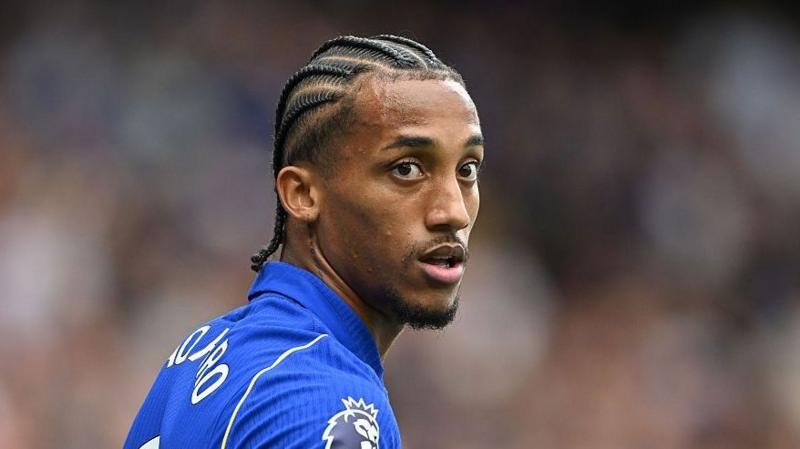
Joao Pedro's thigh injury has left Chelsea struggling in attack, with the Brazilian striker's absence coinciding with a run of poor results that has intensified debate about his importance to Xabi Alonso's side. The 25-year-old will miss the visit of Leeds United on Saturday, extending a period during which Chelsea have won just one of their previous four matches. According to BBC Sport, the statistics paint a stark picture of how heavily the club relies on their £55 million summer signing from Brighton.
The debate over Chelsea's most important player has intensified among supporters, with Cole Palmer and Moises Caicedo frequently mentioned alongside Pedro. However, the recent 1-0 defeat to Sunderland and subsequent struggles have shifted focus to the Brazilian's impact on the team's overall performance. Alonso has faced criticism for his tactical decisions when attempting to replace Pedro, particularly regarding personnel choices during the injury layoff.
Pedro has been sidelined since Chelsea's match at Everton on 17 October, according to Sportsmole, and Alonso confirmed he had not yet returned to team training ahead of the Leeds fixture. The manager indicated that Chelsea would assess his recovery on a match-by-match basis rather than rushing him back.
How has Chelsea's attack changed without Pedro?
The numbers reveal a dramatic difference in Chelsea's attacking output depending on Pedro's availability. Since the start of the 2025-26 Premier League season, Chelsea have averaged 1.8 goals per game when he plays, compared with just 0.6 without him. Their expected goals metric—a measure of chance quality—drops from 1.8 per game with him to 1.1 without, indicating that the decline reflects genuine attacking weakness rather than poor finishing alone.
Chelsea create 4.8 shots on target per game when Pedro features, falling to 3.9 when he is unavailable. The team has failed to score in only 12.2% of Premier League matches involving him, a stark contrast to the 71.4% of games without him in which they have failed to find the net. Chelsea have lost without scoring in just 7.3% of league games featuring Pedro, compared with 71.4% when he has been absent. Three of Chelsea's four Premier League defeats this season have come without him, while they have scored in every match he has played.
The club's points-per-game average falls from 1.5 to 0.9 when Pedro is unavailable, a drop that has contributed to Chelsea sitting fifth, 11 points behind Premier League leaders Arsenal as the winter schedule approaches.
Does Pedro improve his teammates' output?
Pedro's influence extends beyond his own goalscoring. Cole Palmer, who has played 2,317 Premier League minutes alongside the Brazilian and 528 without him, has scored 12 goals and registered four assists when Pedro is in the side—a rate of 0.6 goal involvements per 90 minutes. Without Pedro, Palmer has managed one goal and no assists, equivalent to 0.2 goal involvements per 90 minutes. The pair have developed a productive partnership, with Pedro assisting four Palmer goals while Palmer has provided three assists to the former Brighton forward.
Palmer's chance creation actually increases when Pedro is absent, rising from 1.4 chances created per 90 minutes to 1.9, suggesting that the striker's presence is more closely linked to Palmer's goalscoring output than his creativity. This indicates that Pedro's movement and positioning create clearer opportunities for his teammates to finish.
Morgan Rogers, who has played 523 Premier League minutes alongside Pedro and 360 without him, shows a similar pattern. With Pedro available, Rogers averages 0.7 goals per 90 minutes and 0.9 goal involvements per 90. Without him, those figures fall to 0.3 goal involvements per 90. According to Transfermarkt, Rogers is currently joint top scorer for Chelsea with five league goals, level with Pedro himself.
All three of Pedro's assists this season have been for either Rogers or Palmer, generating early-season excitement about Chelsea's attacking trio and prompting fan nicknames such as 'JP Morgan' and 'CPR'. With 20 goals and eight assists, Pedro has been directly involved in 36.4% of Chelsea's 77 Premier League goals since joining the club.
How has Alonso managed the absence?
Manager Alonso has struggled to find an effective replacement during Pedro's injury. Danny Welbeck, signed from Brighton in the summer to provide cover, has started only one Premier League match during the Brazilian's absence. Instead, Pedro Neto has been deployed through the middle on two occasions—in the home win over Manchester United and the defeat to Sunderland—while Morgan Rogers started as the central striker in the 2-0 home loss to Tottenham.
Striker Emmanuel Emegha, signed from Strasbourg over the summer, has not started a league game and has been hampered by his own fitness issues. The tactical uncertainty has contributed to criticism that Alonso's side lacks a clear identity, a concern that intensified following the Tottenham defeat, which saw goalkeeper Mike Penders score an own goal on his Premier League debut and Cole Palmer sent off.
When asked about the need for goals without Pedro on Friday, Alonso said:
Yes, we need the whole team for that. It's not just the strikers who can score, we can score in set-pieces from defenders, midfielders, so it's teamwork for sure. Joao is an important player but we need to be this time without him. So far we have tried different options and we need to keep trying. I think that there are more explanations for one defeat than missing just one player. The other players, they need to step up and they need to show that they are ready to compete and ready to play for Chelsea.
The manager's comments acknowledge Pedro's importance while attempting to shift responsibility to the wider squad, yet the statistical evidence suggests that tactical adjustments alone have not compensated for his absence.
What does Pedro's contract status reveal about his importance?
Chelsea's investment in Pedro underscores how central he is to their plans. The club handed him both a new contract until 2034 and the number nine shirt vacated by Liam Delap in August, signalling their long-term commitment to the Brazilian. This level of commitment, combined with the £55 million transfer fee from Brighton in 2025, reflects the club's view of him as a cornerstone of Alonso's project.
Alonso has previously compared Pedro to Karim Benzema and rated him at the level of Erling Haaland, further emphasising the manager's regard for the striker. Pedro won the Premier League's August Player of the Month award in his debut season, a recognition of his immediate impact at Stamford Bridge.
Is Pedro truly Chelsea's most important player?
Whether Pedro is the Blues' most important player remains a matter of debate among supporters and analysts. However, the statistical evidence is unambiguous: Chelsea's points return with him in the side is consistent with Champions League qualification, whereas their return without him is not. The team has yet to demonstrate they can perform at the same level when the Brazilian is unavailable.
The contrast between Chelsea's attacking efficiency with and without Pedro suggests that no other player currently at the club can replicate his impact on both his own output and that of his teammates. While Palmer and Caicedo are undoubtedly important, the data indicates that Pedro's absence creates a void that the current squad has been unable to fill.
What happens next for Chelsea?
Chelsea are scheduled to host Leeds United at Stamford Bridge on Saturday, 21 November 2026, at 3 p.m. GMT. Alonso will assess Pedro's fitness on a game-by-game basis, with no guarantee of his return for the Leeds match. In the meantime, Moises Caicedo has been declared fit for the fixture despite concerns following his international duty, providing some relief to the manager's injury situation.
The club's ability to accumulate points during Pedro's absence will be crucial to their hopes of closing the gap to Arsenal and securing Champions League football. Should the Brazilian's injury prove more serious than initially expected, Chelsea may need to reconsider their attacking options in the January transfer window.