

Cwmbran Celtic, the Welsh club relegated from the country's second tier last season, has confirmed a shirt-sponsorship arrangement for the 2026/27 campaign involving four independent bands rather than a single act. According to a national broadcaster's report, Super Furry Animals, Mogwai, Panic Shack and Loose Articles will each appear across the men's and women's first-team kits, with a portion of proceeds earmarked for music charities and local venues. The move revives a tradition of Welsh rock acts backing football clubs while updating it for an era in which shirt deals increasingly double as merchandising strategies.
Anyone who came of age during the Britpop years, singing along to anthems they only half understood, might feel a jolt of recognition at the news. Super Furry Animals were always slightly at a remove from that scene — known to many casual listeners chiefly through their more provocative moments — yet the announcement that they will once again grace a football shirt carries an unmistakable whiff of 1990s nostalgia, however commercially minded the deal now is.
Which bands are involved, and who wears what?
Four acts have been assigned to four different shirts. Per a report from the South Wales Argus, Super Furry Animals will feature on the men's home shirt, Mogwai on the men's away shirt, Panic Shack on the women's home shirt and Loose Articles on the women's away shirt. The club has said 10% of proceeds from shirt sales will go to a UK music charity, and the new kits are being produced by supplier Tor Sports, according to Nation.Cymru.
Cwmbran itself is no arbitrary choice for Super Furry Animals. The band has said its touring props — including the 50-foot inflatable bears that have become a signature of their live shows — have been repaired in the town "numerous times over the last thirty years," as noted in the broadcaster's report, giving the sponsorship a genuine local connection rather than a purely commercial one.
How does this compare with the band's last football sponsorship?
This is not Super Furry Animals' first venture into shirt sponsorship. Nearly three decades ago, in September 1999, frontman Gruff Rhys and bassist Guto Pryce — both Cardiff City supporters — persuaded their Bangor-born bandmates to set aside north Wales loyalties and back the Bluebirds through that season's Welsh Cup run, a sponsorship confirmed by the club's own historical records. Rhys later recalled that the shirts, which cost the band £2,000, were essentially repurposed ice hockey jerseys rather than purpose-made football kit — a detail that has become part of the band's own lore. That earlier deal fit a wider pattern documented by broadcasters at the time, in which acts such as the Libertines at Margate FC and Goldie Lookin' Chain at Newport County also lent their names to football shirts, generally out of local affection rather than marketing calculation.
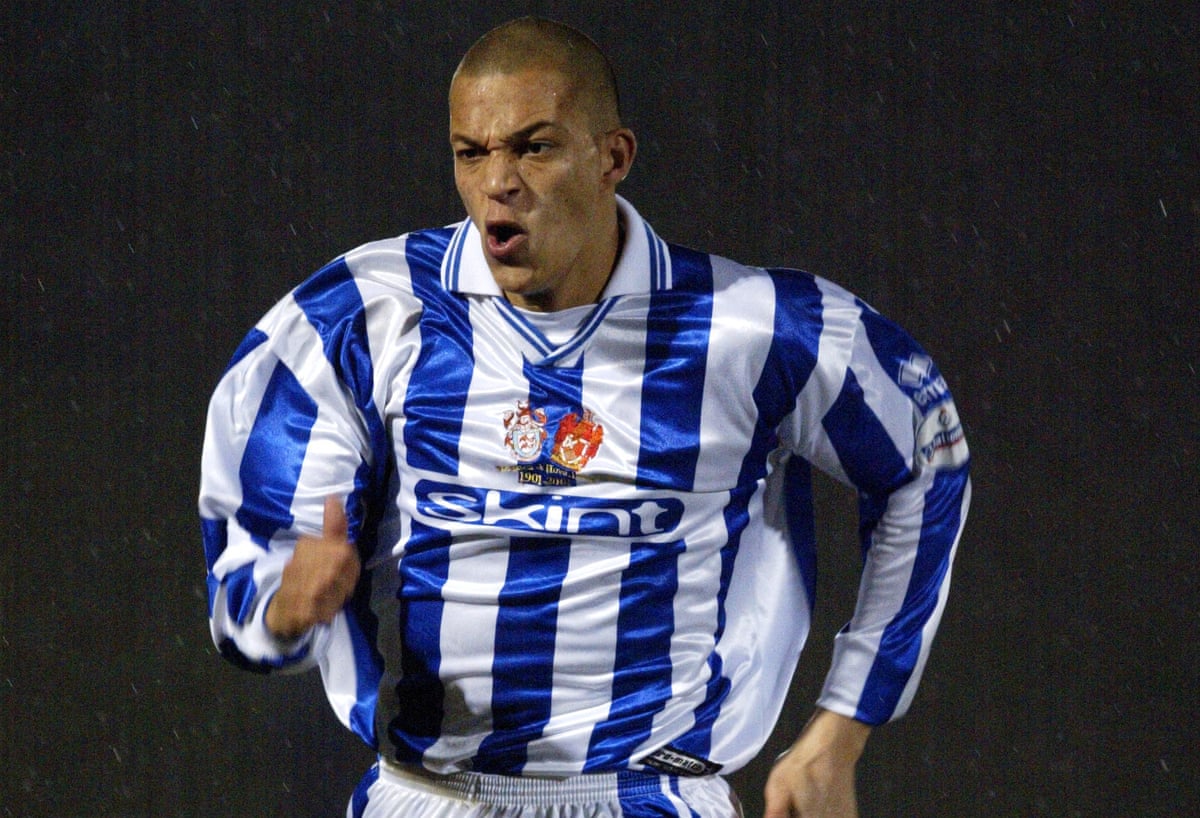
Shirt sponsorship by musicians has a longer pedigree still. Wet Wet Wet became the first band to put their name on a football shirt when they backed Clydebank in 1993, producing a kit design that aged rather better than the group's stage outfits of the period. Elton John's long chairmanship of Watford and Robbie Williams's appointment as Port Vale club president in 2024 both follow the same template: a famous supporter repaying a boyhood allegiance. Fatboy Slim's record label sponsored Brighton & Hove Albion's shirts in the late 1990s, at a time when the club was fighting for its very survival, famously emblazoning players' chests with the word SKINT during Micky Adams's tenure.

Even smaller-scale sponsorships have carried real affection. Motörhead's Lemmy was reportedly delighted by the idea of a Lincolnshire under-10s side wearing his Snaggletooth skull emblem, though the resulting all-black strip was ultimately banned from league matches because it too closely resembled a referee's kit. The Prodigy, Biffy Clyro, Sleaford Mods and Franz Ferdinand have all funded youth-team kits in similar spirit.
Why are music-and-football tie-ups becoming more commercial?
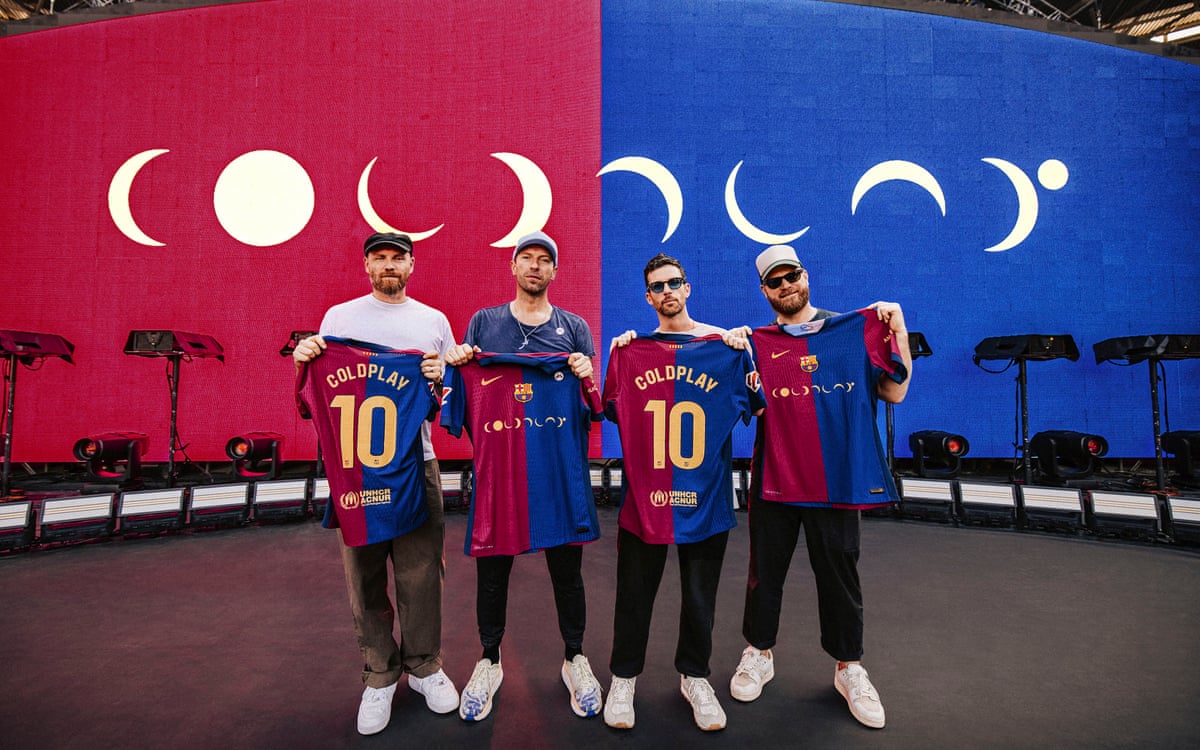
What has shifted in the past two years is the underlying logic of these deals. Where earlier sponsorships were largely gestures of loyalty or charity, more recent arrangements are explicitly designed to monetise what industry insiders term "adjacent audiences" — the overlap between music fandom and football fandom. Spotify's sponsorship of Barcelona set this trend in motion, with Coldplay, Karol G, Rosalía and Travis Scott each briefly featured on the club's shirt front and limited-edition replica versions retailing for more than £340.
That model has since spread widely. Manchester United's pre-match shirts have carried Stone Roses album artwork rather than a conventional sponsor name, a nod to Ian Brown's lifelong support for the club and the fact that the team has walked out to the song "This Is the One" for two decades, though the connection reportedly required explanation for younger supporters unfamiliar with the Madchester era. Paris Saint-Germain teamed up with K-pop group Blackpink to boost fan engagement across Asia, while an Italian club marked the 50th anniversary of a Pink Floyd album release with its own branded range. Clothing collaborations of this kind now sit alongside more traditional pairings, such as last year's Admiral x Spice Girls kit at the European Championships and a Rolling Stones x England Cricket x Castore range, illustrating how thoroughly sport and pop culture branding have merged.
How does this fit the band's wider 2026 activity in Wales?
The Cwmbran deal arrives during a busier-than-usual year for Super Furry Animals on Welsh cultural ground. The band is set to perform at the National Eisteddfod Maes in August, their first appearance there since 1996, a gig that will mark a rare Welsh-language performance from the group. That earlier 1996 appearance, which involved the band's mobile sound tank and unfolded amid a language controversy, has itself become part of retrospective accounts of the group's early career. Taken together, the football sponsorship and the Eisteddfod booking suggest a band leaning into its Welsh identity three decades on from its formation.
What happens next?
The newly sponsored kits are intended for use throughout the 2026/27 season, meaning the next milestone will be Cwmbran Celtic's league and cup fixtures once that campaign gets under way. The shirts have already gone on general sale, with a local outlet publishing purchasing details on 3 August 2026, according to Clwb Pêl-droed. Whether the wider trend of pop-star shirt sponsorships proves lasting or fades as quickly as it arrived remains an open question — fashion commentators have already suggested attention may swing toward classic rugby shirts by autumn, a reminder that these crossovers tend to move in and out of fashion as fast as the bands themselves.
Key Facts
- Cwmbran Celtic's 2026/27 kits will feature Super Furry Animals, Mogwai, Panic Shack and Loose Articles across the men's and women's home and away shirts.
- Ten per cent of shirt-sale proceeds will go to a UK music charity, with the club's new kits supplied by Tor Sports.
- Super Furry Animals previously sponsored Cardiff City during the September 1999 Welsh Cup run, paying £2,000 for shirts Gruff Rhys said were originally made for ice hockey.
- The band's touring inflatable bears have reportedly been repaired in Cwmbran repeatedly over the past three decades.
- The new Cwmbran shirts went on sale by 3 August 2026, ahead of the 2026/27 season.


