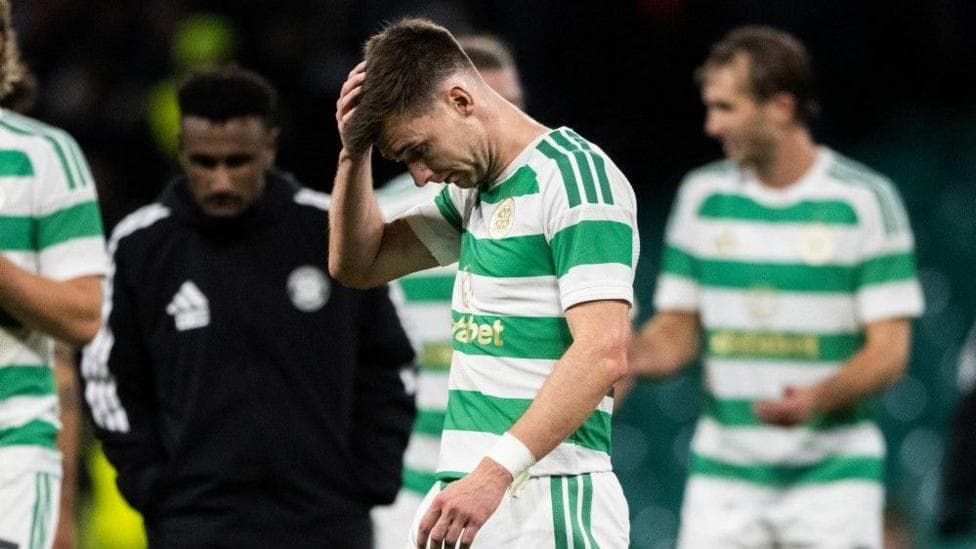
Celtic's struggles in continental competition reached a new low on 22 October as they suffered a third consecutive Europa League defeat, this time falling 2-1 at home to Celta Vigo. The Scottish champions now occupy 35th place out of 36 teams in the competition, with only Ararat-Armenia's inferior goal difference preventing them from sitting bottom of the table. According to BBC Sport, the result exposed a widening chasm between Celtic's domestic dominance and their European inadequacy.
The defeat came just three days after a commanding 7-1 victory over Hearts in the Scottish Premiership, raising hopes that manager Martin O'Neill's team had found their form. Instead, the performance against the Spanish side demonstrated the fragility that has become characteristic of Celtic's European campaign. Mika Baur gave Celtic the lead in the 47th minute, but the team retreated into a defensive shell, allowing Javi Rodriguez to strike twice in three minutes and secure victory for Celta Vigo.
This latest collapse represents the fourth consecutive European loss for Celtic, during which they have conceded 14 goals. The only previous occasion when the club suffered four defeats in a row in European competition during a single season was in the 2017-18 Champions League campaign. The pattern of capitulation has become so pronounced that former Scotland attacker James McFadden questioned whether Celtic possess the quality to compete at this level.
The performances at this level haven't been good enough. Celtic are way short.McFadden said on Sportsound.
The underlying statistics paint a damning picture of Celtic's performance. BBC match statistics show that Celta Vigo dominated possession with 56.3 per cent to Celtic's 43.7 per cent, while the Spanish side registered 22 shots compared to Celtic's eight. This disparity in attacking threat proved decisive as the visitors controlled the match after the interval.
Why does Celtic's confidence collapse so quickly?
McFadden identified a troubling pattern in how Celtic respond to adversity during European matches.
It seems as though Celtic struggle when there's a bit of adversity. If something goes against them, the confidence drops, their heads drop, they stop playing forward. The ball goes back and across, inviting pressure, and there's no way they take the pressure off. That has been a theme.This mental fragility has become the defining characteristic of their continental performances, with the team appearing to lose belief at the first sign of difficulty.
What moments did O'Neill believe cost his team?
Rather than accepting a deserved defeat, O'Neill focused on marginal decisions and near-misses that he felt altered the trajectory of the match. He highlighted a free-kick that should have been awarded to Celtic in the build-up to Celta's equaliser, and a Liam Scales header that struck the top of the crossbar when Celtic led 1-0.
We conceded a free-kick and I thought a second before that we should have had a foul for us. They score from the free-kick and it knocks us a little bit. It gave them a bit of momentum. I think if [Liam] Scales' header goes in to make it 2-0, we get the three points.O'Neill said.
The manager acknowledged that Celtic remain mathematically alive in the competition but recognised the magnitude of the task ahead.
We've lost three matches now, remarkably we're still in with a chance [of progressing]. We've got to win here and got to win away from home. We take the lead in the game, if we get the second goal we win the match and it changes the whole dynamic. It didn't happen, that's it - we need to try to find a way to win European games.
Scales emerged as Celtic's most active player, recording 121 touches—significantly more than left-back Kieran Tierney with 79 and goalkeeper Sam Johnstone with 69. Yet this defensive dominance in possession statistics reflected Celtic's inability to control the game's tempo or create sustained attacking pressure.
Do Celtic possess sufficient quality for European football?
Baur, who scored Celtic's only goal, admitted that his team did not merit a positive result. When asked what needed to change, he appeared unable to articulate a solution.
How we played second half, last 30 minutes, we deserved it in the end.Baur said, before adding:
I cannot tell you, sorry. It can happen that you get a goal, they can score too, good team - you should then get control back, hold the ball a bit longer to take the momentum away from them. You should break that.
Former Celtic goalkeeper Pat Bonner delivered a blunt assessment of his former club's capabilities.
I don't think Celtic are good enough, individually and collectively, to take on a team that's eighth in La Liga. They moved the ball really well and Celtic couldn't get close to them. They are not good enough at this level. Celtic are paying big money for some players because the fans are demanding it and then they come in and aren't good enough.Bonner said on Sportsound.
The collapse against Celta Vigo must be viewed within the context of Celtic's broader European struggles this season. The club surrendered a four-goal aggregate lead to LASK in the Champions League play-offs, a capitulation that forced them into the Europa League. That defeat set the tone for a campaign characterised by defensive fragility and mental weakness when facing sustained pressure from continental opponents.
What lies ahead for Celtic?
Celtic's next European fixture comes on 5 November when they host Besiktas, a match they must win to maintain any realistic hope of progressing from their group. Before that, the Scottish champions face a Premiership visit to Hibernian on 25 October, offering an opportunity to rebuild confidence in domestic competition. Whether O'Neill's team can translate any domestic form into a European performance remains the defining question of their season, and one that their recent record suggests they are ill-equipped to answer.