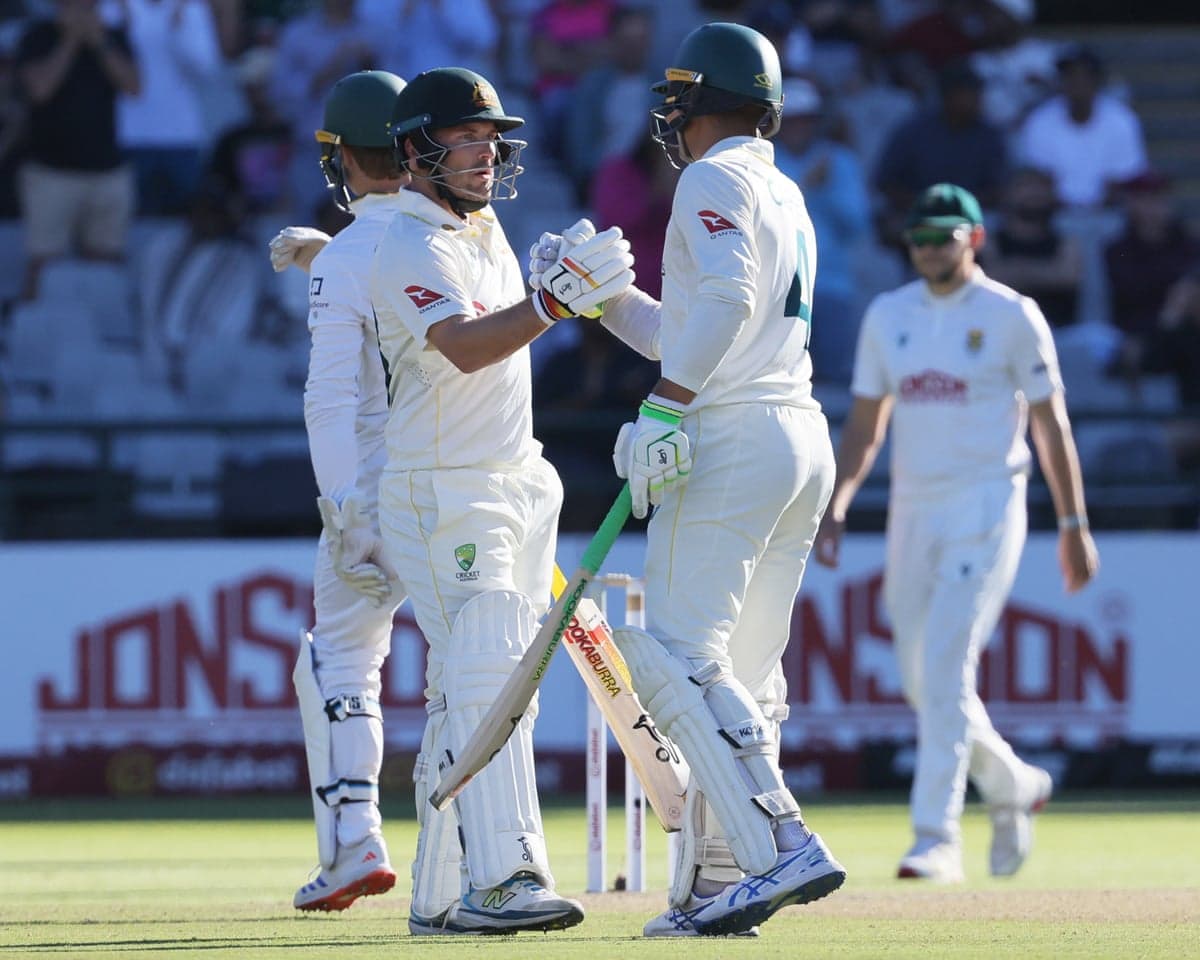
South Africa finished the third day of the decisive third Test at Newlands in a precarious position, with the match outcome hanging in the balance as both teams vie for top spot in the Test world rankings. According to The Guardian, the hosts reached stumps on 29 October 2026 having lost four wickets while holding a slender advantage over Australia.
The match represents a series decider, with the teams locked at 1-1 after Australia's 214-run victory in Durban and South Africa's subsequent innings-and-31-run triumph in Gqeberha. The Test is scheduled to run through 31 October, giving both sides two further days to force a result.
Matthew Breetzke will resume batting on the fourth morning alongside Ryan Rickelton as South Africa attempts to construct a total sufficiently large to trouble Australia in their second innings. The margin between the teams remains tight, with the hosts needing to balance aggression against the risk of further collapses.
How did Australia's bowlers perform?
Mitchell Starc proved the most destructive force with the ball, claiming two wickets for 29 runs. Aiden Markram fell early when he drove to mid-off off Starc's bowling for one, while David Bedingham repeated his second-innings pattern by pulling and being caught by Nathan Lyon off Josh Hazlewood for 11.
Josh Hazlewood and Nathan Lyon shared the remaining wickets, with Lyon's intervention proving particularly costly late in the day. The Australian attack maintained pressure throughout, preventing South Africa from building substantial partnerships.
What happened to Marques Ackerman?
Ackerman produced a composed innings of 62 from 80 deliveries, his second half-century of the match following a first-innings 95. The batter appeared set to carry South Africa through to stumps until a Starc bouncer cramped him up, forcing an edge that Cameron Green caught at slip.
Ackerman's dismissal sparked controversy when he attempted to review the decision but ran out of time to signal his intention as the clock reached zero. Replays subsequently confirmed he was out, meaning South Africa retained their review despite the batter's frustration as he departed the field.
How did Temba Bavuma's innings end?
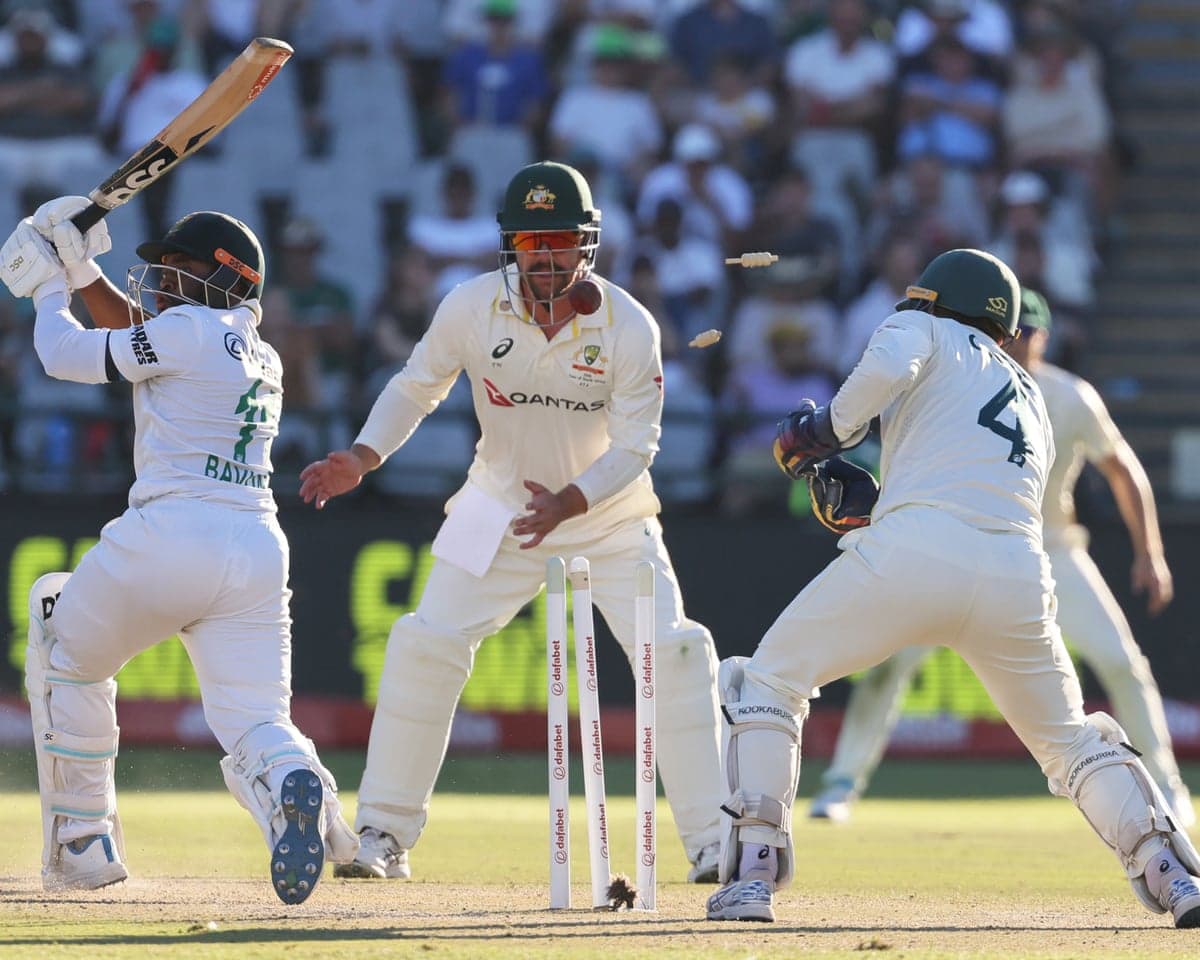
Captain Temba Bavuma played a loose shot off Nathan Lyon's bowling in the penultimate over of the day, allowing the spinner to bowl him for 35. The dismissal proved particularly damaging given South Africa's fragile position, removing a senior batter at a moment when consolidation was essential.
Bavuma's exit left the hosts vulnerable heading into day four, with the lower middle order facing the prospect of batting against Australia's attack on a pitch that may deteriorate as the match progresses.
What was Australia's first-innings contribution?
Josh Inglis equalled his career-best score of 102, reaching his second Test century off 132 balls to anchor Australia's first innings. His 102 proved instrumental in establishing a 100-run lead, providing the touring side with a foundation from which to build pressure.
Inglis eventually fell when wicketkeeper Ryan Rickelton caught him off spinner Simon Harmer's bowling. Alex Carey contributed 80 runs in a substantial partnership, while Cooper Connolly added 29 before being caught and bowled by Marco Jansen. Harmer finished with four for 104, claiming the prize scalp of Inglis and proving South Africa's most successful bowler. Jansen took three for 60 across the innings.
What is the pitch condition and what total might be required?
The match marks the first Test played in October at Newlands, and while conditions have been warm, the absence of midsummer heat means the pitch has not yet begun to crack and deteriorate significantly. This suggests batting may become progressively more difficult as the match enters its final stages.
Australia's Josh Inglis offered insight into the target calculation, stating:
The further it goes into the game, I think it's only going to get harder and harder to bat. I'm not sure of a total to chase. You don't want them getting too many more than maybe 200 or so.
Inglis's assessment suggests Australia would prefer South Africa to set a target in the region of 200 runs, though the exact figure required to win remains uncertain given the pitch's current state and the quality of both attacks.
What is at stake in this match?
The winner of the series will occupy top spot in the Test world rankings, which Australia currently hold. The series has been tightly contested, with neither team able to establish dominance across the three-match format.
South Africa's path to victory requires batting out day four and potentially into day five, building a total that forces Australia to chase under pressure. Australia, conversely, will seek to dismiss the remaining South African batters quickly and chase down whatever target is set.
What happens next?
Day four is scheduled for 30 October, with play resuming at Newlands as South Africa attempts to extend their lead. The fourth day will prove crucial in determining whether the hosts can post a defendable total or whether Australia's bowlers will force a collapse that swings the series in the tourists' favour.