

The US Senate has confirmed Todd Blanche, Donald Trump's former personal lawyer, as attorney general in a narrow 50-49 vote, ending months of tense negotiations between the president's allies and skeptical Senate Republicans. Blanche, who had been serving as acting attorney general since April 2026, will now take over the role permanently as the country's top law enforcement official. Two Republican senators, Susan Collins and Lisa Murkowski, broke with their party to vote alongside all Democrats against his nomination.
According to reporting on the Senate floor vote, the confirmation took place in the early hours of 8 August 2026, capping a drawn-out fight that had at various points threatened to derail Blanche's nomination entirely. Louisiana Senator Bill Cassidy supplied the decisive vote, a moment closely scrutinized given his long-running friction with Trump.
Why did some Republicans hesitate to back Blanche?
Several GOP senators expressed unease over Blanche's stewardship of the release of documents related to Jeffrey Epstein, as well as his part in setting up a proposed $1.8bn (£1.3bn) "anti-weaponisation" compensation fund pushed by Trump. Critics, including Murkowski, worried the fund could end up benefiting individuals prosecuted for their roles in the 6 January 2021 assault on the Capitol rather than genuine victims of political persecution.
Under pressure during his confirmation hearings, Blanche agreed to abandon the fund altogether. However, it remains uncertain whether that commitment carries any legal force, or whether Trump might later persuade his former lawyer to revive a similar initiative under a different name. According to the Associated Press, Blanche put his pledge in writing, stating:
"beyond any doubt, there is no Fund"
That written assurance was enough to satisfy Republican senators John Cornyn and Thom Tillis, who had previously withheld support pending confirmation the fund was truly dead, according to . Their reversal cleared the way for the Senate Judiciary Committee to advance the nomination to the full chamber in a 12-10 party-line vote on 4 August 2026, as detailed in our earlier coverage of the committee vote.
Collins and Murkowski, however, were not swayed. Murkowski cited doubts that Blanche could restrain what she described as the administration's worst tendencies, while Collins pointed to Blanche's involvement in settling a $10bn lawsuit Trump had brought against the Internal Revenue Service. Separately, according to the New York Times, that IRS settlement could have saved Trump roughly $100 million in tax liability, a detail that fed into senators' scrutiny of Blanche's conflicts of interest.
On 7 August 2026, Murkowski publicly confirmed she would vote against Blanche, pointing to broader concerns about what she called the "politicisation" of the Justice Department under his leadership.

Why was Bill Cassidy's vote so significant?
Collins ultimately said she trusted Blanche to offer the president honest and direct legal counsel, despite her reservations about the tax settlement. Before casting his vote, Cassidy made clear he saw Blanche as the most palatable option Trump was likely to offer, rather than an endorsement of the president himself.
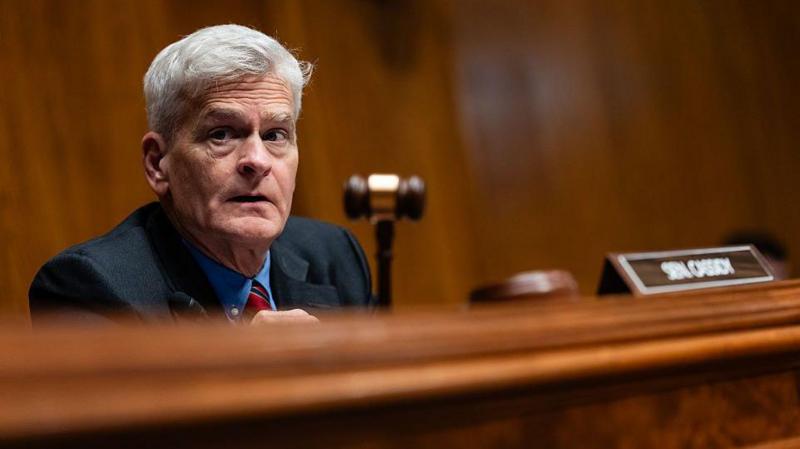
"This is not a referendum on President Trump, it is a decision regarding Mr Blanche, in very specific circumstances. All considered, I will vote for Mr Blanche."
Cassidy acknowledged that ultimate control over the Justice Department's direction rests with Trump, but argued that a Senate-confirmed attorney general would have more standing to push back when necessary than an acting one.
The relationship between Cassidy and Trump has been openly hostile for years. Cassidy voted to convict Trump during his second impeachment trial in 2021 over the January 6 Capitol riot, a vote that failed to reach the required threshold. After returning to office, Trump backed a primary challenger against Cassidy in Louisiana earlier this year, a move that effectively pushed the senator toward retirement.
How did we get here?
Trump formally nominated Blanche for attorney general on 8 June 2026, setting the stage for a contentious Senate battle centered on his personal closeness to the president, as reported in our earlier coverage of his initial Senate hearing. The nomination nearly collapsed at multiple points; at one stage, according to our prior reporting, Trump floated temporarily withdrawing Blanche's bid amid continued Republican resistance, while separately his confirmation stalled over the disputed IRS-related fund, as covered in our report on the tax settlement dispute that threatened his nomination.
Throughout the process, Democrats and advocates for Epstein's victims also criticized Blanche's handling of sensitive files, alleging errors in redactions and failures to protect victims' privacy, according to reporting on the confirmation fight.
Blanche had already been serving in an acting capacity as attorney general since April 2026, stepping into the role as deputy attorney general after Pam Bondi was removed from the position.
What happens next?
With Senate confirmation secured, the next step is Blanche's formal swearing-in, after which he will assume the role of attorney general on a permanent rather than acting basis, according to the Associated Press. Attention is now likely to shift toward whether Blanche's written pledge to scrap the disputed compensation fund holds up over time, and how he manages the department's ongoing handling of the Epstein-related files that drew criticism during his confirmation process.
Key Facts
- Todd Blanche was confirmed as US attorney general in a 50-49 Senate vote on 8 August 2026.
- Republicans Susan Collins and Lisa Murkowski voted against him, joining all Democrats.
- Senator Bill Cassidy cast the deciding vote despite years of tension with Trump.
- Blanche pledged in writing that the disputed $1.8bn "anti-weaponisation" fund would not proceed.
- He had served as acting attorney general since April 2026, following Pam Bondi's removal.


