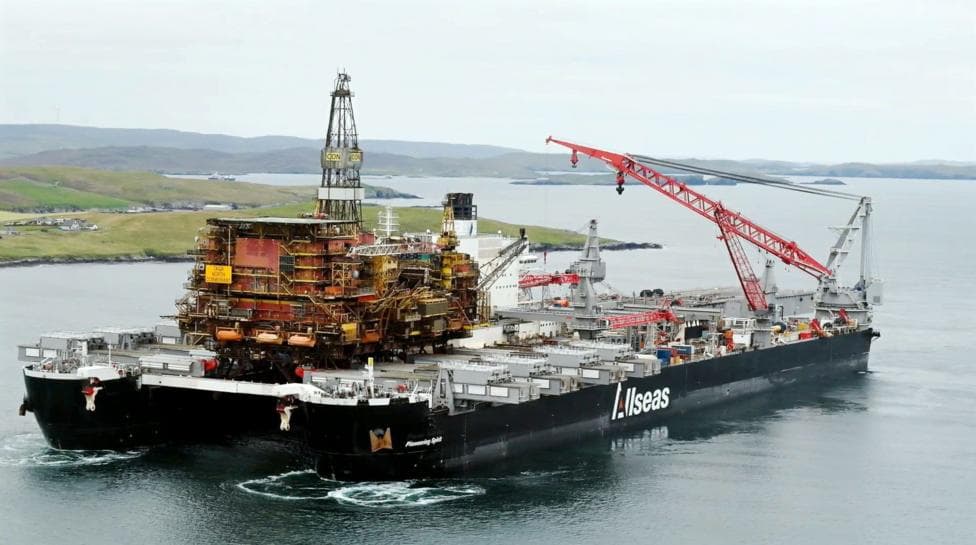
The Pioneering Spirit, the world's largest heavy lift vessel, has transported the North Cormorant platform to Shetland for decommissioning. The twin-hulled ship, operated by Allseas, arrived in Lerwick Harbour early on Saturday morning carrying the 16,000-tonne topside on its deck, marking the beginning of a major recycling operation that will transform the port's industrial landscape.
Measuring 1,253 feet (382 metres) in length and 407 feet (124 metres) across, the Pioneering Spirit is equipped with a 5,000-tonne crane capable of lifting the topsides from offshore platforms. The vessel transferred its cargo onto a barge for transport to Dales Voe, where the platform will be dismantled over the coming months. According to a local maritime notice, heightened activity in the area is expected to last approximately 10 days as the platform is repositioned, with vessels required to maintain at least 500 metres distance from any ship moving to or from the site.
Colin Nicolson, Deputy Chairman of Lerwick Port Authority, described the arrival as an emotional milestone. He worked aboard North Cormorant as a technician from 1987 to 1995, holding roles that took him across the entire installation, from the drilling derrick to the flare stack tip.
I had eight good years on there and met many good people and made lifelong friends on there. One of my tasks was gas testing. There's very few places I haven't been on board, including the top of the drilling derrick and the tip of the flare stack. I was also part of the emergency response team, basically a fireman and advanced first aider.
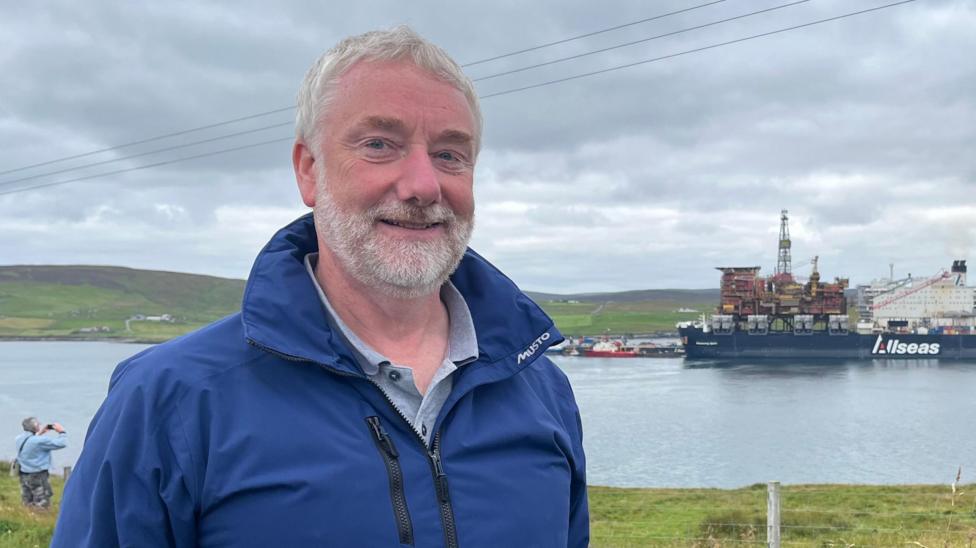
North Cormorant began operations in February 1982, following its installation the previous year. Over its 42-year operational life, the platform extracted 467 million barrels of oil, which flowed ashore via the Brent pipeline to the Sullom Voe terminal. The platform ceased production in June 2024, according to decommissioning documentation filed with UK authorities.
Nicolson acknowledged the bittersweet nature of witnessing the platform's arrival for dismantling.
Seeing it arriving is tinged with a wee bit of sadness, old memories it brings with that. But also quite a rewarding thing to see Lerwick Port has once again got a significant piece of decommissioning work.He noted that the project represented
a bonusfor the harbour and the regional supply chain.

What will happen to the platform materials?
Brown and Mason Group, working alongside Peterson Energies, will carry out the dismantling and recycling work onshore. According to local industry sources, the companies expect to recycle up to 97 per cent of the steel and materials recovered from the platform. The onshore demolition phase is anticipated to take between 12 and 14 months, with the overall project expected to run for approximately 18 months. The decommissioning effort is creating around 30 jobs locally.
This project forms part of a larger contract awarded to Allseas by TAQA, the Abu Dhabi-based energy company that owns the North Cormorant asset. The broader TAQA contract encompasses the removal of four platform topsides and three steel supporting jackets, with a target of reusing or recycling 95 per cent or more of all materials recovered across the programme.
Why is this significant for Lerwick?
The arrival of North Cormorant represents the largest platform ever to enter Lerwick Harbour for decommissioning. This is the third major platform decommissioning project undertaken at the port, reflecting a strategic shift in the North Sea's industrial focus as oil and gas production declines. The port authority is actively pursuing additional decommissioning contracts as part of its long-term strategy, with plans to construct a deep water quay on the horizon to support larger vessels and more ambitious projects.
The decommissioning sector has become increasingly important to Shetland's economy as traditional oil production winds down. Lerwick's growing reputation as a hub for platform recycling and dismantling positions the port to capture further work from operators managing the end-of-life phase of North Sea infrastructure.
What happens next?
The onshore demolition phase is scheduled to commence following the platform's secure positioning at Dales Voe. According to decommissioning plans filed with UK authorities, the broader TAQA programme indicated topsides removal between 2026 and 2028, with full project completion forecast by 2029. The North Cormorant dismantling will proceed in parallel with other platform removals under the same contract, with Allseas coordinating the overall schedule.
Key Facts:
- The Pioneering Spirit is 1,253 feet long and equipped with a 5,000-tonne crane for lifting platform topsides
- North Cormorant produced 467 million barrels of oil over 42 years of operation before ceasing production in June 2024
- Brown and Mason Group and Peterson Energies expect to recycle 97 per cent of the platform's steel and materials
- The dismantling project will employ approximately 30 people and take 12 to 18 months to complete
- This is the third major decommissioning project for Lerwick Harbour, reflecting the port's growing role in North Sea platform recycling