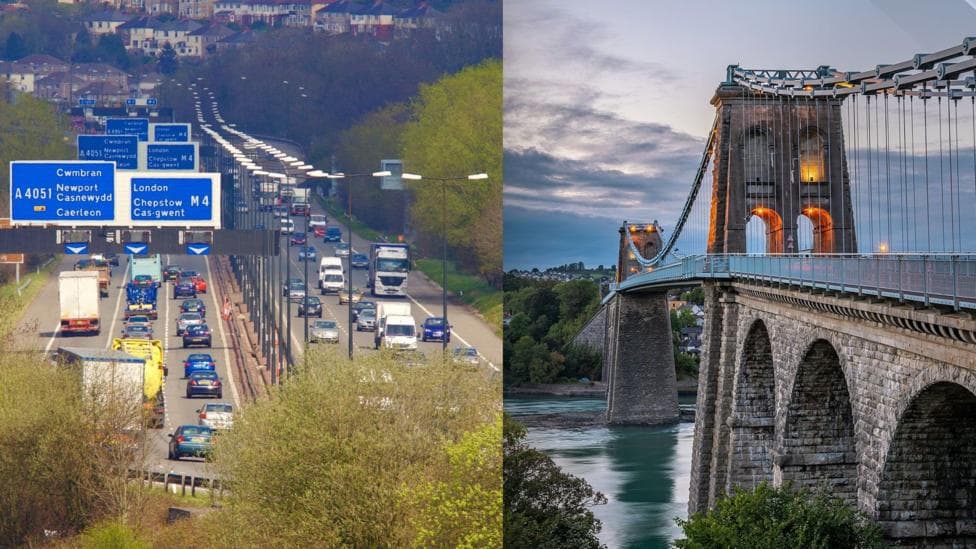
The Welsh government has unveiled plans to address severe congestion affecting both north and south Wales, including potential closure of three motorway junctions near Newport and revival of a long-stalled third crossing over the Menai Strait. The announcement has prompted immediate opposition from Newport Council, with the leader vowing to fight the proposals.
Under the proposals, junctions on the M4 in Newport could be closed or partially closed by 2028, while a new bridge across the Menai would be developed over the coming decade. The government will also launch an 18-month study examining a range of "roads-based" options for the M4 corridor, potentially including a new motorway or expansion of the Brynglas Tunnels. Deputy Transport Minister Mark Hooper stated that keeping the status quo was "not an option."
However, significant obstacles remain. A review by transport consultants has cautioned that closing junctions could worsen congestion and noise on alternative routes, while funding mechanisms for the proposed Menai crossing—estimated at up to £700m—remain unclear. Local political opposition has also intensified, with council leaders and Labour politicians warning of severe impacts on residents.
What junction closures are being considered?
Ministers are examining the closure of junction 27 at High Cross, along with east-facing slip roads at junction 26 (Malpas) and junction 25 (Caerleon). Deputy Transport Minister Mark Hooper stated that such measures could offer "some of the quickest opportunities to improve traffic flow and resilience on the M4."
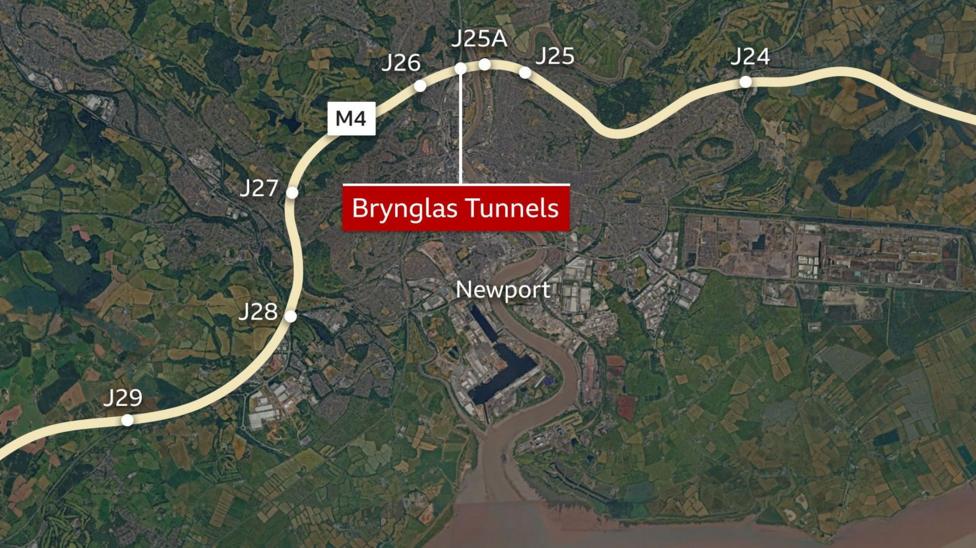
Yet no final decisions have been made. The government intends to assess the impact on local roads and consult Newport council before proceeding. Newport Council leader Dimitri Batrouni has pledged to oppose the closures, stating that "someone pays a price" and that residents should not bear the cost of easing motorway congestion. Former council leader Jane Morden suggested some estimates indicate journeys could take 20% longer if junctions close, and called for updated traffic analysis given recent development around Llanwern and shifting travel patterns.
Batrouni said he is "considering options to build up a campaign, to build up some petitions, and look at what we can do as a council to fight these proposals." Labour MS for Casnewydd Islwyn Jayne Bryant told a national broadcaster that people in the city would be "astonished" if the proposals went ahead, and said the closures would have a "huge impact" by bringing "more traffic close to where people live."
What does the ARUP review say about junction closures?
A review by transport consultants ARUP warned that public acceptance of junction closures was "likely to be low" among users. The report cautioned:
There is a risk that economic costs would be redistributed rather than reduced, with poorer access for local businesses and increased congestion, noise and delay on alternative routes.
The ARUP analysis estimated the capital cost at £14m with only a 3% reduction in traffic, concluding the option would "likely provide limited long-term value." The review also stated:
The option may provide some local operational benefits but is unlikely to deliver the wider productivity, resilience or agglomeration benefits of a more comprehensive M4 corridor intervention.The review examined eight different options across the M4 corridor, ranging from new railway stations and bus rapid transit schemes to various road projects.
What are the longer-term M4 options being studied?
Over 18 months, the Welsh government will evaluate multiple "road-based solutions" for congestion on the M4 around Newport. The black route previously proposed for the M4 Relief Road has been ruled out, though the study could still include a new motorway south of Newport. Deputy Minister Hooper said the protected route status for the black route "went when it was cancelled" and that reviving it would require "decades of work to even get that off the ground."
Widening the Brynglas Tunnels—one of the most significant sources of congestion on the M4 in Wales—could cost £1.7bn but poses "engineering/geotechnical risk" and major construction disruption. Changes to the A48 and A4810 to increase capacity, known as the Blue Route, are estimated at £1.8bn, would take eight years, and could reduce M4 traffic by 6%.
The government is also backing improvements to the A465 for freight, including facilities for heavy goods vehicles. Transport for Wales will also work on developing proposed new stations in south-east Wales using funding from the UK government, with Cardiff Parkway, Magor and Undy given priority.
What is the status of the proposed third Menai crossing?
The Welsh government has recommenced development work on a third Menai crossing, a project that had been formally scrapped three years earlier. Officials estimate the crossing could cost around £670m, with development work taking up to two years and construction requiring at least eight to ten years.
The A55 currently crosses the Menai via the Britannia Bridge, which unlike the rest of the road is a single carriageway. The Menai Suspension Bridge has operated under restrictions since repair works began in October 2022. The bridge was partially reopened in October 2025 with a 3-tonne vehicle limit and daytime-only vehicle access, following safety advice from engineers.
The government has ruled out a three-lane tidal-flow operation on the Britannia Bridge after a review identified significant safety and operational concerns.
What short-term measures is the government pursuing?
Alongside the longer-term studies, the Welsh government is implementing a five-year programme of changes designed to deliver "shorter-term benefits." This includes a "delivery plan to improve how the motorway is operated and managed," which could encompass the junction closures mentioned above.
The government stated it aims to reduce peak-hour traffic by up to around one in ten vehicles through these immediate interventions.
What concerns have been raised about the plans?
On 6 October, the Future Generations Commissioner warned against reviving an M4 relief road, citing summer heat and wildfires, and said the proposal had been rejected "for good reason." The commissioner's position reflects recommendations from the Burns Commission's 2020 report, which underpins the government's stated focus on public-transport-led solutions for Newport's M4 congestion.
Reform UK has backed a campaign urging ministers to rule out Newport junction closures and publish the evidence supporting them. The Conservatives have also said they would build the black route if they were in power, though the Plaid Cymru-led Welsh government maintains it is now not deliverable.
Why is this announcement significant?
These proposals represent the latest attempt to resolve congestion on the M4, following the controversial M4 Relief Road plans developed in the 2010s and abandoned by former Labour first minister Mark Drakeford in 2019. Deputy Minister Mark Hooper emphasised that "people want action, not endless discussion," and stated the government is committed to delivering "reliable journeys, less disruption and confidence that government is getting on with improving things and making a difference to people's lives."
Hooper added that he was committed to working closely with affected communities and councils. "One of the things that people forget is that it is almost as if Newport works as a system at the moment," he said. "To my mind it doesn't work effectively enough. I've got two jobs to do. One is to solve the problem on the M4 but conversely to make sure that we help Newport and the surrounding areas solve their congestion problems too."
What happens next?
Deputy Minister for Transport Mark Hooper addressed the Senedd on 6 October on strategic priorities for the Menai Strait crossings and the M4 around Newport. The Welsh Government unveiled its plans on that date, with full details of the next stage expected to follow. The government has promised to consult Newport Council before proceeding with any junction closures.
Key Facts
- Three M4 junctions near Newport could close by 2028: junction 27 at High Cross, and east-facing slip roads at junctions 26 (Malpas) and 25 (Caerleon)
- An 18-month study will examine road-based solutions for M4 congestion, including potential new motorway construction and Brynglas Tunnels expansion
- A proposed third Menai crossing could cost £670m–£700m and take 8–10 years to build, with development work lasting up to two years
- ARUP review estimates junction closures would cost £14m but deliver only 3% traffic reduction and "limited long-term value"
- The Menai Suspension Bridge reopened in October 2025 under restrictions, with a 3-tonne vehicle limit and daytime-only access