Wales' standing in international assessments for 15-year-olds has deteriorated relative to other parts of the United Kingdom, according to the latest cycle of the Programme for International Student Assessment (Pisa).
The most significant decline occurred in mathematics, where average scores dropped from 466 to 456, while reading performance also slipped. Science results showed a modest improvement, rising from 473 to 476, though gains in other UK nations were more pronounced. The Organisation for Economic Co-operation and Development (OECD) characterised the findings as evidence that Wales' "overall downward trend still continuing".
A total of 113 Welsh schools participated in the 2025 assessment cycle, with 3,406 pupils taking the tests. The results form part of Wales' official International comparisons of education statistics series.
How does Wales compare to the rest of the UK?
Wales' performance has widened the gap between itself and England, Scotland and Northern Ireland across multiple subjects. In mathematics and science, Welsh pupils scored significantly below the OECD average and performed worse than their counterparts in other UK nations. English teenagers achieved 516 in science—an increase of 13 points over three years—substantially outpacing Welsh results. For reading, Wales aligned more closely with the broader OECD average and performed comparably to Denmark and France, though still trailing other UK regions.
An additional assessment in computational problem-solving, introduced in this cycle, also showed Welsh teenagers scoring lower than peers elsewhere in the UK. Andreas Schleicher, representing the OECD, noted that England had pursued "coherent and consistent policies in education" that were "conducive to producing good learning outcomes", contrasting this with the approach taken in Scotland and Wales.

What do the subject-specific trends reveal?
Mathematics has emerged as the area of greatest concern. The 10-point decline from 466 to 456 represents a continuation of downward pressure on numeracy standards, whilst other UK nations maintained broadly stable performance in the subject. Reading standards have faced particular scrutiny since the 2023 results, and the latest assessment confirms that pressure remains justified: scores fell from 466 to 459. This follows a pattern established after the 2022 tests, when Welsh performance contracted more sharply than in other UK nations in the aftermath of pandemic-related disruptions, reversing gains made in 2018.
Science provided the only area of encouragement, with a three-point increase. However, this modest rise must be contextualised against stronger improvements elsewhere. The OECD noted that whilst some of the decline in Welsh scores was not "statistically very robust" and science results had "stabilised", the broader trajectory remains concerning.
How do Welsh results fit into the global picture?
More than 760,000 students across 91 countries and economies participated in the 2025 Pisa cycle. Asian countries and regions, including areas of China, Singapore and Japan, once again ranked highest. The UK as a whole featured in the top 10 for all three subjects and was described by the OECD as "bucking the trend" of declining performance observed globally. However, this positive UK-wide picture masks significant internal variation, with Wales lagging substantially behind its neighbours.
According to the OECD's country-level reporting for Great Britain, Wales' performance places it broadly in line with nations such as Spain and Croatia for mathematics and science, though below the OECD member average in both subjects.

What insights did participating students offer?
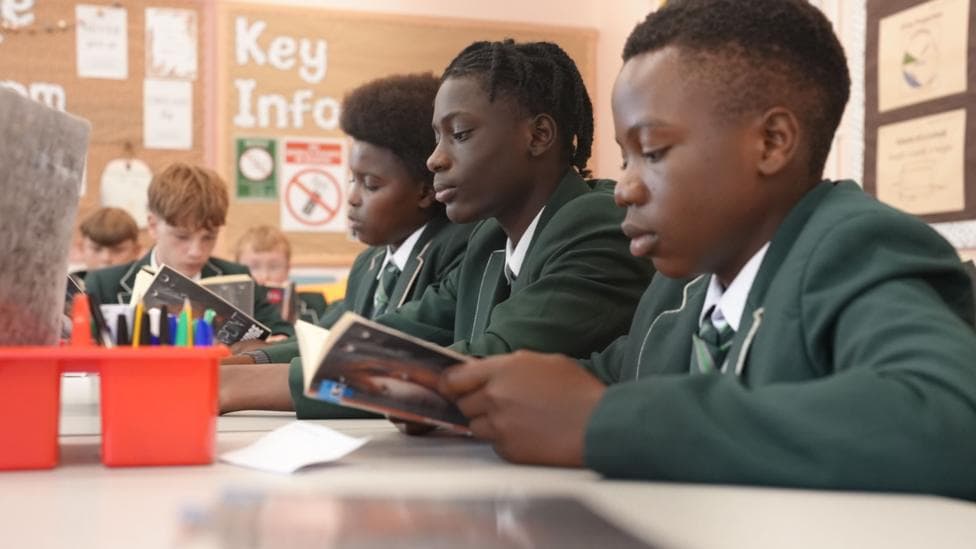
Pupils at Ysgol Gyfun Gymraeg Glantaf in Cardiff, one of the participating schools, reflected on their experience of the assessment. Caron, aged 16, noted that the test differed from conventional school examinations because revision was not required and the format was online rather than paper-based. She observed that the difficulty level adjusted based on performance: "Depending on how you answered it it got easier or harder so it varied depending on how well you did."

Elin, also 16, found some questions aligned with typical science assessments whilst others seemed incongruous. Owain highlighted that the absence of individual grades—unlike GCSEs—altered the psychological dynamic:
"I don't think it was as serious. When the questions got harder I backed out a bit, maybe gave a random answer."
Tiago, his classmate, approached the assessment with greater commitment, recognising Wales' historical underperformance:
"Going in, I was excited because I really wanted to give it my all to boost the ranking."
What do school leaders say about the results?
Dyfrig Rees, headteacher of Ysgol Gyfun Gymraeg Glantaf, emphasised the value of school participation in Pisa as a means of benchmarking "how our teaching and learning compares to other countries". He acknowledged that Pisa represents one of several assessments competing for pupils' attention during GCSE preparation, and that schools attempt to encourage focused effort whilst recognising its secondary importance relative to other in-school evaluations.
Rees expressed optimism that Wales' newly implemented curriculum would eventually yield improved Pisa outcomes. He articulated the broader sentiment:
"People are proud of the Welsh education sector, and they want it to be successful and so whenever there is a league table where we are not where we want to be—that's disappointing."He also cautioned that whilst Pisa holds significance, it "asks more questions than gives answers".
What recommendations has the OECD offered?
The OECD has identified several strategies for strengthening education systems. High and consistent expectations for all pupils, combined with ensuring teachers possess strong pedagogical skills beyond subject-matter expertise, rank among the priorities. The organisation also advocates targeted deployment of artificial intelligence in educational settings, provided such tools do not displace "effortful learning".
Schleicher highlighted research showing that limited or moderate use of digital devices for learning in school correlates with better outcomes, whereas substantially worse results emerge when devices are used for leisure purposes during school time.
Understanding Pisa and its scope
Pisa assesses 15-year-olds' capacity to apply reading, mathematics and science knowledge to real-world scenarios. Participating countries select a sample of schools, from which representative cohorts of pupils aged between 15 years three months and 16 years two months—typically Year 11 students—are chosen. The assessment comprises a two-hour online test in which each student sits two of the three subjects, receiving different questions with varying combinations and ordering. Participants also complete a background questionnaire covering personal circumstances, home environment and school experiences, whilst school leaders provide institutional context.
The OECD contends that Pisa results offer governments insight into their competitive standing relative to other economies and their capacity to equip young people with tools "essential for full participation in social and economic life". However, some educational researchers have questioned Pisa's methodological robustness and the extent to which it should influence policy decisions.
Following the substantial decline recorded in 2022, the OECD observed that "outcomes have largely stagnated or continued to decline in many countries". Reading has displayed the steepest long-term contraction, exhibiting a "weakening of performance" that predates the pandemic.
What happens next?
According to reporting published ahead of the release date, Wales and UK Pisa rankings were scheduled for publication on 8 September 2026. The OECD has indicated that the 2025 cycle represents the ninth iteration of the assessment, with results to be published in 2026. These findings will provide the next opportunity to assess whether Wales' downward trajectory has reversed or whether the gap with other UK nations continues to widen.
Key Facts
- Welsh mathematics scores fell from 466 to 456, whilst other UK nations' results remained broadly stable, widening the performance gap
- Reading scores declined from 466 to 459, continuing a pattern of concern that has prompted scrutiny of literacy standards
- Science was the only subject showing improvement, rising from 473 to 476, though gains in other UK nations were more substantial
- The OECD characterised Wales' performance as reflecting an "overall downward trend still continuing" and noted that England's coherent education policies contrasted with approaches in Scotland and Wales
- A total of 113 Welsh schools and 3,406 pupils participated in the 2025 assessment cycle