Teenagers across the United Kingdom have demonstrated solid performance in the latest cycle of international assessments measuring reading, mathematics and science competency, with results from the Programme for International Student Assessment (Pisa) showing the nation's education systems holding their position on the global stage. England's steady performance has helped move the UK into the top 10 international rankings as other countries dropped out, with the nation outperforming peers in most countries including Australia, the United States, Finland and France.
The assessment, administered by the Organisation for Economic Cooperation and Development (OECD), evaluated 760,000 fifteen-year-olds across 91 countries, with 15,566 UK students from 515 schools participating in the 2025 cycle. The UK's standing in Pisa remained consistent, placing it below elite performers such as Singapore, Taiwan and certain regions of China, yet ahead of most major European economies and the United States. However, results dipped in almost all OECD member nations compared with previous years, with the exception of England and a handful of others.
England's schools minister, Georgia Gould, stated the government aimed to "build on" the encouraging outcomes and "go further so all young people leave school with strong literacy and numeracy". She highlighted the need to address areas where England performs less well, noting that "the next leap forward will come from pupils engaged and excited to be at school". She also noted that Estonia provides a model where "academic excellence can go hand in hand with high-quality vocational routes", with England soon introducing technical subjects to students from age 14.
The Pisa report highlighted a concerning global trend: a widespread deterioration in teenagers' reading abilities. According to the OECD's assessment framework, reading performance measures the ability to understand, use and reflect on written texts to achieve goals and participate in society—skills the organisation warns are increasingly critical in an artificial intelligence-driven world. The OECD's overall analysis characterised the international decline in reading scores as "most concerning", with average scores falling by double digits across OECD members since 2018, implying that a majority of 15-year-olds in 2025 had performed at a level previously expected of 14-year-olds.
How does UK performance compare across the home nations?
Performance varied markedly between England, Northern Ireland, Scotland and Wales, with England consistently outperforming the other three nations. England's biggest improvement came in science, while its reading performance stood out particularly. Scotland, Wales and Northern Ireland recorded results slightly lower than in previous years. Prof Mary Richardson of University College London, lead author of the Pisa reports for Wales and Northern Ireland, said: "Despite the international trend of declining performance in reading, we found 15-year-olds in England, Wales and Northern Ireland to be reading just as well as they were in 2022. In science and maths, we also saw good performances, particularly for pupils in England and Northern Ireland, where scores were above the international average."
This disparity reflects the significantly different curricula and educational policies operating across the UK's constituent countries. The 2025 Pisa tests provide what the OECD describes as the biggest global snapshot of education systems, offering an independent benchmark of how teenagers perform relative to international peers.
Scotland's government report on the 2025 results presented "a mixed but more positive picture", with performances in science, mathematics and reading little changed since 2022. However, the report concluded that "scores remain significantly below those achieved in several previous cycles, and a substantial proportion of pupils, particularly in mathematics, did not reach the OECD baseline proficiency level." Màiri McAllan, Scotland's education secretary, said: "While recognising the positives, these results also underline the need for change in certain areas."
What is driving the decline in reading skills?
The proportion of "hasty readers"—students who rush through texts and provide quick, inaccurate answers—has nearly doubled between 2018 and 2025, with the decline most pronounced among teenagers from "relatively well off" families. Andreas Schleicher, director of education at the OECD, characterised reading as the "mother of all skills" and expressed alarm at the steepness of the fall. He noted that children's capacity to engage with complex texts has declined by the equivalent of "two school years" over the past decade.

The OECD's analysts stated that "the long-term declines in performance suggest deeper structural issues within education systems, with challenges at the school and system level. These include changing attitudes towards reading, the impact of digital distractions on students and rising levels of absenteeism." Schleicher noted that while the negative impact of the Covid pandemic was a common explanation, the downturn in reading skills had emerged before the pandemic. "We cannot say for sure but declining levels of reading for enjoyment and the shift towards digital reading – skimming social media feeds and rapidly processing information – may be compromising the ability of students to engage with complex texts and data," he said.
Schleicher attributed part of this decline to reading habits, observing that students who read longer books performed best, as this practice helped them retain and process complex information. The global shift toward digital media and shorter-form content has coincided with this measurable erosion in reading comprehension. While some uses of digital devices for learning were beneficial, Schleicher noted that those countries where devices were allowed for leisure at school saw "substantially lower" student performance. "This raises questions about whether devices such as smartphones – designed to maximise a user's attention – are compatible with sustained academic attention," he said.
How are schools responding to reading challenges?
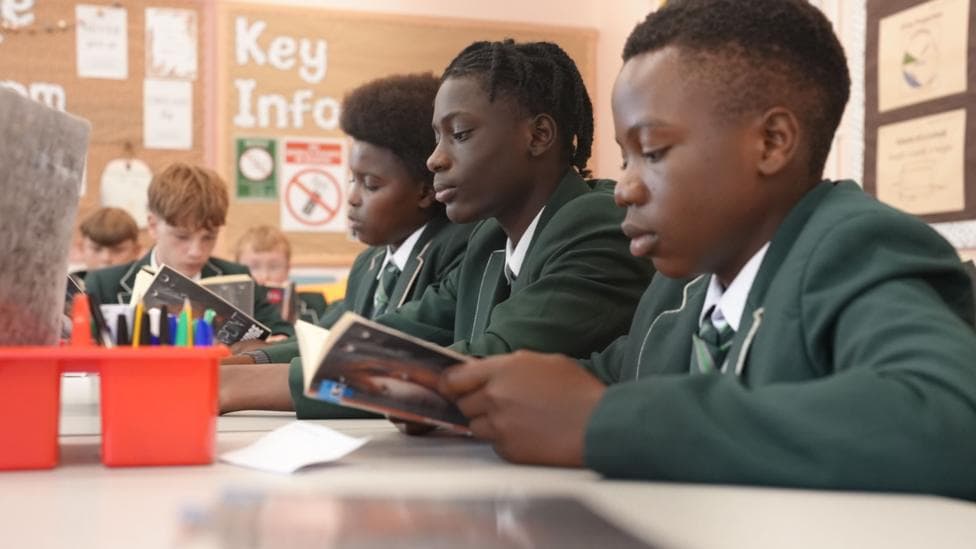
Educational institutions are implementing varied strategies to reverse declining reading standards. Meadow Park School in Coventry has introduced weekly book club discussions led by tutors, expanded its library collection, and encouraged reading for pleasure during lunch breaks. Year 10 pupil Ampaabeng reported that the sessions have had a "really positive impact" on his reading since their introduction a year ago.
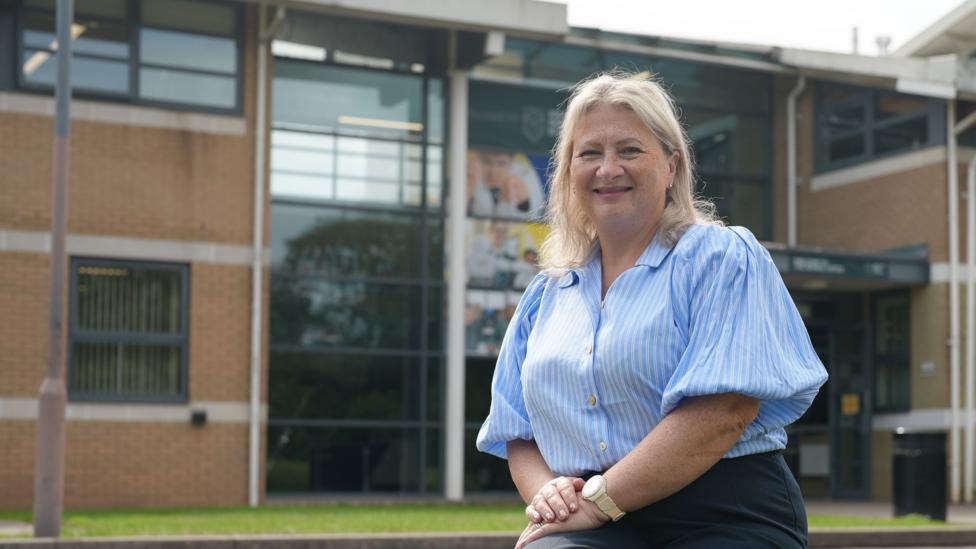
The school introduced a mobile phone ban two years ago to reduce distractions—a measure the Pisa report commends. Head teacher Bernadette Pettman explained that reading together has enabled the school to "break down that fear of reading" and that pupils have "absolutely embraced it". She reflected on the challenge of competing with digital devices: "In a digital age, it's easier to pick up a phone than it is a book."
What concerns does the report raise about artificial intelligence in education?
The Pisa report warns that excessive artificial intelligence use in schools can lead to "cognitive off-loading"—a phenomenon where pupils avoid independently researching information. The OECD cautioned that countries are permitting rapid AI deployment in education without evidence of its effects, comparing the situation to "rolling out an untested vaccine on children".
In the UK, questionnaire responses suggested a relatively high proportion of teenagers reported never using AI for schoolwork. Schleicher urged governments to establish clear guidelines and consider whether AI could be deployed in targeted ways to support teaching rather than to "give quicker answers" to students. According to the 2025 Pisa cycle, the assessment has expanded to include a Foreign Language Assessment alongside the traditional reading, mathematics and science components.
What is the Pisa assessment and how does it work?
Pisa, run by the OECD, evaluates teenagers' ability to solve problems, think critically and communicate. Beyond the core assessments, students complete a questionnaire covering broader aspects of their educational experience. The tests are administered every three years and represent a nine-cycle international assessment programme designed to provide independent comparison of education systems worldwide.
What happens next?
The OECD's full Pisa 2025 results are scheduled for release on 8 September 2026, with further thematic analysis expected to follow. Scotland's government has announced that its national Pisa 2025 report will be published on the same date, aligned with the international release. Following the initial publication, the OECD's Pisa database will publish comprehensive student, school principal and parent response data, enabling deeper analysis of the results across participating nations.
Key Facts
- The 2025 Pisa cycle assessed 760,000 fifteen-year-olds in 91 countries, with 15,566 UK students participating from 515 schools
- The proportion of "hasty readers" nearly doubled between 2018 and 2025, with the steepest decline among teenagers from affluent families
- Children's ability to comprehend complex texts has declined by the equivalent of two school years over the past decade, according to OECD analysis
- England consistently outperformed Northern Ireland, Scotland and Wales in the 2025 assessments, reflecting different curricula across the UK
- The 2025 Pisa cycle includes an expanded Foreign Language Assessment alongside traditional reading, mathematics and science components