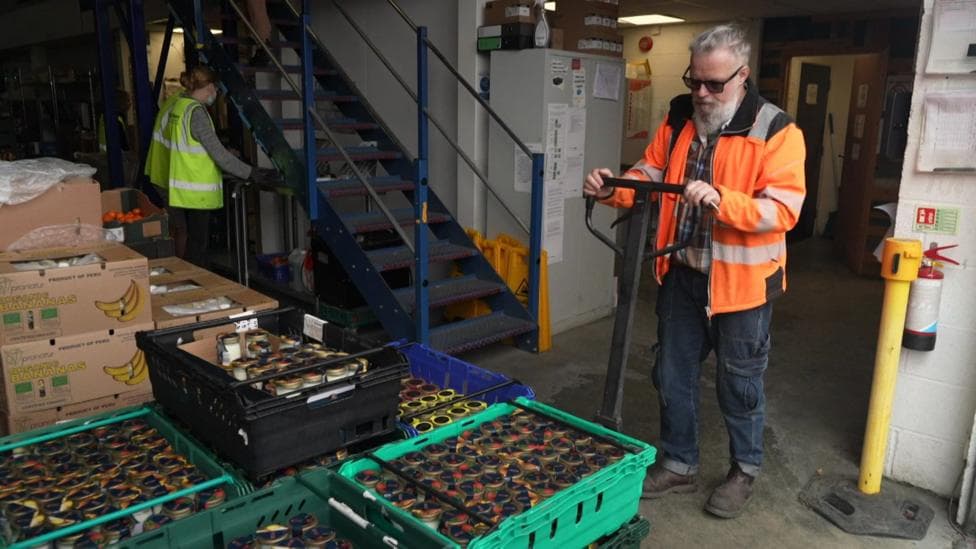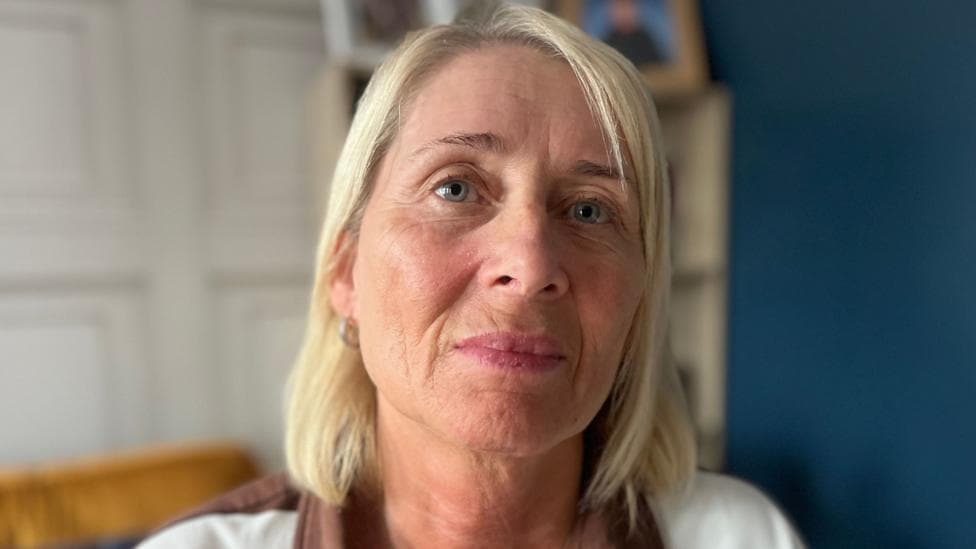
Patricia Burns' father was shot dead by a soldier in 1972. Now, as legislation to address the unresolved legacy of Northern Ireland's three-decade conflict progresses through Westminster, she and thousands of other families affected by the violence are watching the debate with intense scrutiny. According to BBC News, the Troubles legacy bill returned to the House of Commons on Monday, with MPs continuing their examination of government amendments on Tuesday.
The long-awaited legislation will reshape how the conflict's unresolved cases are handled and will have profound consequences for victims' families, military veterans, and the broader Northern Irish population. For individuals like Patricia Burns, whose father was killed, and David Crabbe, who served in the Ulster Defence Regiment during the Troubles, the parliamentary debate carries exceptional personal weight.
Last week, the government introduced hundreds of amendments to the bill, including a requirement that the attorney general must provide consent for any serious prosecutions related to the Troubles under the new framework. The government said the amendments would rename and reform the Independent Commission for Reconciliation and Information Recovery as the Legacy Commission, and establish a separate Independent Commission on Information Retrieval under the UK-Ireland Joint Framework. On Monday, the Northern Ireland secretary rejected characterisations that the planned changes constitute an "amnesty" for former soldiers.
MPs engaged in more than six hours of debate on Monday evening as votes on amendments continued late into the night. If approved, the bill will advance to the House of Lords for additional scrutiny. ITV reported that the government tabled 156 amendments and that MPs criticised the limited time available for detailed scrutiny.
What do victims' families want from the bill?
Thomas Burns, a father of four, was killed as he left a social club in north Belfast on 18 July 1972. A soldier fired from a watch tower, striking him in the chest and claiming to have seen a gunman. In 2023, a new inquest was ordered, but the then-Conservative government's Legacy Act cut it short.
His daughter Patricia, who was six years old when her father was shot, has made the inquest into his death her family's primary objective.
"Each year that goes by is a year that we can't afford to lose,"she said.
"Time is of the essence here and our inquest needs to be heard."
Burns explained that the events surrounding her father's death have occupied her thoughts for three decades.
"I can't rest until this is resolved and my daddy's name is cleared,"she stated. She expressed strong objection to the proposal to move future prosecutions to England and Wales, saying
"It is disgusting."She argued that jurors in those jurisdictions would lack understanding of the Northern Irish context.
"These amendments, in my opinion, are completely centred around the perpetrator, not the victim. My daddy isn't coming into this,"she said.
"In my lifetime, I really hope so much that someone in government will listen to the victims in all this and please just let us move on with our lives and just draw a line under it."
Claire Hayes' brother Alan Radford was killed in the Omagh bombing in 1998. She told BBC News NI that
"justice needs to prevail."Hayes identified the exclusion of the Omagh bombing from the legislation as a significant concern.
"It is something that doesn't sit very well with me. It should be included within the legacy. It has to be included in the legacy, and I would like it to be included in the legacy."
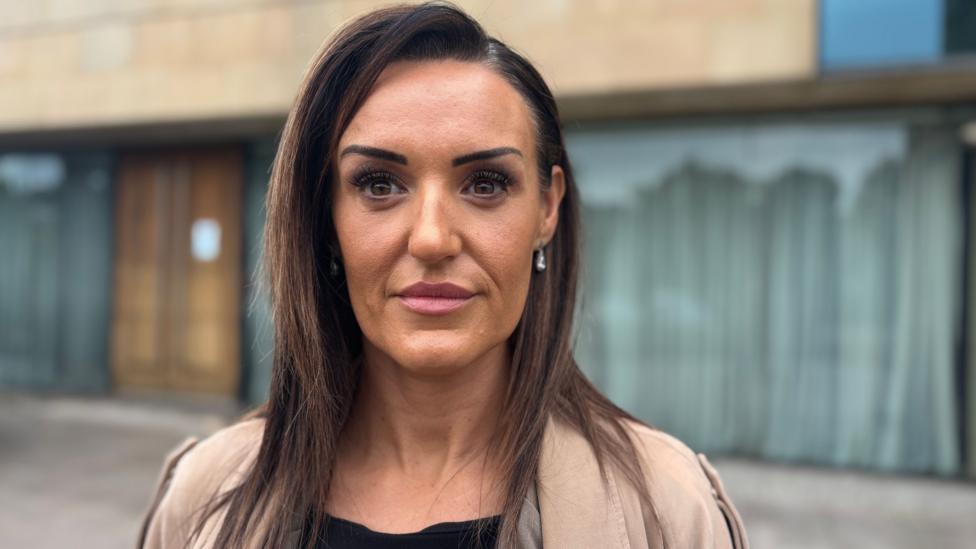
Hayes expressed concern about decisions regarding Northern Irish prosecutions being made in London.
"It is a fair system given the fact that we have fallen. There has been no movement, very little movement for innocent victims of terrorism so unfortunately it is going to fall on them because we have failed to act."
What are veterans' concerns about the legislation?
David Crabbe served in the Ulster Defence Regiment and the Royal Irish Regiment during the Troubles from 1977 to 2007. As a member of the Victims and Survivors Forum, he has called for the bill to be structured around the needs of victims.
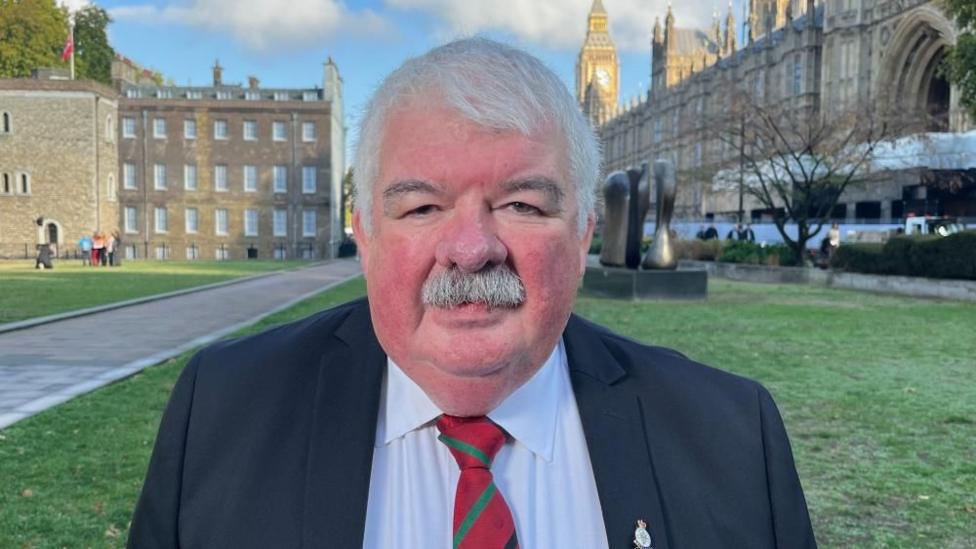
Crabbe emphasised that the forum wanted
"to ensure there is a fairness across the board"and that it
"serves those many number of victims and survivors and bereaved families that want to get the answers to the questions they need."He stressed the urgency of the matter, stating
"This has been a long time coming. We can't afford to kick the can down the road and subject future generations to the uncertainty of what happened to their loved ones and what the truth of the loss of their loved ones involved."
Crabbe underscored the time-sensitive nature of the legislation.
"It needs to be done now because of this doesn't go through then you are years down the road and the clock is ticking for everyone,"he added.
"The key message is to say that this is planning the future and we want to ensure a better future for our grandchildren, and their children and this is a huge potential step towards to obtaining that."
What is the government's position on the amendments?
Speaking in the Commons on Monday night, Northern Ireland Secretary Sir Chris Bryant acknowledged that thousands of families affected by the Troubles have waited
"far too long to get their answers."He told MPs:
"We can put this right. We can only put it right with a balanced set of amendments and a balanced bill."
A series of government amendments were approved on Monday night without requiring a vote, with further changes expected to be considered on Tuesday. The government said the amendments would set deadlines for public bodies to provide information to the Legacy Commission, allow it to draw on police expertise, and require regular inspections of its work.
What specific changes are the government proposing?
The legislation will establish that the commission and coroners must not treat the lawful conduct of armed forces members as equivalent to the actions of paramilitaries responsible for terrorist acts. The attorney general, currently Ellie Reeves, will be required to consent to all "serious" Troubles-related prosecutions.
Additional measures include protections against "cold-calling" of veterans and expanded provisions for remote attendance during the commission's work. Before any witness can be approached, the commission must evaluate whether "compelling new evidence exists, or the likelihood of a witness being able to provide new information." The commission will also be required to consider the "context and command orders" in which military veterans were operating.
Former paramilitaries are prohibited from serving on the Victims and Survivors Advisory Group, and the panel must include at least one veteran or veterans' representative. A statutory review of the veterans' protections will ensure they "deliver as intended."
Why is the government replacing the previous legislation?
The bill seeks to replace the previous Conservative government's 2023 Legacy Act, which had introduced a ban on inquests and civil actions related to Troubles-era incidents. The act's most contentious provision—offering immunity from prosecution to suspects who cooperated with an information recovery body—was later disapplied after courts determined it was unlawful.
Labour's bill establishes a legacy commission to investigate Troubles-related killings, a separate information recovery body, and a dedicated legacy unit within An Garda Síochána, the Irish police force. The government stated that its amendments "significantly reduce" the likelihood of military veterans facing repeated investigations.
What is the background to this legislation?
The Troubles was a period of conflict lasting 30 years that claimed the lives of more than 3,500 people. The bill was introduced in 2025 following agreement on a joint framework with the Irish government and is intended to replace the 2023 Legacy Act, whose conditional-immunity scheme was later disapplied after courts found it unlawful. A Westminster human rights committee previously stated that the government's Troubles legacy bill needs substantial further improvements, including changes to disclosure procedures, expanded family access rights, and clearer funding arrangements.
The Ministry of Defence has also settled a civil action with the family of Thomas Burns, a former Royal Navy serviceman killed by British forces in Belfast in 1972, demonstrating the ongoing legal complexities surrounding Troubles-era deaths as the government works to reform legacy legislation.
What happens next?
The government said the bill was expected to complete its Commons passage on Tuesday, 20 October 2026, and then proceed to the House of Lords. Opposition parties and backbench MPs have also submitted separate amendments aimed at modifying the bill, though it remains the responsibility of Commons Speaker Sir Lindsay Hoyle to determine whether any of them will be accepted for debate.